Silver Fibre Fabric for Maternity Brands: Sourcing, Safety Notes and Private-Label Options
Maternity brands face harder questions than most buyers. This guide covers silver fibre sourcing, safety documentation and private-label options — and the claims you should never print.
Silver Fibre Fabric for Maternity Brands: Sourcing, Safety Notes and Private-Label Options
Maternity brands face harder questions than most buyers. Their customers ask what the fabric is made of, how it should be washed, what the label really means, and what evidence sits behind every claim. A distributor can sell a roll of fabric on a specification sheet; a maternity brand has to stand behind a garment that a pregnant customer wears every day. That is why sourcing silver fibre fabric for maternity wear is not only a fabric decision. It is a documentation decision, a labelling decision, and a private-label decision, all made before the first sample is cut.
This guide covers what a maternity brand should ask a supplier, what safety notes actually mean in practice, and how private-label maternity garments are usually ordered — and it starts with the one rule that matters most: do not print a promise the fabric cannot prove.
Why maternity brands choose silver fibre
Silver fibre fabric is the usual choice for maternity wear for one practical reason: it behaves like clothing. It is listed at 50 to 80 decibels in the product guides on this site, and it is soft, drapes like an ordinary textile, and is made to be worn next to the skin. Copper-nickel fabric, listed at 60 to 90 decibels, is the usual choice for linings, enclosures and curtains, where a higher shielding figure matters more than a soft hand feel. For a garment that is worn for hours at a time, hand feel and wearability decide the order more than a single decibel figure.
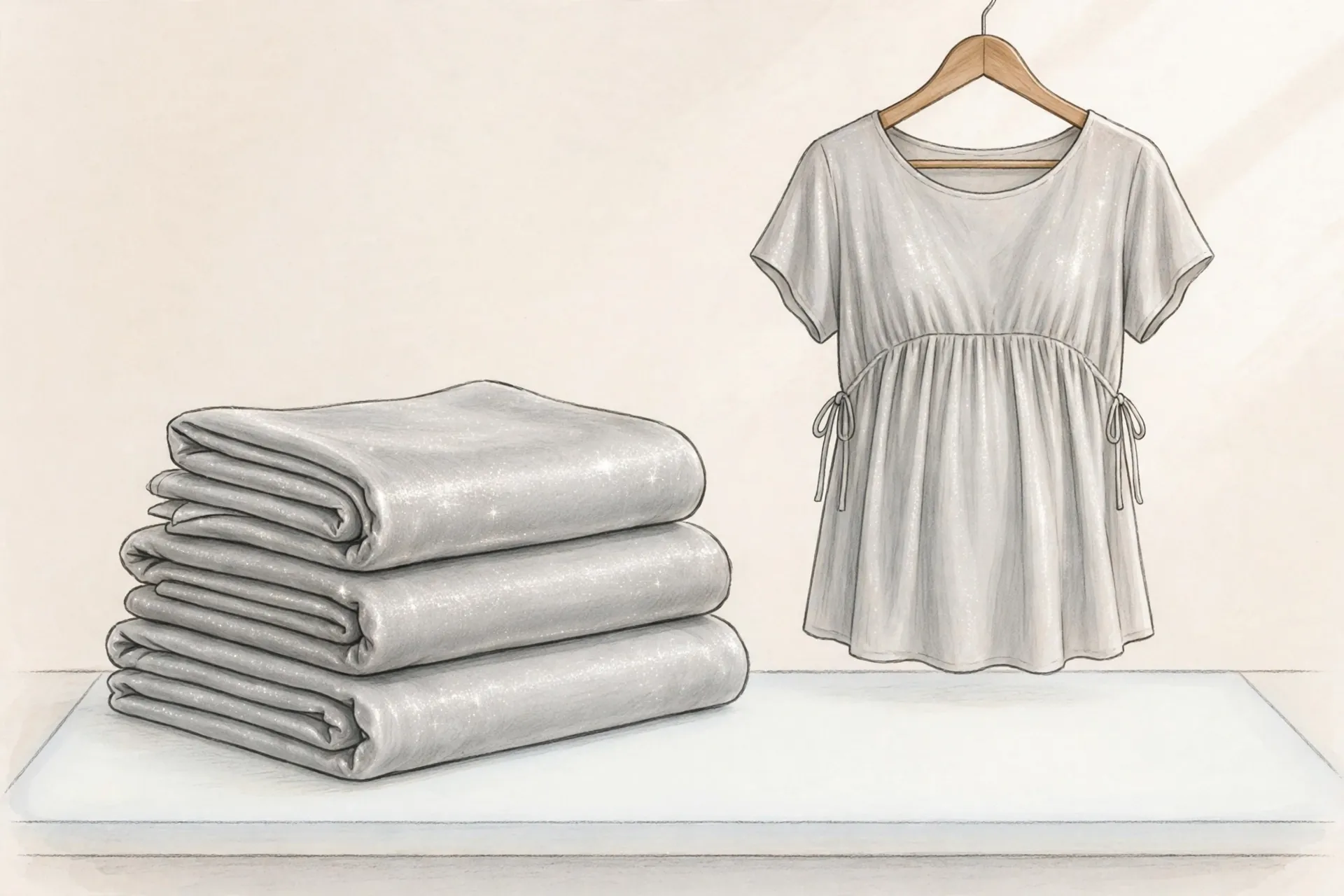
Maternity brands usually buy in one of two ways. Some buy silver fibre fabric by the roll and cut and sew it themselves, or through their own garment factory. Others ask the supplier for finished private-label garments — belly bands, tops, dresses and cover layers — made to the brand's design, label and packaging. Both routes start with the same fabric questions, and both need the same documents. The difference is who holds the cutting, sewing and quality risk, and that should be agreed in writing before sampling starts.
Safety notes: what to ask, and what never to print
Safety is the part of this order where a careless sentence costs the most. Silver fibre fabric is a textile. It is not a medical device, and it should never be described as one. A brand should never print, on a label, a listing or a care card, that a garment protects a pregnancy, improves a health outcome, or blocks a specific source of exposure in a way that has been measured on the finished garment. Those are medical claims, and a fabric test report does not support them.
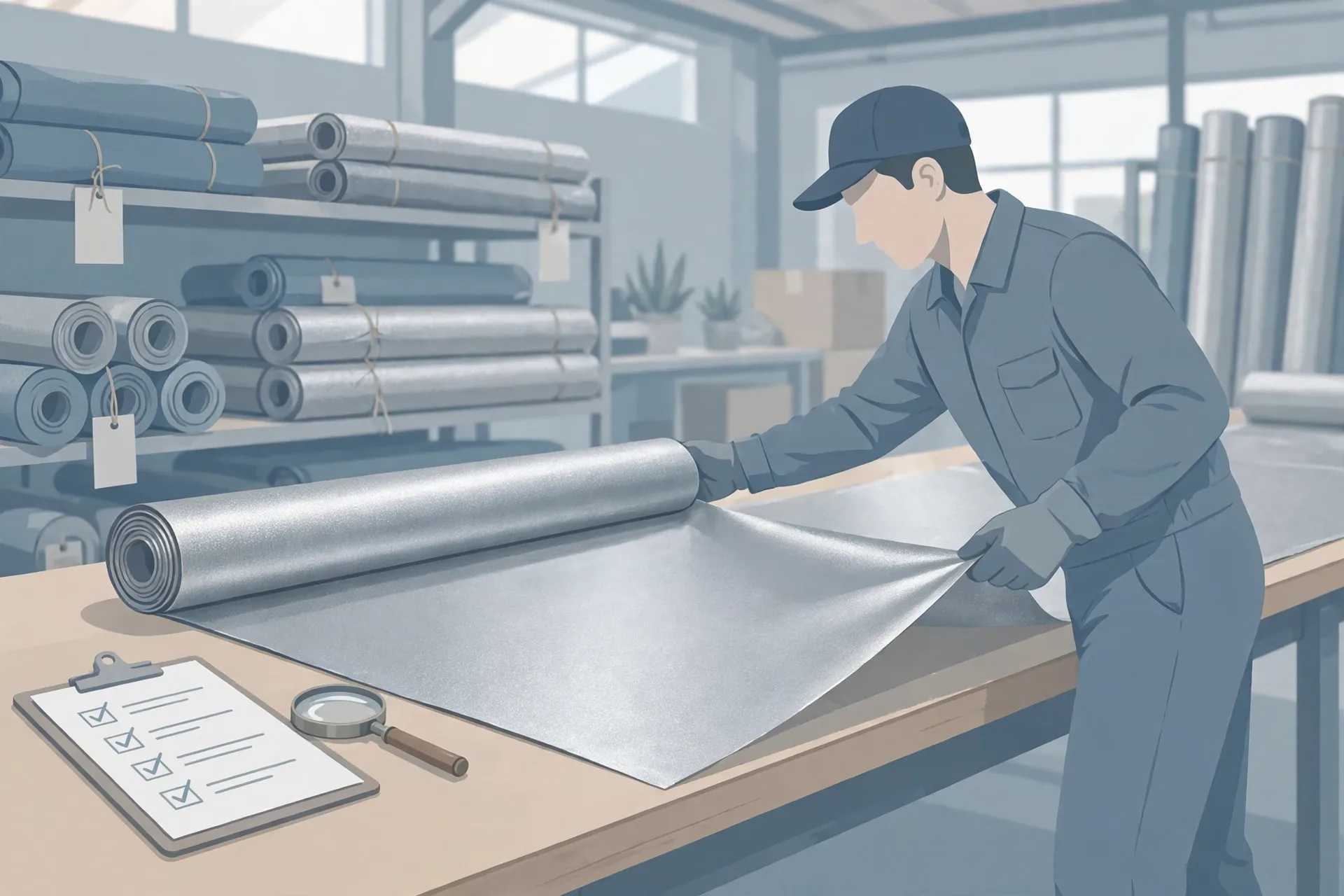
What a brand can and should ask for is narrower, and it is entirely reasonable. Ask for the fabric composition in writing. Ask for the test report of the exact fabric, with the test method named and the result in writing. Ask for the washing and care guidance that the test was based on, and ask whether the test was run on the flat fabric or on a finished garment, because the two are not the same. Test reports and supplier certificates are available on request.
Then take the answers to the brand's own compliance adviser, for the market where the garment will be sold. Labelling rules, permitted wording and required warnings differ by market, and the supplier cannot decide them for the brand. What the supplier can do is supply the fabric facts — composition, test method, test result, care method — in writing, so the brand's adviser has something real to work from. If a supplier cannot name the test method or cannot produce a report for the exact fabric, that is a reason to stop, not a detail to sort out later.
Skin contact deserves the same discipline. A maternity garment is worn next to the skin for long hours, so ask how the fabric is finished, what the care label will say, and whether the supplier has washing guidance for the finished garment rather than for the roll. Do not accept a wash count from a brochure: how many washes a garment survives depends on the fibre, the blend, the construction and the washing method together. Agree the washing method before ordering, wash the sample by that method, and test the finished garment after washing.
Sourcing the fabric: quantities, samples and price
Fabric can be ordered from as little as 1 square metre, and the suggested starting quantity is 10 square metres or 10 metres, with a better price for a larger quantity. Silver fibre fabric is usually priced by the square metre, while copper-nickel fabric is usually priced by the metre. Say in the first message whether you are ordering fabric by the roll or finished garments, give the width you need, and say how the fabric will be cut, sewn or finished, because the price depends on all of it.
A stock sample usually ships in 1 to 5 days, while a custom sample usually takes 5 to 30 days depending on the process, and the exact time is confirmed once the specification is confirmed. For maternity wear, order the sample in the exact fabric you will buy — the same blend, the same weight, the same finish — and test it as a garment, not as a flat piece of cloth. Wear it, wash it by the agreed method, and check the seams, the edges, the stretch and the hand feel after washing. Keep the test result with the sample, because that pair is the reference the bulk order will be judged against.
Ask the supplier to quote the fabric that meets the brief, not the cheapest fabric on the list, and ask what is included in the price: the test report, the sample, the cutting, and the documents. A cheaper roll that fails the test, feels wrong against the skin, or cannot be sewn the way the garment needs is the expensive order.
Private-label options: logo, labelling and packaging
Private label is where a maternity brand turns a fabric order into its own product, and the details should be settled before the sample is made, not after. Agree the logo placement and the method — printed, woven or heat-applied — and ask for a sample of the finished label on the finished fabric, because a label that looks right on paper can feel wrong on a soft silver fibre garment. Agree the care label wording, the size label, and any hang tag, and confirm that every word on them has been checked against the market's labelling rules.
Packaging is part of the product for a maternity brand. Agree whether garments are folded or hung, bagged individually or in sets, and what the retail bag or box carries: brand name, fabric composition, care instructions and nothing that reads as a medical claim. If the brand sells through distributors, agree the carton labelling and the documents that travel with the shipment, so a distributor can answer a customer's questions without guessing.
Finished products in stock can be ordered from 1 to 2 pieces, while an out-of-stock or custom item needs a new quotation and lead time. For a private-label garment, that means the first order is usually a sample run, then a small trial, then bulk — and the sample approval should be in writing, with the approved fabric, the approved label and the approved packaging all named, so the bulk order has a fixed reference to match.
A short checklist before you order
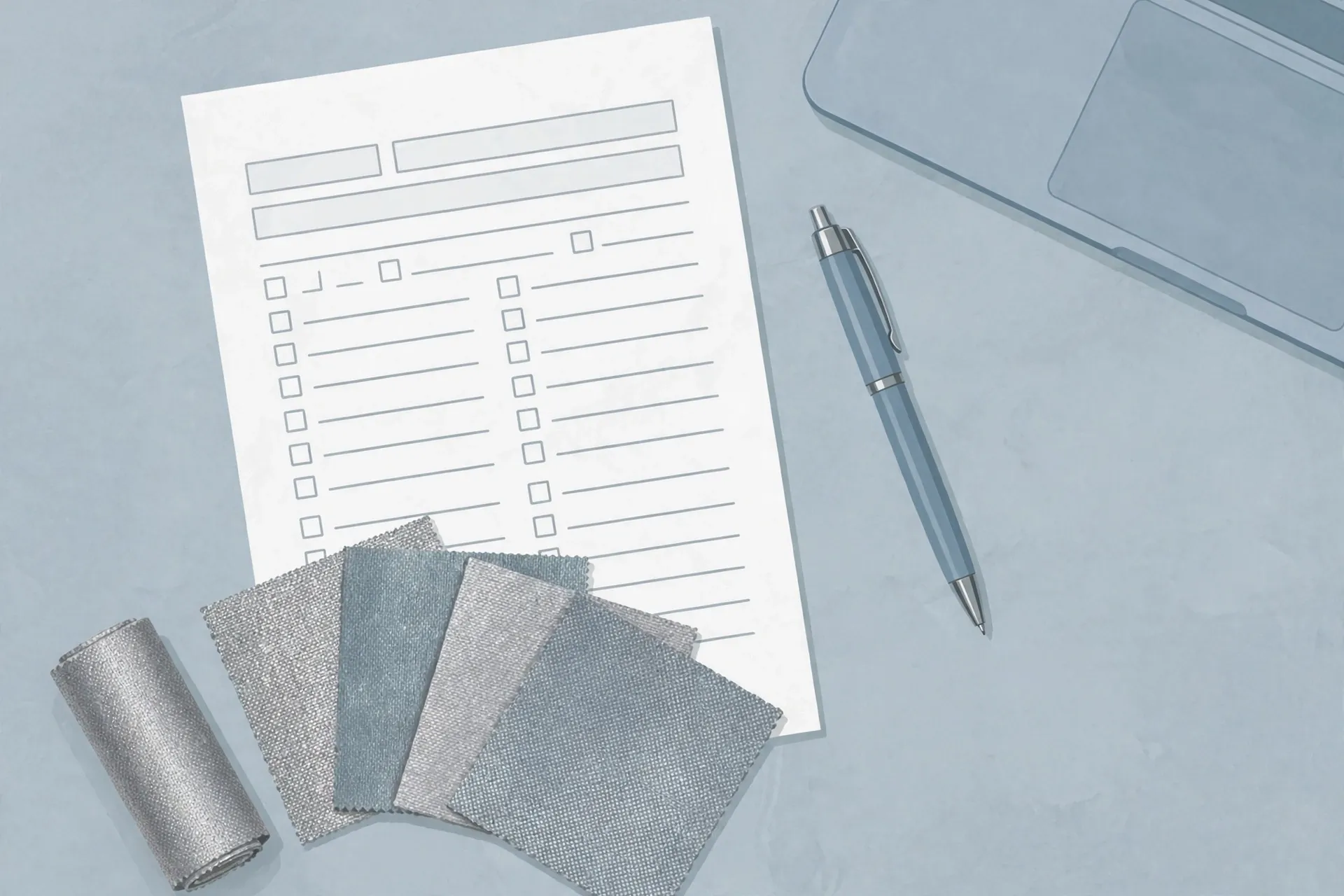
Name the product and who will wear it, and for how long each day. Name the fabric, the composition, and the shielding target with the test method you want. Ask for the test report of the exact fabric, in writing, with the test method named. Agree the washing method, wash the sample by it, and test the finished garment after washing. Settle the logo, the labels, the care wording and the packaging before sampling, and have the wording checked for the market where the garment will be sold. Never print a medical claim on a label, a listing or a care card, and never let a brochure figure stand in for a test report on the exact fabric.
Payment is by letter of credit, telegraphic transfer, PayPal or Western Union. Confirm the method and the currency before the order is placed. Yiwu Zimo Trading Company is a trading-and-manufacturing supplier. The details above describe how it quotes and samples; they do not describe factory capacity or production processes, which are not published.
Frequently asked questions
Is silver fibre fabric suitable for maternity wear?
It is the usual choice for garments worn next to the skin because it is soft and drapes like an ordinary textile. Whether a specific garment suits your market is a decision for your brand and your compliance adviser, based on the fabric facts and the test report.
What documents should we ask for?
The fabric composition in writing, the test report of the exact fabric with the test method named, and the washing and care guidance the test was based on. Test reports and supplier certificates are available on request.
Can we put shielding claims on the label?
Only the wording your market allows, checked by your own compliance adviser. Never print a medical claim, and never present a roll-of-fabric figure as a result measured on the finished garment.
How long does a sample take?
A stock sample usually ships in 1 to 5 days. A custom sample usually takes 5 to 30 days depending on the process, and the exact time is confirmed once the specification is confirmed.
What is the smallest order?
Fabric can be ordered from as little as 1 square metre. Finished products in stock can be ordered from 1 to 2 pieces; a custom or out-of-stock item needs a new quotation and lead time.
Your next step
Write a one-page brief with the product and who will wear it, the fabric and the composition you want tested, the shielding target and the test method, the washing method, the logo, label and packaging you want, the quantity, the documents you need, and the payment method and currency. Send it and ask the supplier to confirm the fabric, the sample time, the test that will be run on the sample, and what is included in the sample price. When the sample arrives, wear it, wash it by the agreed method, and test the finished garment before you approve bulk. If you are ready to start, contact us through the contact page or email info@zimo-cn.com with your brief, and we will reply with a fabric proposal, a sample time and a quote.