Packaging EMF Shielding Fabric for Export: Rolls, Cartons and Moisture Protection
Shielding fabric is only as good as the condition it arrives in. This guide explains how export packaging protects rolls and cartons from moisture, crushing and mix-ups.
Packaging EMF Shielding Fabric for Export: Rolls, Cartons and Moisture Protection
Shielding fabric is only as good as the condition it arrives in. A roll that left the supplier at the right width, weight and shielding figure can still arrive unusable — damp at the edges, crushed at the ends, or mixed up with another order. Export packaging is what stands between the fabric and that outcome: it keeps moisture out, keeps the roll's shape, keeps each roll identifiable, and keeps the documents with the goods. This guide explains how shielding fabric is packed for export — rolls, cartons and moisture protection — and what a buyer should confirm in writing before the order ships.
Why packaging matters more for shielding fabric
Shielding fabric is not a hard good. It is a wound roll of coated or metallised textile, and three things damage it in transit. Moisture is the first: damp can stain the surface, encourage mould on a natural-fibre blend, and corrode a metal-coated surface, which can change how the fabric shields. Crushing is the second: a roll stacked under weight, or dropped on its end, can arrive with a flattened section or a damaged core, and the flattened fabric may never lie flat again. Mix-ups are the third: two rolls that look alike can be swapped in a warehouse, and the wrong roll gets cut for the wrong product.
All three are preventable, and cheaper to prevent than to fix: a damp roll may need drying and re-testing, a crushed roll may lose its damaged section, and an unmarked roll must be unrolled and identified before use. Packaging agreed in advance, and checked at delivery, avoids most of it.
Rolls: the core, the wrap and the ends
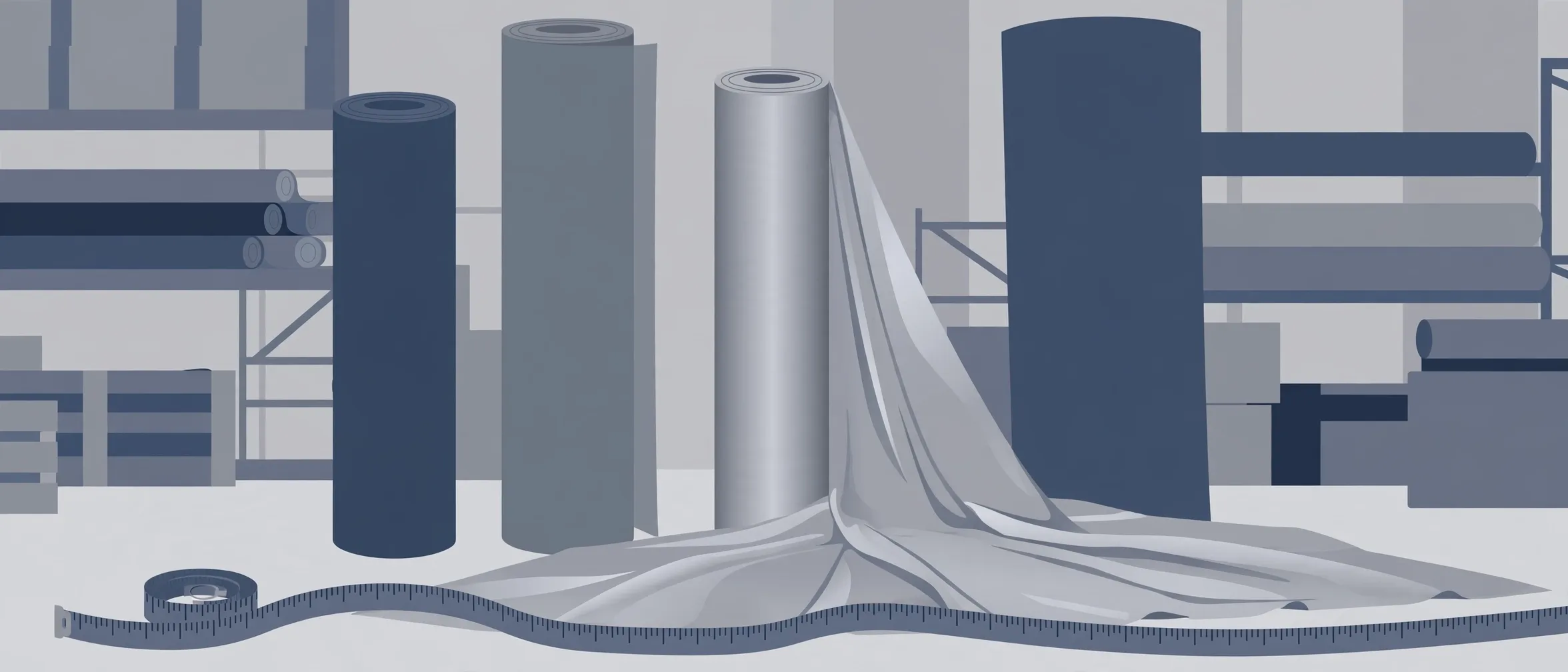
Most shielding fabric travels as rolls, wound on a core. The core should be strong enough to hold the roll's shape through handling and stacking, and not crush under the roll's own weight — a collapsed core leaves a roll that cannot be mounted on a cutting table without wobbling, and the fabric feeds unevenly. Ask the supplier how the roll is wound — tight enough to hold its shape, but not so tight that the inner layers are creased — and how the ends are protected, since the ends are the first part to be damaged if a roll is stood on end or knocked.
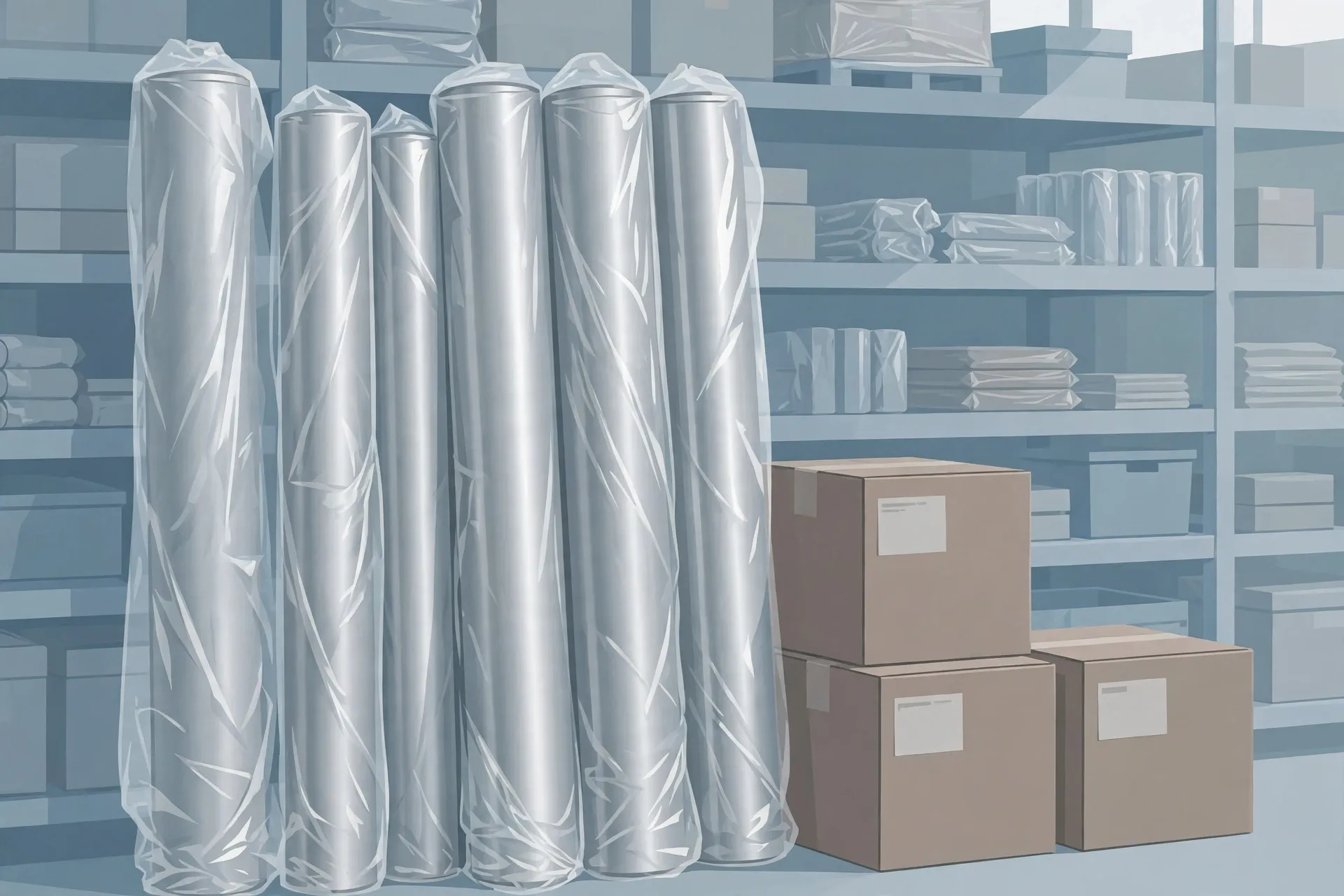
The wrap matters as much as the core. Each roll should be wrapped in a moisture-resistant layer that covers the full roll, ends included, and sealed so damp cannot get in during transit and storage. The wrap should be strong enough not to tear in normal handling, and easy to remove without cutting into the fabric — a wrap that needs a knife to open is a wrap that will eventually cut the fabric. Each roll is wrapped on its own, so opening one roll does not expose the others.
Marking is part of the packaging, not an afterthought. Each roll should be marked, on the outside of the wrap, with the fabric, the width, the weight, the roll length, the roll number and the order number — enough for the warehouse to tell one roll from another without opening it. For custom widths or weights, the marking is what keeps a custom roll from being mistaken for a standard one. Ask for the marking to be checked before shipment, and check it again at delivery.
Cartons: cut lengths, finished goods and small orders
Not everything ships as a full roll. Cut lengths, samples, and finished goods such as hats, garments and pouches usually travel in cartons. A carton should be strong enough to hold its shape when stacked, sized to the goods inside so they do not move about, and sealed against moisture — too large and the goods shift and crease, too small and they are crushed.
Inside the carton, the goods should be protected in the same way as a roll: wrapped against moisture, separated where surfaces could rub or transfer colour, and packed so the pieces on top do not press the pieces below out of shape. Finished goods with a shape — a hat, a pouch with a closure — should be packed so the shape holds. Small orders and samples deserve the same care as large ones: a sample that arrives creased or damp tells the buyer nothing about the fabric.
Each carton should be marked on the outside with the contents, the quantity, the order number and the carton number — for example, carton 1 of 4 — so a missing carton is noticed at delivery, not a week later. The packing list should match the marking on the outside.
Moisture protection: the layer that earns its keep
Moisture is the most common cause of damage to fabric in export transit, because a shipment passes through changes of temperature and humidity — a warm warehouse, a cool container at night, a humid port. When warm, damp air meets a cool surface, water condenses, and a roll that was dry when packed can arrive damp.
Moisture protection is therefore a layer, not a hope. Rolls and cartons should be wrapped in a moisture-resistant barrier, sealed, and kept sealed until the buyer opens them. The barrier should cover the whole consignment, not only the top — damp gets in at the edges and the bottom as easily as at the top. If the shipment will be stored before use, ask the supplier how the goods should be stored: off the floor, away from walls, in a dry place, and not under weight that would crush the rolls.
Tell the supplier how the goods will travel and where they will be stored. A shipment that goes by sea, sits in a port, and then travels inland needs more protection than a shipment that goes by air to a dry warehouse. The supplier can only pack for the journey it knows about.
What to confirm in writing, and what to check at delivery
Agree the packaging in the order, in the same way as the fabric specification. Write down: how the rolls are wound and wrapped, how the ends are protected, how each roll and carton is marked, what moisture protection is used, how many rolls or cartons make up the shipment, and what documents travel with it — the packing list, the test report and any certificates the buyer asked for. Test reports and supplier certificates are available on request.
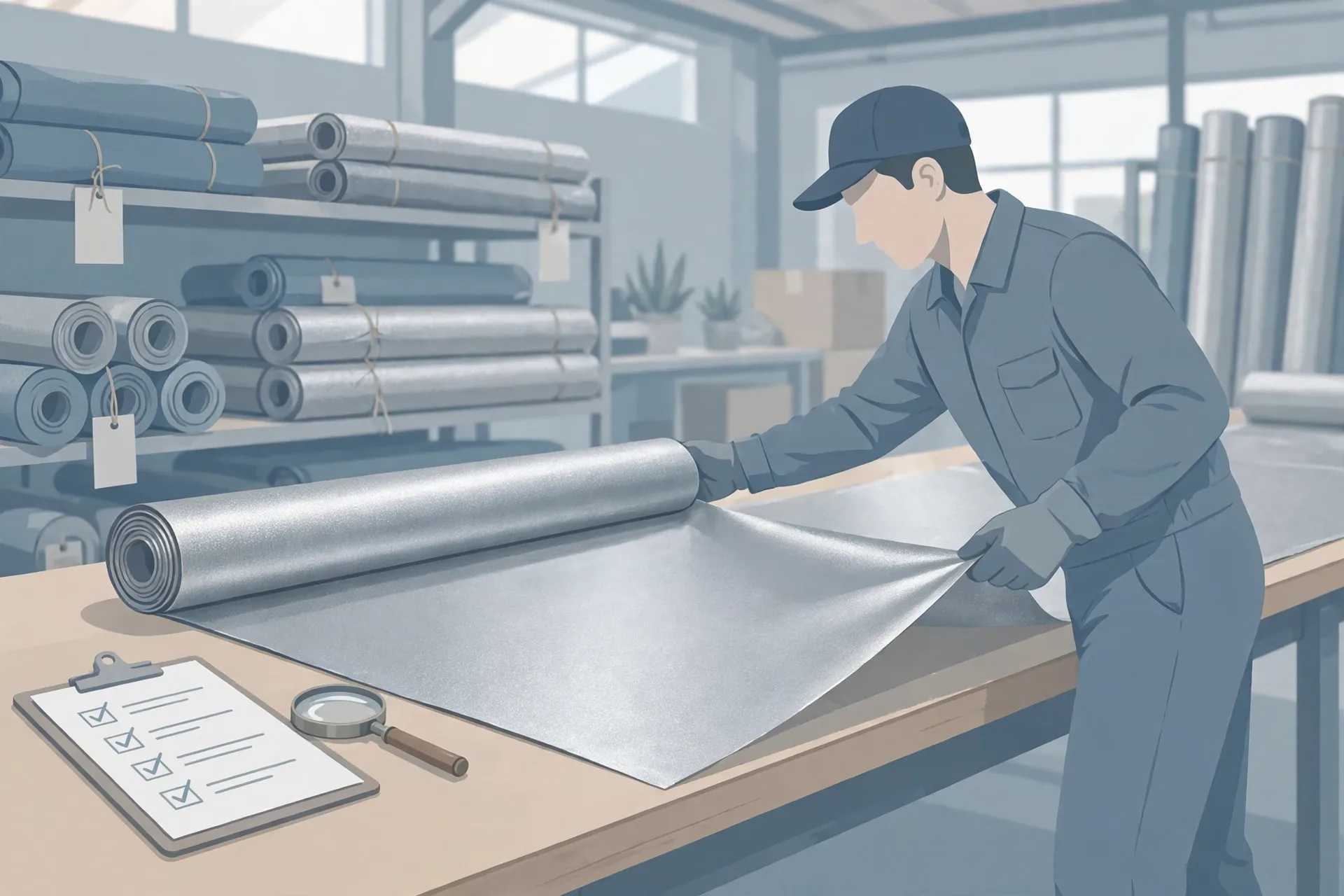
At delivery, check the packaging before opening it: torn wrapping, crushed ends, damp patches, or marks that do not match the order. Count the rolls and cartons against the packing list. Then open the shipment and check the fabric lot by lot — width, weight, appearance, roll length and the shielding figure where the product depends on it — against the approved sample and the written specification. Copper-nickel fabric is listed at 60 to 90 decibels, silver fibre fabric at 50 to 80 decibels, and conductive foam above 75 decibels.
If packaging is damaged, photograph it before opening, and keep the photographs with the delivery note. A damaged outer wrap with dry fabric inside is a different matter from a damaged wrap with damp fabric inside. Do not cut fabric from a roll whose condition is in question until the question is settled in writing: a roll that has been cut is much harder to discuss than a roll that is still whole.
Frequently asked questions
How is shielding fabric packed for export?
As rolls wound on a core, each roll wrapped in a moisture-resistant layer and marked with its fabric, width, weight, length and roll number. Cut lengths, samples and finished goods usually travel in sealed cartons, marked with their contents and carton number.
What is the biggest packaging risk?
Moisture, followed by crushing and mix-ups. A sealed moisture barrier, a strong core, protected ends and clear marking on every roll and carton prevent most of it.
Should I ask for special packaging?
Say how the goods will travel and be stored, and ask the supplier to confirm the packaging in writing — the wrap, the marking, the carton count and the documents — before the order ships.
What should I check when the shipment arrives?
Check the outside of every roll and carton first, count them against the packing list, then check the fabric against the approved sample and the specification, and photograph any damage before opening.
Can fabric be ordered in small quantities?
Yes. Fabric can be ordered from as little as 1 square metre, with 10 square metres or 10 metres as the suggested starting quantity, and a better price for a larger quantity.
Your next step
Before your next order, write the packaging into the order: how the rolls are wound and wrapped, how the ends are protected, how each roll and carton is marked, what moisture protection is used, how the shipment is counted, and what documents travel with it. Tell the supplier how the goods will travel and be stored. Zimo is a trading-and-manufacturing supplier, and the details above describe how it quotes, samples and packs; they do not describe factory capacity or production processes, which are not published. If you are ready to start, contact us through the contact page or email info@zimo-cn.com with your specification and your packaging requirements, and we will reply with a fabric proposal, a sample time and a quote.