AQL Inspection for EMF Shielding Fabric Orders: What a Buyer Should Check, Lot by Lot
An AQL inspection checks a shielding fabric order lot by lot, before it ships. This guide explains what to inspect, how sampling works, and what to agree in writing first.
AQL Inspection for EMF Shielding Fabric Orders: What a Buyer Should Check, Lot by Lot
A shielding fabric order is rarely one roll. It is a lot — several rolls made to the same specification, shipped together, and expected to behave the same way. AQL inspection is how a buyer checks that lot before it ships, without opening and measuring every roll. A sample of rolls is drawn, the sample is checked against the agreed specification, and the lot is accepted or held on the basis of what the sample shows. Done well, it catches the problems that matter while the goods are still with the supplier. Done badly, or not agreed in advance, it becomes an argument after delivery. This guide explains what an AQL inspection covers for EMF shielding fabric, how sampling works, and what a buyer should agree in writing before the order is placed.
What AQL means, and what it does not mean
AQL stands for Acceptable Quality Limit. It is a sampling system, not a promise that every roll is perfect. The buyer and the supplier agree, before the order, how many rolls will be drawn from the lot, what will be checked on each roll, and how many defects of each kind are acceptable in the sample. If the sample stays within the agreed limits, the lot is accepted. If it goes beyond them, the lot is held — for re-inspection, sorting, replacement, or another remedy agreed in advance.
Three points matter. First, the levels are agreed, not assumed — there is no single AQL level that fits every order, and the levels, with what counts as a defect at each level, should be written into the order. Second, AQL is a statistical check, so it can pass a lot that still contains a defective roll; that is why the inspection also looks at the pattern of defects, not only the count. Third, AQL covers what can be seen and measured on the sample; it does not replace a shielding test on the delivered fabric where the product depends on the shielding figure.
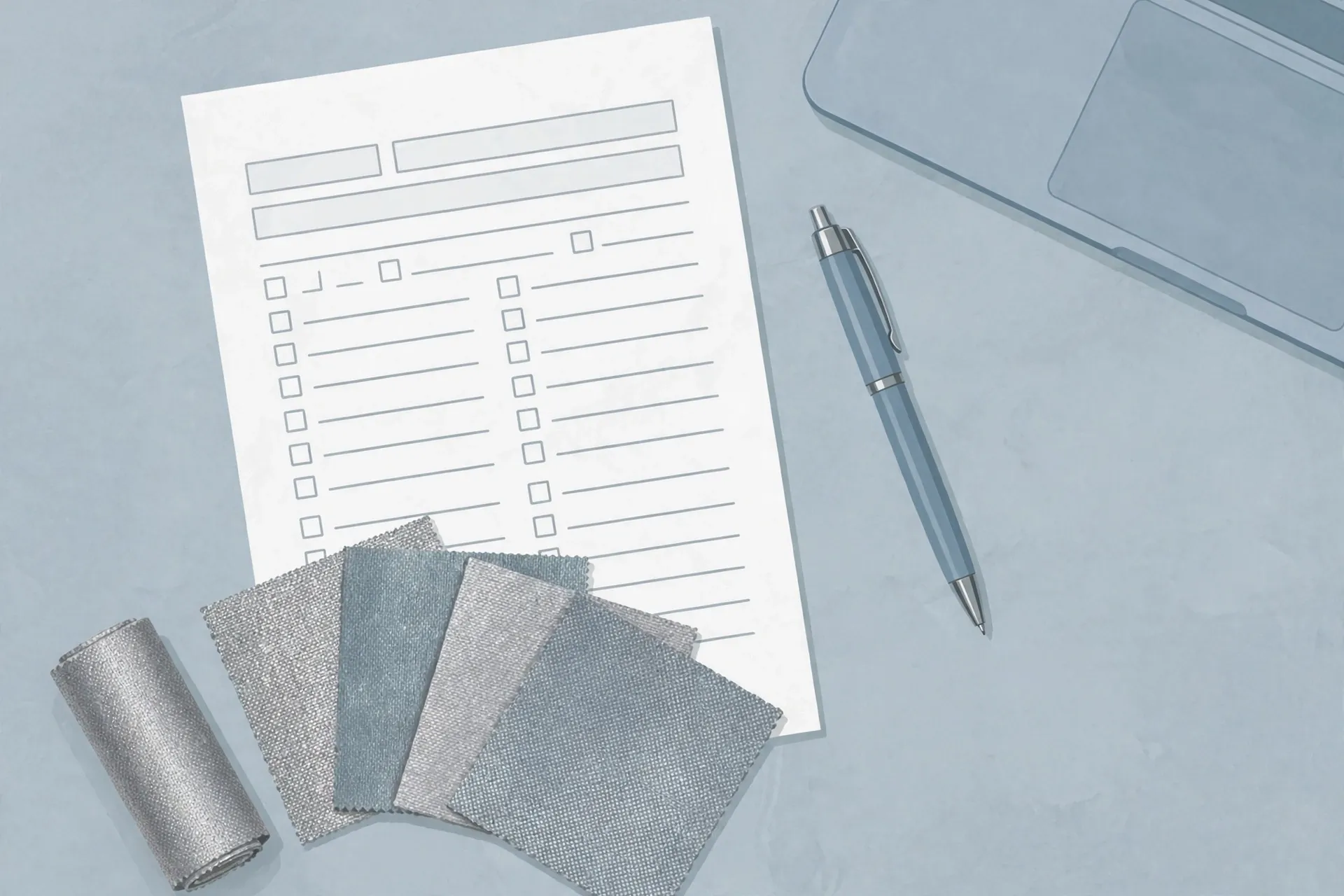
Agree the inspection before the order is placed, not when the goods are ready: the method, the defect classes, the levels for each class, who inspects — buyer, supplier, or third party — and what happens if a lot fails. A buyer who agrees these points at the order stage can point to them at inspection.
Sorting defects: critical, major and minor
Not every fault matters equally, so defects are usually sorted into three classes, and each class gets its own limit:
- Critical defects are faults that make the fabric unusable for its purpose — for example, the wrong fibre family, or a shielding figure below the agreed figure where the product depends on it. The usual position is that no critical defect is accepted.
- Major defects are faults that would make a roll hard to use — a width outside the agreed tolerance, a weight outside the agreed range, a tear, a stain across the working width, or a roll length well short of the order.
- Minor defects are faults that do not stop the fabric being used — a small mark near an edge that will be trimmed off, or a label that is smudged but still readable. They are usually tolerated in small numbers, within the agreed limit.
Write the classification down with examples, because the same fault can look major to one side and minor to the other: a stain in the middle of the working width is major, the same stain on a selvedge that will be cut away is minor. Agree the examples at the order stage, with the product in mind, and the inspection becomes a check rather than a negotiation.
What to check, lot by lot
A lot inspection for shielding fabric should cover the fabric itself, the rolls, and the paperwork that travels with them:
- Fabric family and surface: confirm the fabric is the family ordered — silver fibre or copper-nickel — and the surface version ordered, such as plain, patterned, or black-coated, where that applies. Check it against the approved sample, not against memory.
- Shielding figure: where the product depends on shielding, check the test report for the lot, and confirm the figure was measured on fabric from this lot. Copper-nickel fabric is listed at 60 to 90 decibels, silver fibre fabric at 50 to 80 decibels, and conductive foam above 75 decibels. Test reports and supplier certificates are available on request.
- Width and weight: measure the width at several points along the sampled rolls, and check the weight the way the specification says it will be checked. A single measurement at one end of one roll proves very little.
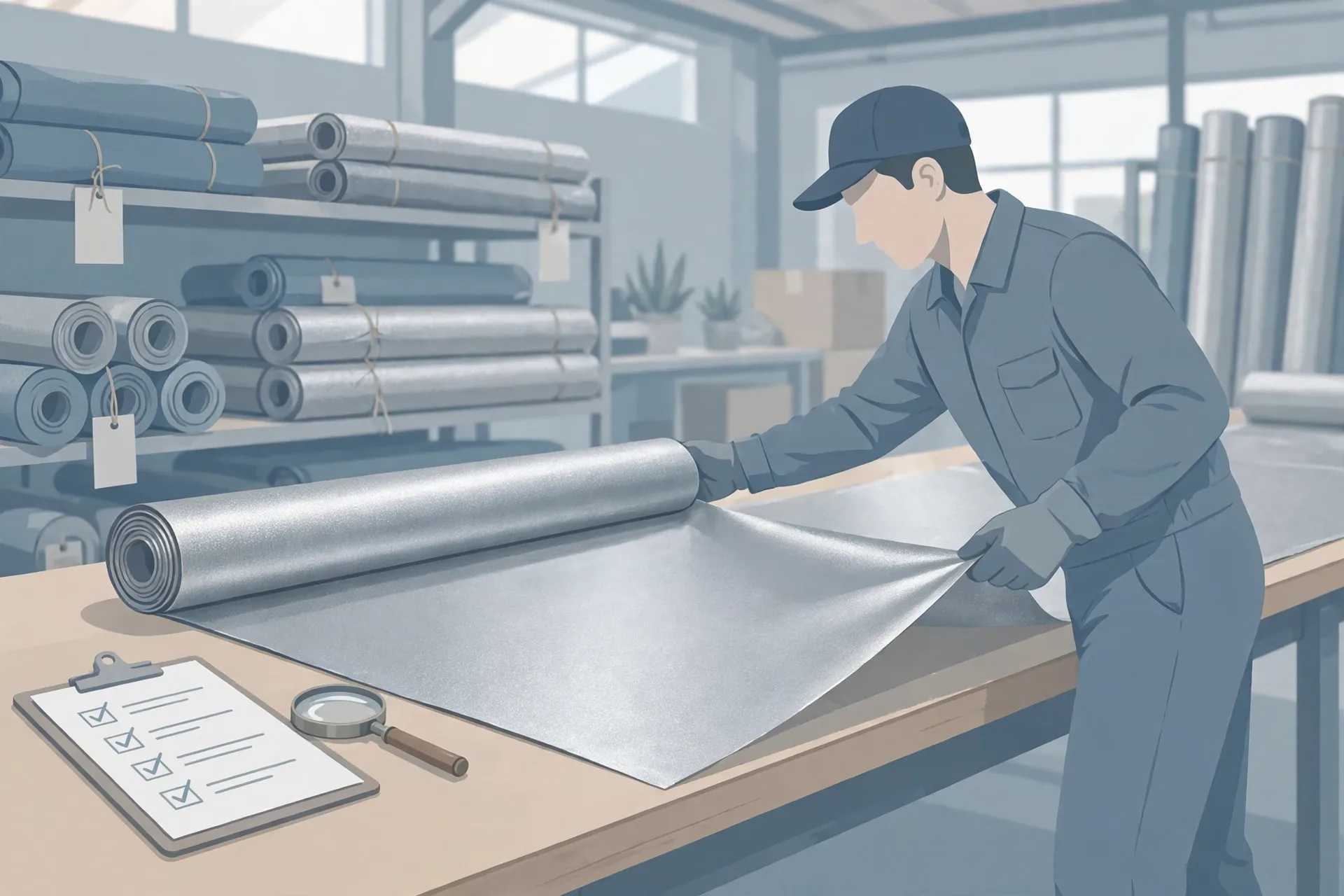
- Appearance: unroll enough of each sampled roll to look at the surface — stains, holes, tears, creases, uneven coating, or colour variation that would show in the finished product — and check the edges for fraying.
- Roll length and count: check the length of the sampled rolls against the order, and count the rolls in the lot. A short roll is a short delivery, however good the fabric is.
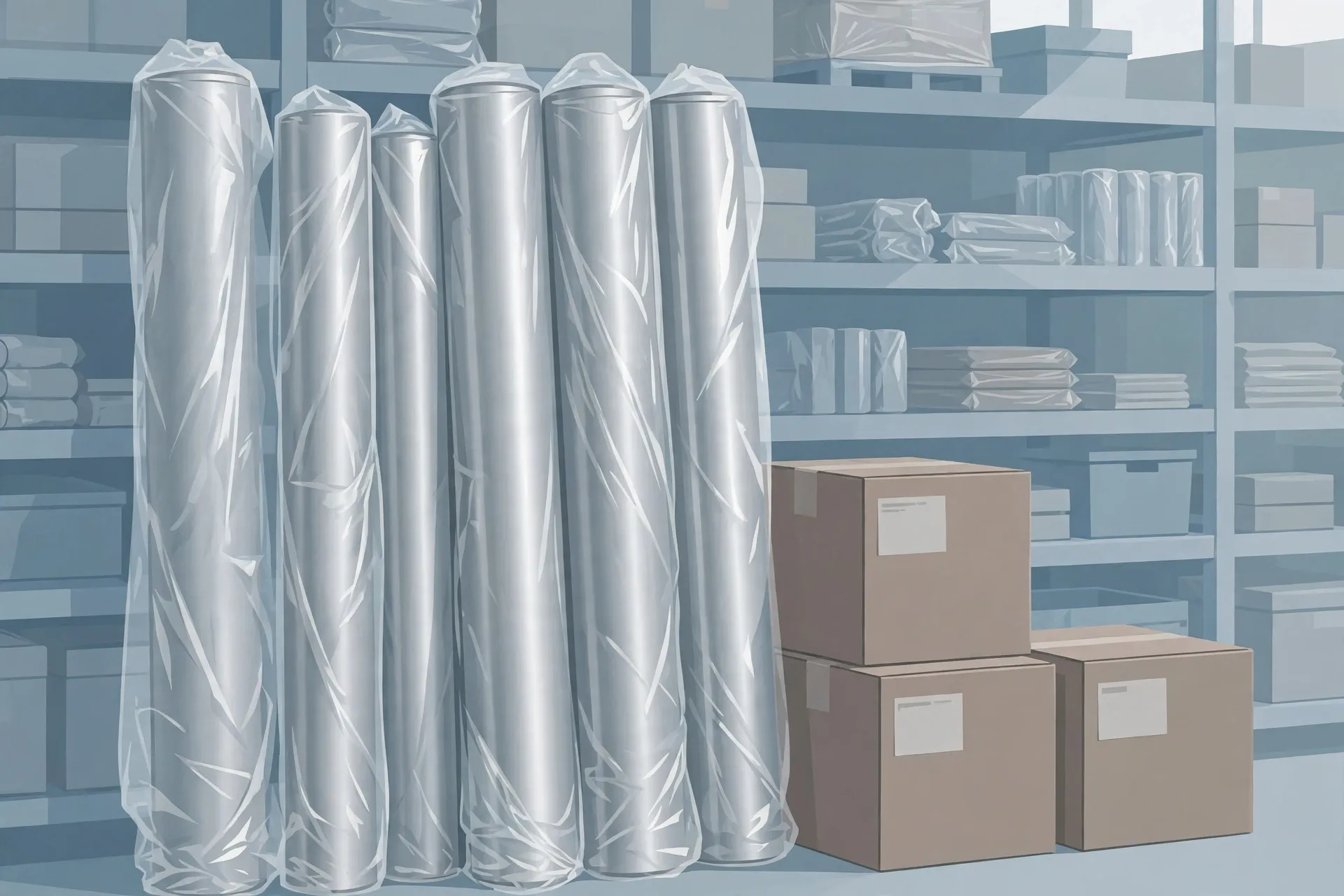
- Packaging and marking: check that rolls are protected against moisture and crushing, and that each roll is marked with its width and weight so the warehouse can tell one roll from another without opening it.
- Documents: check that the packing list, the test report and any certificates the buyer asked for are present and match the lot.
Judge the sample against the approved sample and the written specification, not the standard roll: a custom width or weight is judged against its own specification.
How sampling works in practice
Sampling means the inspector does not check every roll. Rolls are drawn at random — not the rolls on top, and not the rolls the supplier points to — covering the start, middle and end of the production run. The number drawn depends on the lot size and the level agreed, but the sample is always a fraction of the lot: inspection stays affordable while still giving a fair picture of it.
Within each sampled roll, spread the check out too: measure the width at several points, look at the surface in more than one place, and check that fabric to be cut, bonded or sewn behaves the way the approved sample did. Photograph what is found, with the roll number and the measurement beside it, and send the supplier the result in writing, so a failed lot can be traced to the rolls that failed.
When a lot fails
A failed lot is not the end of the order; it is the point the pre-agreed remedy is used. Agree in writing, before the order, what happens if a lot fails: re-inspection after sorting or repair, replacement of the failed rolls, re-making of the whole lot, or acceptance at a different price with the buyer's written agreement. Which remedy fits depends on the defect and the buyer's schedule.
Do not accept a failed lot verbally, and do not reject one verbally either. Put the result in writing, with the inspection report, the photographs and the roll numbers, and ask the supplier to confirm the remedy and the new timing in writing. A lot should be inspected before it is cut, and ideally before it ships: a roll that is still whole can be replaced, while a roll that has been cut into panels cannot.
Payment is by letter of credit, telegraphic transfer, PayPal or Western Union, confirmed before the order is placed. Some buyers tie part of the payment to the inspection result; if so, it should be written into the order, not raised at shipment.
Frequently asked questions
What is AQL inspection for shielding fabric?
A sampling inspection of a lot before shipment: a sample of rolls is drawn at random and checked against the agreed specification, and the lot is accepted or held on the sample.
Who decides the AQL levels?
The buyer and the supplier agree them in writing before the order, with the defect classes and examples, the inspection method, who inspects, and what happens if a lot fails.
Does AQL inspection replace shielding testing?
No. Where the product depends on the shielding figure, the figure should be checked on fabric from the lot, with the test report to support it.
How many rolls are sampled?
It depends on the lot size and the level agreed. The sample is a fraction of the lot, drawn at random, covering rolls from different parts of the production run.
What should I do if a lot fails inspection?
Use the remedy agreed before the order, and put the result, the photographs and the roll numbers in writing before the fabric is cut.
Your next step
Before your next order, write the inspection into the order: the method, the defect classes with examples, the levels, who inspects, and what happens if a lot fails. Ask for the test report on the lot, and check the sample against the approved sample and the written specification. Zimo is a trading-and-manufacturing supplier, and the details above describe how it quotes, samples and supports inspection; they do not describe factory capacity or production processes, which are not published. If you are ready to start, contact us through the contact page or email info@zimo-cn.com with your specification and your inspection requirements, and we will reply with a fabric proposal, a sample time and a quote.