Private-Label EMF Hats and Beanies: Logo, Labelling and Packaging Options for Brands
A private-label hat is more than a logo on a shielding fabric. This guide covers logo placement, labelling and packaging options for brands ordering EMF hats and beanies.
Private-Label EMF Hats and Beanies: Logo, Labelling and Packaging Options for Brands
A private-label hat is more than a logo on a shielding fabric. The hat is the product a buyer wears, washes and shows to other people, and the label, the logo and the packaging are the parts that tell the buyer whose brand it is and how to look after it. Get those three right and the hat reads as a brand product; get them wrong and the same hat reads as an unbranded sample with a sticker on it. This guide covers logo, labelling and packaging options for brands ordering EMF hats and beanies, so the first private-label order arrives looking like the brand it carries.
The hats a brand can start from
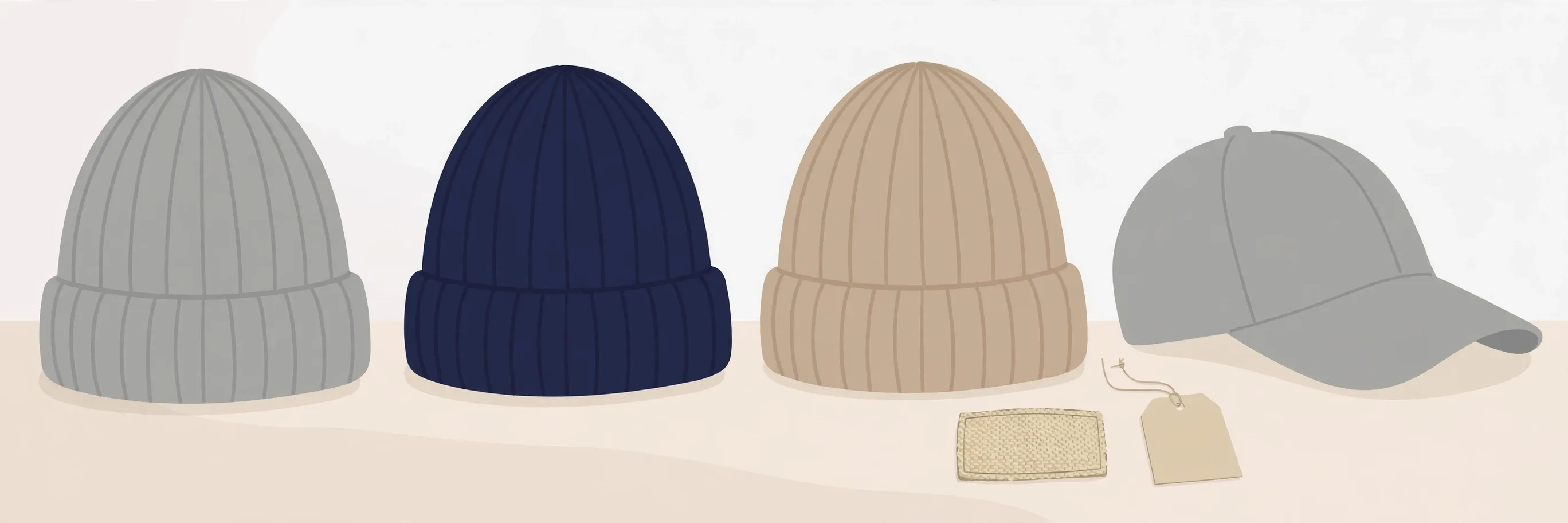
Silver fibre headwear is the usual starting point for a private-label hat order, because the fabric is already made into finished hats: knitted hats, sun hats, baseball caps, beanies, bucket hats and hoods are all in the catalogue, in silver fibre fabric listed at 50 to 80 decibels. A brand does not need to design a hat from nothing; it needs to choose the style that fits its customers, then decide how its name appears on it.
Choose the style by who will wear it. A knitted hat and a beanie suit a cold-weather or outdoor customer; a sun hat and a baseball cap suit a customer who wears a hat in daylight; a bucket hat suits a customer who wants coverage without a structured crown. Say who the wearer is and where the hat will be worn, because the style decides the logo space: a baseball cap has a front panel made for a logo, a beanie has a folded brim that carries one, and a bucket hat has a narrow band where a small mark fits better than a large one. The logo should follow the hat, not the other way round.
Ask for a sample of the exact style before deciding the logo. A stock sample usually ships in 1 to 5 days. A custom sample — a different colour, a different lining, or a logo applied the brand's way — usually takes 5 to 30 days depending on the process, and the exact time is confirmed once the specification is confirmed. Finished goods with stock can be ordered from 1 to 2 pieces; where there is no stock, the price and the lead time are confirmed again before the order is placed. Check the sample hat on a head, not only on a table: the logo sits differently on a worn hat from the way it sits on a flat one.
Logo: where it goes, and how it is applied
The logo decision has two parts: where it goes, and how it is put on. The place is decided by the hat style and by how visible the brand wants to be. The front of a cap, the folded brim of a beanie, the side of a bucket hat and the back of a knitted hat are the usual places, and each one suits a different size of mark: a front panel takes a larger mark, a brim fold takes a short word or a small symbol, and a side placement suits a mark the wearer notices more than the people around them. Say where the brand wants to be seen, and how large the mark should be, in the brief — and send the logo file with it, in the format the supplier asks for, so there is no guessing about the artwork.
How the logo is applied is a choice to make with the supplier, because the method has to suit silver fibre fabric. The common options are an embroidered mark, a woven or printed label sewn on, and a printed mark applied to the fabric. Embroidery suits a beanie and a knitted hat, where the texture hides the stitching; a sewn-on label suits almost any style and is easy to change between orders; a printed mark suits a flat panel such as the front of a cap. Each method behaves differently in the wash, so ask how the chosen method holds up to washing, and test it: wash the sample the way the end user will wash it, and check the logo after washing before approving bulk.
Keep the logo simple on shielding fabric. Fine lines and small text do not reproduce well on a knitted or textured surface, and a mark that is hard to read at arm's length is a mark that does not do its job. If the brand's usual logo is detailed, ask for a simplified version for the hat, and approve it on the sample hat, not only on paper.
Labelling: what the label must say
Every hat needs a label, and the label does more work than the logo. It tells the wearer what the hat is made of, how to wash it, and what size it is. For a shielding hat, the label should also say what the fabric is — silver fibre, for example — and it should not promise more than the fabric does. Do not put a shielding figure on a label unless that figure was measured on the finished hat, in the construction it will be sold in, and do not put a health claim on a label at all. A label that over-promises is a problem for the brand, not only for the supplier.
Agree the label contents in writing before production: the fibre content, the care instructions, the size, the country of origin as the buyer's market requires, and any brand information the buyer wants on the label. Ask for the care instructions to match the washing test the sample went through, so the label tells the wearer to wash the hat the way it was tested. And ask where the label sits — inside the crown, on the brim fold, or on a hangtag — because a label that scratches the wearer will be cut out, and a label that is cut out takes the brand information with it.
Hangtags deserve the same attention. A hangtag is the first thing a retail buyer sees, and it is the place for the information that does not fit on the sewn label: the brand story in a sentence or two, the shielding fabric description, and the care summary. Keep the hangtag short — a buyer in a shop reads it for a few seconds; the hat itself has to do the rest.
Packaging: from a single hat to a retail order
Packaging is decided by how the hat will be sold. A hat sold online needs packaging that survives shipping and looks right when the parcel is opened; a hat sold in a shop needs packaging that hangs or stacks well and shows the brand; a hat sold as part of a set needs packaging that holds the set together. Say how the hat will be sold before deciding the packaging, because the packaging follows the channel.
The usual options are a single polybag per hat, a branded paper band around the hat, a header card for hanging, and a gift box for a set or a premium line. A single polybag protects the hat in transit and is the simplest choice for an online order. A branded band or a header card adds the brand at the point of sale without the cost of a box. A gift box suits a set — a hat with a scarf or a neck gaiter, for example — and suits a buyer who wants the product to feel like a gift. Ask the supplier what packaging it offers and whether it is included in the sample, so the sample arrives the way the bulk order will.
Think about the hat's shape in the parcel. A beanie folds flat and packs easily; a structured cap and a sun hat hold their shape and need packing that keeps the shape rather than crushing it. Tell the supplier how the hats will be shipped, and ask how they will be packed in the carton, so the hats that arrive look the way they left.
Ordering a private-label hat: the brief, the sample and the first order
Order a private-label hat by brief and by sample. The brief should name the hat style, the colour, the logo and where it goes, the label contents and position, the packaging, the quantities, the documents needed, and the payment method and currency. Send the logo file with the brief, and say which parts are fixed and which are open to the supplier's suggestion: a supplier that knows the fabric will often have a better idea of where a logo sits well.
The sample is where the private-label decisions are proved. Check the sample hat the way a customer would: wear it, wash it, look at the logo after washing, read the label, open the packaging. Approve the sample in writing before bulk starts, and keep the approved sample as the reference for the bulk order.
Payment is by letter of credit, telegraphic transfer, PayPal or Western Union. Confirm the method and the currency before the order is placed. Zimo is a trading-and-manufacturing supplier. The details above describe how it quotes and samples; they do not describe factory capacity or production processes, which are not published. Test reports and supplier certificates are available on request.
Frequently asked questions
Which hat styles can be private-labelled?
Knitted hats, sun hats, baseball caps, beanies, bucket hats and hoods in silver fibre fabric are the usual starting point. Choose the style by who will wear it, and check the sample on a head.
Where should the logo go?
It depends on the hat. A cap front takes a larger mark, a beanie brim takes a short word or a small symbol, and a bucket hat band suits a small mark. Approve the logo on the sample hat, not only on paper.
What should the label say?
The fibre content, the care instructions, the size, and the origin information the buyer's market requires. Do not put a shielding figure or a health claim on the label unless it was measured on the finished hat.
What packaging works for hats sold online?
A single polybag per hat is the simplest choice, with a branded band or header card where the brand needs to show. A gift box suits a set or a premium line.
How long does a private-label sample take?
A stock sample usually ships in 1 to 5 days. A custom sample, including a logo applied the brand's way, usually takes 5 to 30 days, and the exact time is confirmed once the specification is confirmed.
Your next step
Write a one-page brief with the hat style and colour, the logo file and where it goes, the label contents and position, the packaging and how the hat will be sold, the quantities, the documents you need, and the payment method and currency. Send it and ask the supplier to confirm the hat, the logo method, the sample time and what is included in the sample price. When the sample arrives, wear it, wash it the way the end user will wash it, and check the logo, the label and the packaging before you approve bulk. If you are ready to start, contact us through the contact page or email info@zimo-cn.com with your brief, and we will reply with a hat proposal, a sample time and a quote.