How Silver Fibre Fabric Is Dyed and Finished: Colour, Hand Feel and Shielding After Washing
Colour changes more than the look of silver fibre fabric. This guide covers dyeing and finishing — what colour does to hand feel and shielding, and how to check the fabric after washing.
How Silver Fibre Fabric Is Dyed and Finished: Colour, Hand Feel and Shielding After Washing
Colour changes more than the look of silver fibre fabric. A buyer who orders a coloured shielding fabric expecting it to behave exactly like the undyed version will be surprised twice: once by the hand feel, and once by what washing does to it. Dyeing and finishing are not decoration on top of a shielding fabric — they are part of the fabric, and they change how it feels, how it looks, and how it should be checked. This guide covers how silver fibre fabric is dyed and finished, what colour does to hand feel and shielding, and how to check the fabric after washing, so the coloured fabric that arrives matches the sample that was approved.
What silver fibre fabric is, before colour
Silver fibre fabric is a textile with silver fibre in the yarn — in the catalogue, silver fibre is used for hats, garments, bedding nets and linings, and the fabric is listed at 50 to 80 decibels. In its undyed state it is usually a pale grey or off-white, soft to the touch, and flexible enough to be cut and sewn into a garment. That natural colour is the starting point for every dyeing decision, because the dye has to work with the silver in the yarn, not against it, and because the colour a buyer sees on a sample is the result of the dye, the fibre and the finishing together.
The first question to settle is what the colour is for. A brand that needs its own colour for a private-label garment has a different requirement from a buyer who wants a dark fabric so a lining does not show through, and both are different from a buyer who wants a light colour that looks like an ordinary textile. Say what the colour is for, and say where the fabric will be used — next to the skin, as a lining, or as the outside of a garment — because the dyeing and finishing choices follow from that. A fabric that will be worn next to the skin needs a finish the wearer can live with; a lining that will never be seen needs a finish that survives sewing and washing, and little else.
Dyeing: what changes, and what to ask
Dyeing silver fibre fabric is a question of compatibility. The dye has to take evenly on a yarn that contains silver, and the colour has to stay even across the width of the roll and from one roll to the next. Ask the supplier how the colour is achieved — whether the yarn is dyed before weaving or knitting, or the finished fabric is dyed — because the two methods behave differently: yarn-dyed fabric usually holds its colour more evenly through wear, while piece-dyed fabric gives more flexibility in colour choice but needs the colour to be checked across the whole roll.
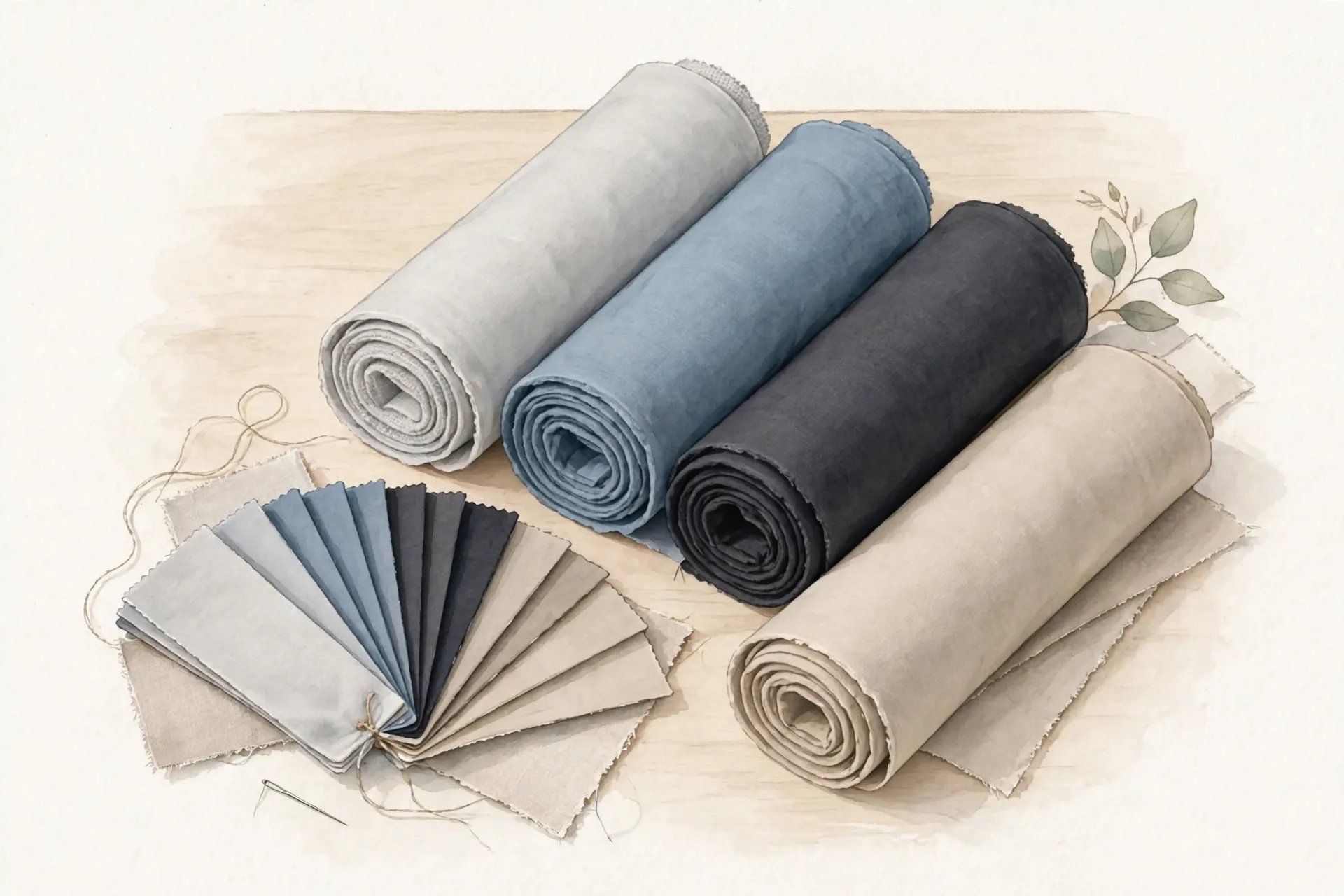
Ask for a dyed sample, not a colour swatch. A swatch shows the colour; a sample shows the colour on the fabric, at the weight and the construction that will be ordered. Check the sample in daylight and under the light the product will be seen in, because silver fibre fabric can look different under different light, and a colour approved under one light can disappoint under another. Check the colour across the sample, from edge to edge, and check more than one sample if the order will use more than one roll: colour can drift between rolls, and the drift should be found at the sample stage, not in bulk.
Dark colours deserve a second look. A deep colour on a silver fibre fabric can make the fabric feel stiffer, and it can show creasing and wear differently from a pale colour. If the product will be folded, packed or worn close to the body, ask how the chosen colour behaves when the fabric is creased and handled, and ask whether the colour rubs off on other surfaces. These are questions to ask with the sample in hand, not questions to discover when the bulk order arrives.
Finishing: hand feel, and what finishing does
Finishing is everything done to the fabric after it is made — softening, setting, coating or treating it so it behaves the way the product needs. For silver fibre fabric, finishing decides the hand feel: whether the fabric is soft and drapes like a garment textile, or stiff and holds a shape like a lining. A buyer ordering a garment fabric should ask for the finish that makes the fabric comfortable against the skin; a buyer ordering a lining should ask for the finish that makes the fabric easy to cut and sew without fraying.
Finishing also decides how the fabric behaves in the wash. Ask what finishing has been applied, and whether it is meant to survive washing or to be renewed. Ask how the fabric should be washed — the temperature, the detergent, whether it is machine-washed or hand-washed — and ask for those care instructions in writing, so they can be printed on the care label. Then test the sample through the wash the product will actually face, not through a gentler one. Wash the sample the way the buyer or the end user will wash it, dry it the way they will dry it, and check the fabric after washing before approving bulk.
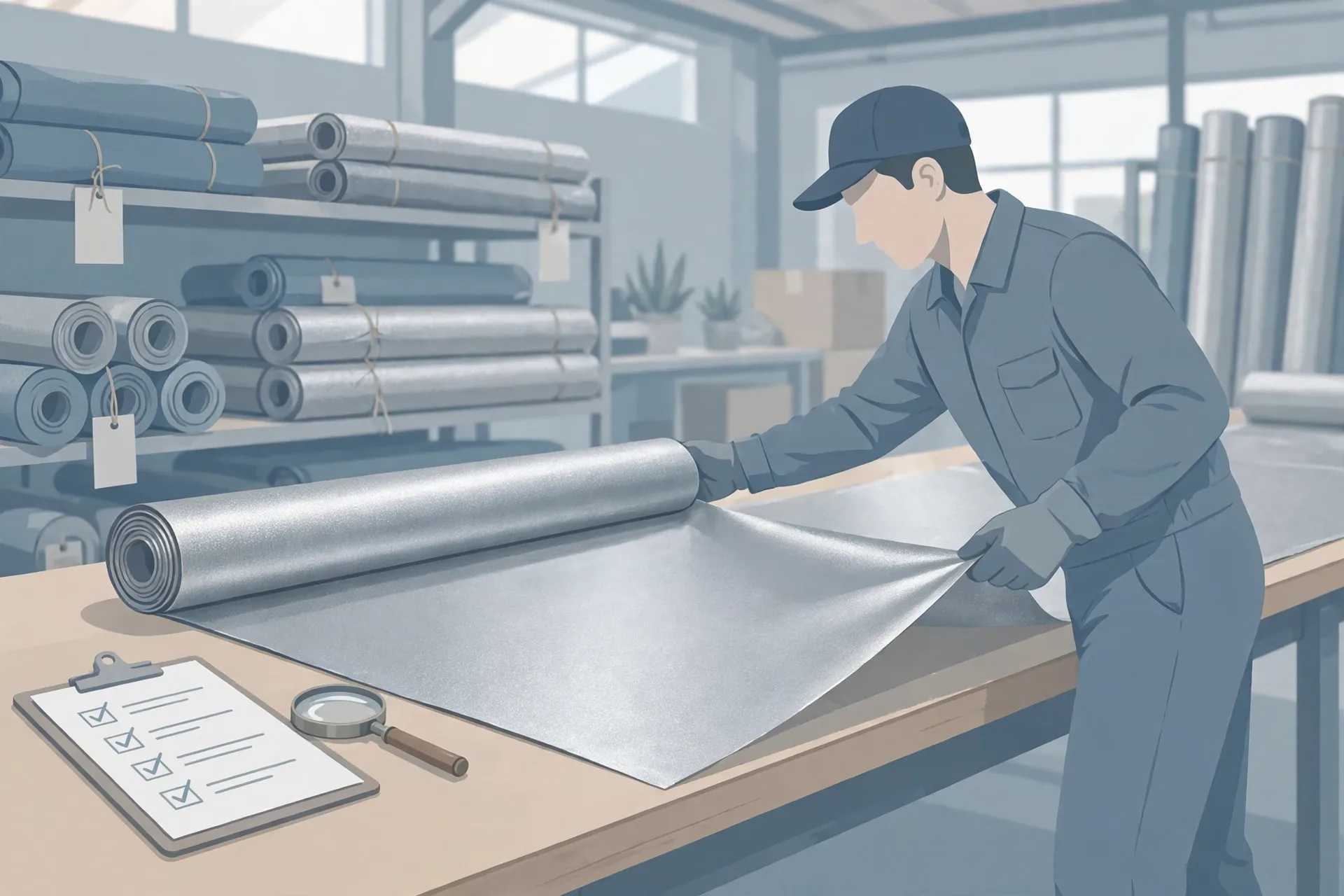
The check after washing should cover three things: the colour, the hand feel, and the shielding. Does the colour hold, or does it fade or change? Does the fabric still feel the way it felt before washing, or has it stiffened or softened? And does the fabric still shield the way it did before washing? The answer to the third question is the one that matters most, and it is the one that should be measured rather than assumed. Ask for the test report of the exact fabric, dyed and finished the way it will be ordered, with the test method named and the result in writing — and ask whether the test was run before washing, after washing, or both. Test reports and supplier certificates are available on request. Do not accept a fabric figure measured on an undyed, unfinished sample as the figure for a dyed, finished fabric: the figure that matters is the one measured on the fabric as it will be sold.
Ordering coloured fabric: samples, rolls and colour control
Order coloured fabric by sample, not by colour name. A colour name — navy, charcoal, beige — describes a range, not a fabric, and two suppliers' navy will not match. Give the supplier a physical reference: a swatch, a sample garment, or a colour standard the supplier can match against. Ask for a lab dip — a small dyed sample of the exact fabric — and approve the lab dip before bulk dyeing starts. The lab dip is the cheapest place to find a colour problem, and it is the last cheap place to fix one.
Agree the colour tolerance in writing. Colour is judged by eye, and two people will judge the same fabric differently, so the order should say how the colour will be checked — under what light, against what reference, and what counts as acceptable. Agree how many rolls will be dyed, and whether the colour will be checked roll by roll or on a sample from the batch. Agree what happens if a roll does not match: whether it is re-dyed, replaced, or accepted at a different price. Put the answers in the order, so there is something to point to if a delivery is questioned.
Fabric can be ordered from as little as 1 square metre, and the suggested starting quantity is 10 square metres or 10 metres, with a better price for a larger quantity. Silver fibre fabric is usually priced by the square metre, while copper-nickel fabric is usually priced by the metre. A stock sample usually ships in 1 to 5 days. A custom sample — including a dyed sample in a buyer's own colour — usually takes 5 to 30 days depending on the process, and the exact time is confirmed once the specification is confirmed. For coloured fabric, that means the first step is usually a lab dip, then a dyed sample in the full fabric, then bulk — and each step should be approved in writing before the next one starts.
Payment is by letter of credit, telegraphic transfer, PayPal or Western Union. Confirm the method and the currency before the order is placed. Zimo is a trading-and-manufacturing supplier. The details above describe how it quotes and samples; they do not describe factory capacity or production processes, which are not published.
Frequently asked questions
Does dyeing change the shielding of silver fibre fabric?
Dyeing and finishing change the fabric, so the shielding should be checked on the dyed, finished fabric — not assumed from the undyed sample. Ask for a test report on the exact fabric as it will be ordered.
How should I specify a colour?
By a physical reference, not a colour name. Give the supplier a swatch, a sample garment or a colour standard, approve a lab dip first, and agree the colour tolerance in writing.
Will the colour survive washing?
That depends on the dye and the finishing. Test the sample through the wash it will actually face, and check the colour, the hand feel and the shielding after washing.
What is the difference between yarn-dyed and piece-dyed fabric?
Yarn-dyed fabric is dyed before weaving or knitting and usually holds colour more evenly through wear. Piece-dyed fabric is dyed after the fabric is made and gives more flexibility in colour choice.
How long does a dyed sample take?
A stock sample usually ships in 1 to 5 days. A custom sample, including a dyed sample in a buyer's own colour, usually takes 5 to 30 days, and the exact time is confirmed once the specification is confirmed.
Your next step
Write a one-page brief with the fabric, the colour reference, the use — garment, lining or bedding — the quantities, the washing routine the fabric will face, the colour tolerance and the light it will be checked under, the documents you need, and the payment method and currency. Send it and ask the supplier to confirm the fabric, the lab dip time, the sample time, the test that will be run on the dyed sample before and after washing, and what is included in the sample price. When the sample arrives, check the colour in daylight, wash it the way it will be washed, and check the colour, the hand feel and the shielding after washing before you approve bulk. If you are ready to start, contact us through the contact page or email info@zimo-cn.com with your brief, and we will reply with a fabric proposal, a sample time and a quote.