Faraday Bags and Pouches for Retail and Logistics: Closure, Lining and Batch Testing
A Faraday bag fails at its opening, not its fabric. This guide covers closures, linings and batch testing for retail and logistics buyers — so the bulk order works like the sample.
Faraday Bags and Pouches for Retail and Logistics: Closure, Lining and Batch Testing
A Faraday bag fails at its opening, not in its fabric. Buyers who choose a bag by the shielding figure on a fabric data sheet, and then find the bulk order does not behave like the sample, have usually been let down by the closure, the seam, or the lining — the three places where a finished bag differs from a flat piece of cloth. This guide covers what retail and logistics buyers should specify for Faraday bags and pouches, how to check a batch rather than a single sample, and what to settle before the order is placed, so the bags that arrive work like the bag that was approved.
What a Faraday bag is, and who buys it
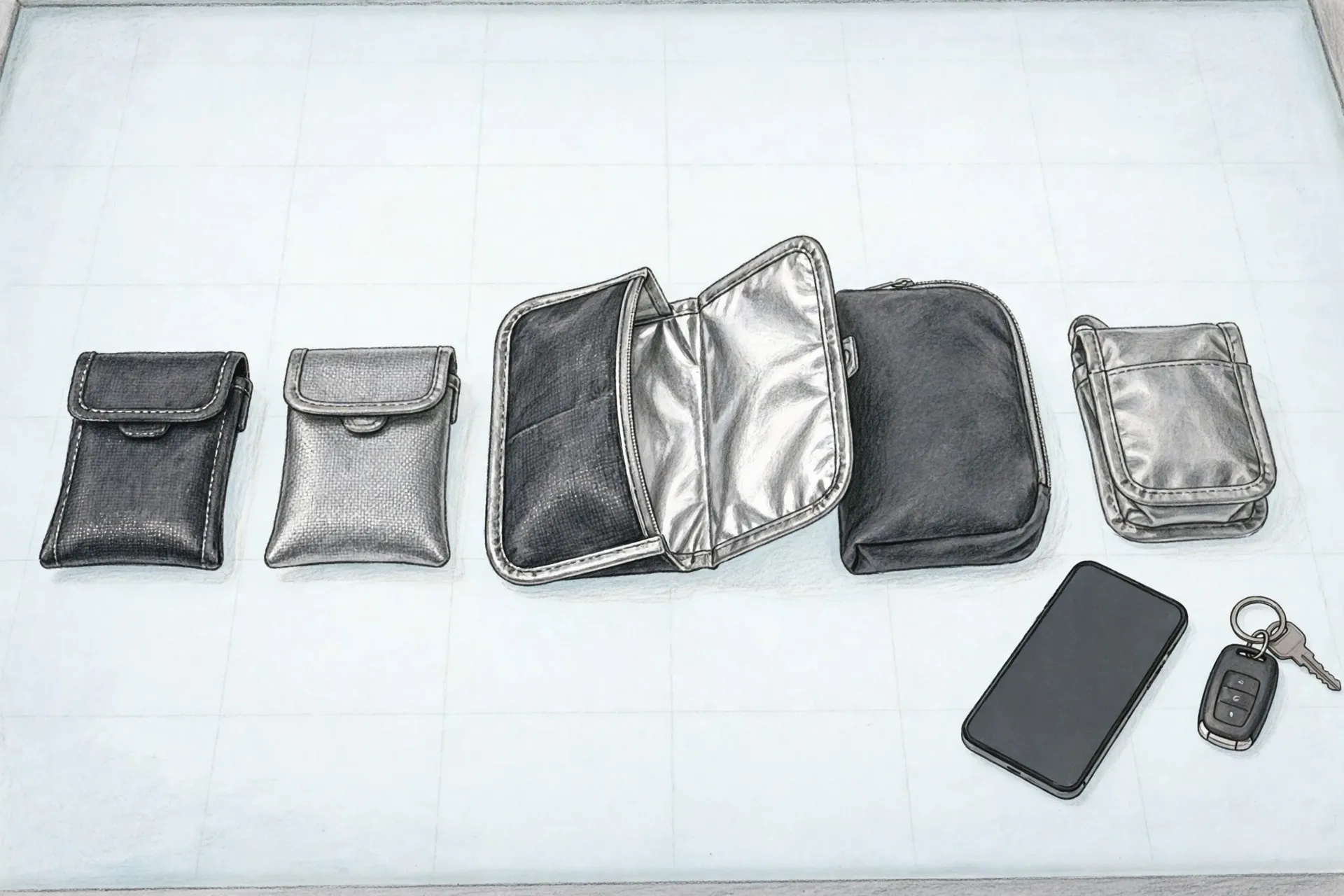
A Faraday bag is a pouch or a bag lined with shielding fabric, made to hold a phone, a laptop, a key fob, a card, or a document, so that signals do not reach the device inside — or leave it. Retail buyers sell them to consumers who want a phone pouch, a laptop sleeve, a car-key pouch or a travel wallet. Logistics buyers use them to move devices, keys, cards and documents that should not be read, tracked or woken while they are in transit or in storage. The product looks simple, and that is the trap: a pouch has only a few parts, so every part has to be right.
The buyers are different, and the order should say which one it is. A retail buyer needs a product that looks good on a shelf, carries a brand, survives being opened and closed many times a day, and comes with packaging and labelling a shop can use. A logistics buyer needs a product that survives handling, stacking and repeated use, in sizes that fit the devices being moved, with a closure that can be checked quickly by the person packing it. Say which buyer you are in the first message, and say what will go inside the bag, because the size, the closure and the lining all follow from that.
Closure: the part that decides whether the bag works
The closure is the most important part of a Faraday bag, because an opening is a gap, and a gap is where shielding leaks. A bag whose fabric is excellent and whose closure leaves a slot open at the top is a bag that does not work, however good the fabric figure looks on paper.
The common closures each have a trade-off. A fold-over flap with a hook-and-loop fastening is quick to close and easy to check — the wearer can see and feel whether it is shut — but it depends on the flap covering the opening fully, and on the fastening still holding after many uses. A zip closure is neat and familiar, and it suits retail products, but the zip itself is a join, and the bag needs the shielding fabric to continue past the zip, not stop at it. A magnetic or press-stud closure is tidy and quiet, and it suits a slim pouch, but it has to hold the opening shut along its whole length, not just at one point. A roll-top or double-fold closure is the most forgiving for logistics use, because the fold itself closes the opening, but it needs the user to fold it properly every time, and it needs a clear instruction printed on the bag or the packaging.
Whichever closure is chosen, agree three things before sampling: how the closure is made, how the shielding fabric runs through it, and how the user is meant to close it. Then test the finished bag closed the way a customer will close it, not the way a careful tester closes it in a laboratory. Put the device in, close the bag as a shopper or a warehouse worker would, and check it. If the result depends on a perfect fold that a hurried user will not make, the closure is wrong for the use, and the sample should be changed before bulk is ordered.
Lining: fabric, layers and seams
The lining is the shielding fabric inside the bag, and its job is to form a continuous enclosure around the device. Copper-nickel fabric, listed at 60 to 90 decibels, is the usual choice for bag linings, because it is flexible, easy to cut and sew into a small product, and carries a high shielding figure. Silver fibre fabric, listed at 50 to 80 decibels, is the softer choice, used where the lining touches the device or the hand often. Which one suits the bag depends on the size, the stiffness the product needs, and whether the lining is on show or hidden inside an outer shell.
The number of layers is a question to ask, not a number to assume. A single layer of the right fabric, properly sewn, is a different product from two layers badly joined, and no brochure figure describes a finished bag. Ask which fabric is used, how many layers there are, and how the layers are joined at the seams and at the base, where the bag folds. The base is the place buyers forget: a bag that is shielded on four sides and open at the folded bottom is not a closed bag. Ask how the base is made, and check it on the sample.
Seams are the second place a bag fails. A seam that is sewn through the shielding fabric can open a line of small holes along the stitching; a seam that is bonded or taped over behaves differently, and the right method depends on the fabric and the use. Ask how the seams are made, ask whether the finished bag is checked as a whole rather than as a flat piece of fabric, and ask for the test report of the exact fabric and the exact construction, with the test method named and the result in writing. Test reports and supplier certificates are available on request. Do not accept a fabric figure as a bag figure: the figure that matters is the one measured on the finished bag, closed the way it will be used.
Batch testing: why the sample is not the order
A sample that works proves that one bag works. It proves nothing about the thousand bags that follow it, because a bulk order can drift: a different roll of fabric, a tired needle, a closure batch that fastens less firmly, a lining cut a few millimetres short. Batch testing is how a buyer finds that drift before the bags reach a shop or a warehouse, and it should be agreed before the order is placed, not argued about after delivery.
Agree the test first. Name the device that will go inside the bag, name the check that will be run on the finished bag, closed the way it will be used, and name what counts as a pass. Agree how many bags from each batch will be tested, and who tests them — the supplier, the buyer, or a third party — and agree that a failed bag stops the batch rather than being quietly set aside. Put the test, the pass mark and the number of bags tested in writing, in the order, so there is something to point to if a batch fails.
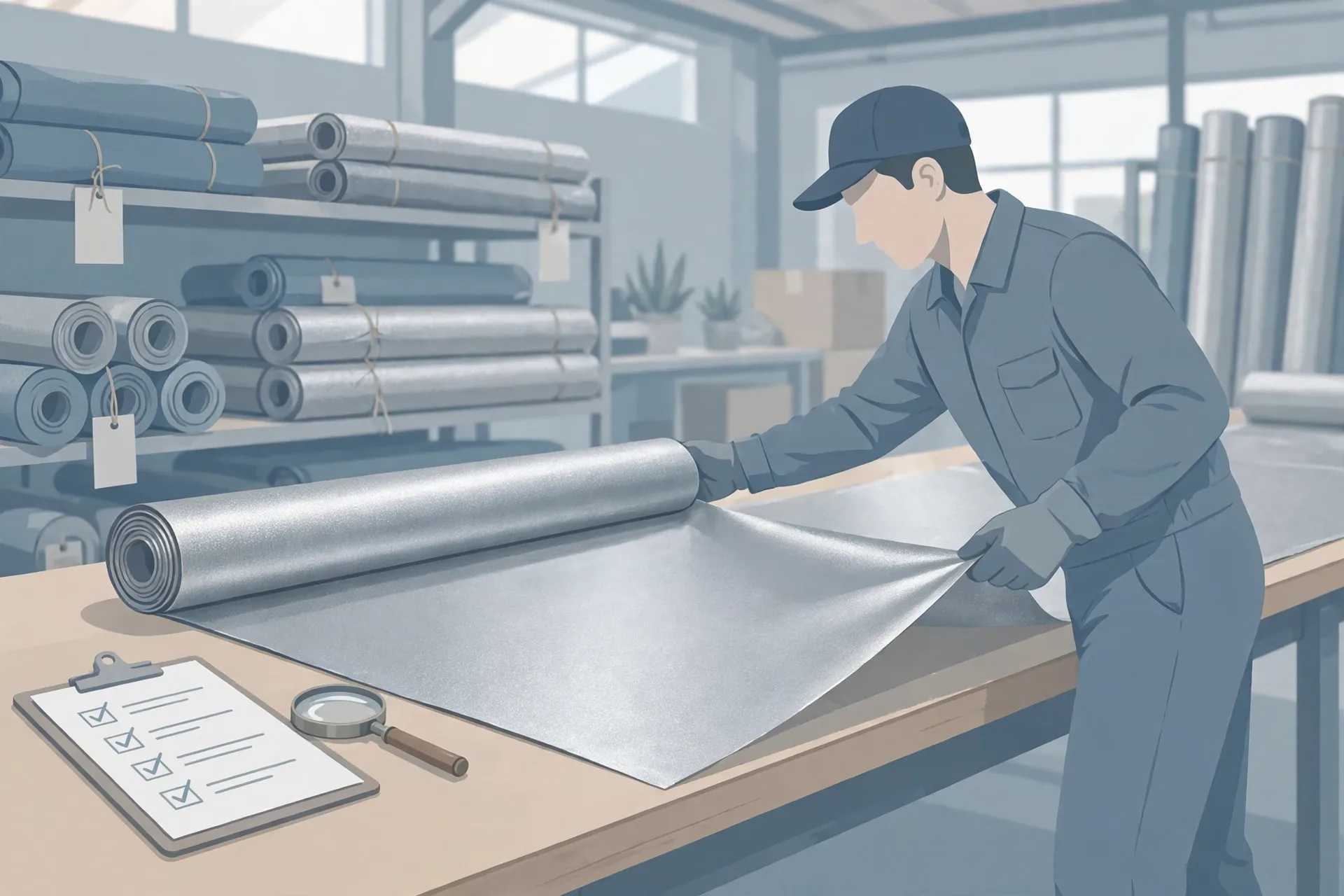
Then test the batch the way it will be used. Take bags from different cartons, not from the top of one carton. Close each one the way a customer will close it. Check the closure, the seams and the base on every tested bag, not only the shielding check, because a bag that passes the signal test with a closure that is already coming apart will not pass it for long. Keep the result with the batch: the date, the number of bags tested, the result, and which cartons they came from. That record is what lets a buyer reorder with confidence, and it is what lets a supplier fix a problem in one batch instead of repeating it in the next.
For retail orders, the batch check should also cover the things a shop will notice first: the print, the logo, the stitching, the packaging and the labelling. A bag that shields perfectly and arrives with a crooked logo is still a failed delivery for a retailer. For logistics orders, the check should cover the things a warehouse will notice first: whether the sizes fit the devices, whether the closures survive repeated use, and whether the bags stack and store without damage.
Sizes, branding and ordering
Sizes should be decided by the devices, not by the catalogue. Give the supplier the dimensions of the largest device each bag must hold, and the thickness, because a laptop sleeve that fits a thin laptop will not fit a thick one, and a key pouch that fits one fob may not fit two. Ask for a sample in each size, and put the real device inside it before approving. A bag that is too tight strains the closure; a bag that is too loose leaves the device moving inside it, and movement wears the lining.
Branding is part of the product for retail buyers. Agree the logo placement and the method — printed, woven, embossed or heat-applied — and ask for a sample of the finished logo on the finished bag, because a logo that looks right on paper can sit badly on a small pouch. Agree the packaging: individually bagged or boxed, with a care and use card that tells the customer how to close the bag properly. A use card that explains the fold is not decoration; it is the difference between a bag that works in a customer's hands and one that does not.
Fabric can be ordered from as little as 1 square metre, and the suggested starting quantity is 10 square metres or 10 metres, with a better price for a larger quantity. Silver fibre fabric is usually priced by the square metre, while copper-nickel fabric is usually priced by the metre. Finished products in stock can be ordered from 1 to 2 pieces, while an out-of-stock or custom item needs a new quotation and lead time. For a Faraday bag, that means the first order is usually a sample run, then a small trial, then bulk — and the sample approval should be in writing, with the approved fabric, the approved closure, the approved lining and the approved batch test all named.
Payment is by letter of credit, telegraphic transfer, PayPal or Western Union. Confirm the method and the currency before the order is placed. Yiwu Zimo Trading Company is a trading-and-manufacturing supplier. The details above describe how it quotes and samples; they do not describe factory capacity or production processes, which are not published.
Frequently asked questions
What matters most in a Faraday bag?
The closure, the lining and the seams. A bag fails at its opening, at a join, or at the base — not in the middle of a flat piece of fabric.
Which fabric is used for the lining?
Copper-nickel fabric, listed at 60 to 90 decibels, is the usual choice for bag linings. Silver fibre fabric, listed at 50 to 80 decibels, is the softer choice where the lining is handled often.
Why test the batch and not only the sample?
A sample proves one bag works. A bulk order can drift — a different roll, a tired needle, a weaker closure — so bags from each batch should be tested, closed the way they will be used.
How should the bag be closed?
The way the customer will close it. Test the finished bag closed as a shopper or a warehouse worker would close it, and put the closing instruction on the bag or the packaging.
How long does a sample take?
A stock sample usually ships in 1 to 5 days. A custom sample usually takes 5 to 30 days depending on the process, and the exact time is confirmed once the specification is confirmed.
Your next step
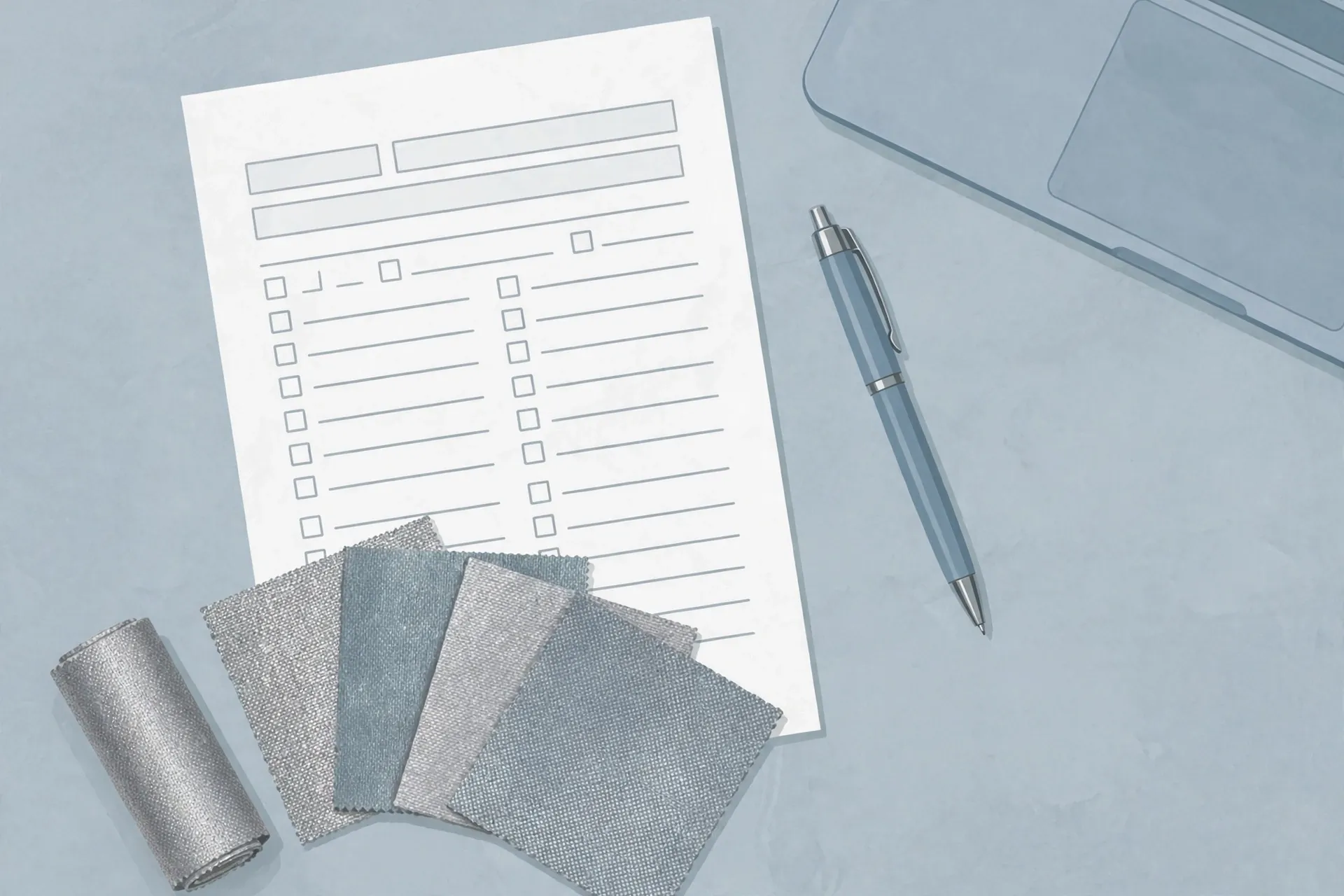
Write a one-page brief with the devices each bag must hold and their dimensions, the closure type, the lining fabric and the number of layers, the sizes and the quantities, the logo and the packaging, the batch test you want run and what counts as a pass, the documents you need, and the payment method and currency. Send it and ask the supplier to confirm the fabric, the closure, the sample time, the test that will be run on the sample, and what is included in the sample price. When the sample arrives, put the real device inside, close it the way a customer would, and test the finished bag before you approve bulk. If you are ready to start, contact us through the contact page or email info@zimo-cn.com with your brief, and we will reply with a fabric proposal, a sample time and a quote.