Guides & Education
EMF Shielding Fabric for the US Market: What B2B Buyers Check Before Placing a First Order
US buyers check five things before a first EMF shielding fabric order: shielding evidence, fabric choice, MOQ, samples and labelling. This checklist walks through each one.
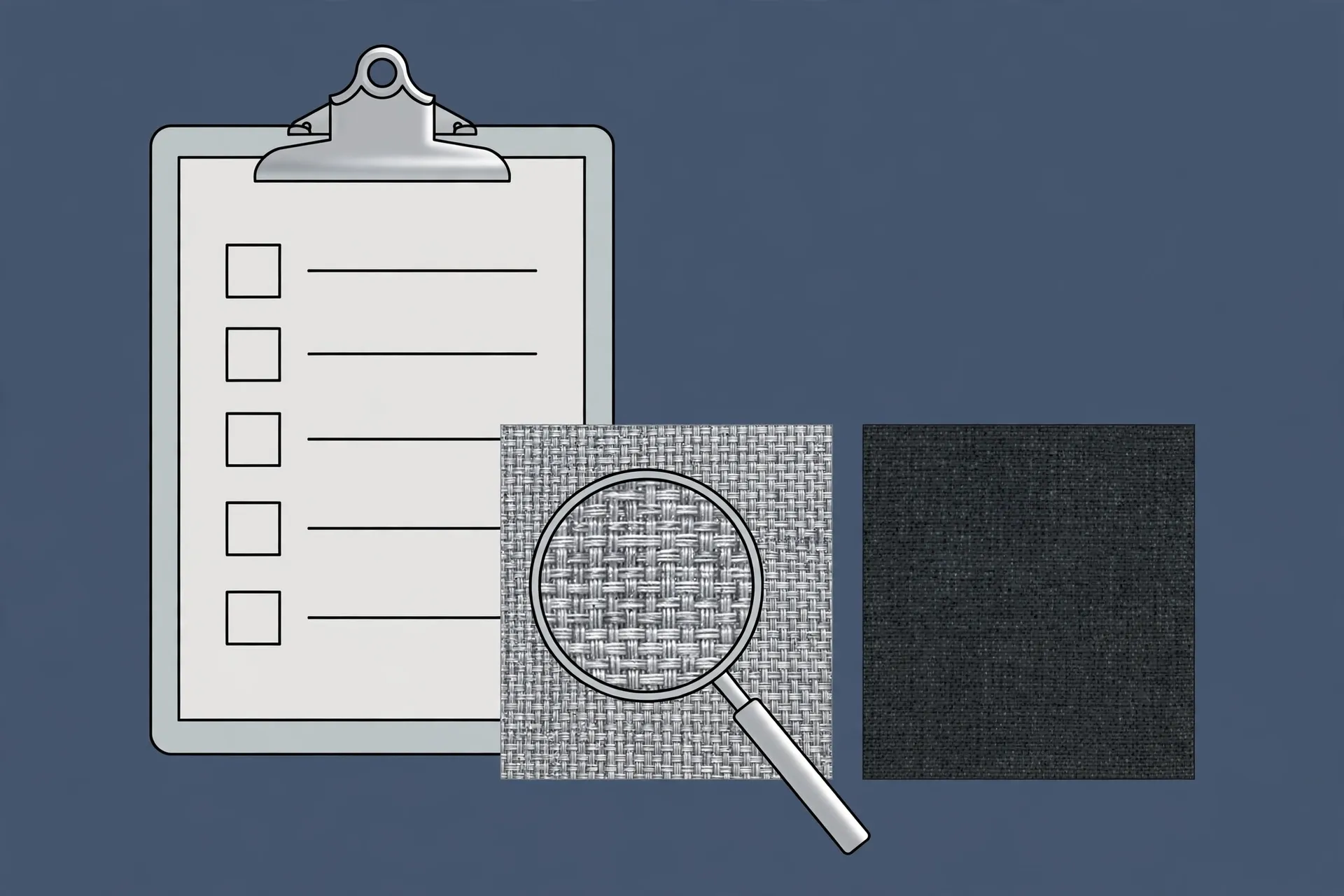
A first order of EMF shielding fabric for the US market is usually decided by a checklist, not by a price. The buyer checks the shielding evidence, the fabric choice, the minimum order, the sample and the labelling, and only then asks for the quote. A supplier who answers all five in the first exchange gets the order moving. A supplier who answers two of them gets a second round of questions, and the buyer moves on to the next supplier while waiting. This guide is for a US wholesale buyer, distributor or brand manager who is placing a first order of EMF shielding fabric or finished shielding goods. It is not for a shopper buying one item for personal use.
The quote that did not answer the question
You send three suppliers the same message: a fabric name and a quantity, and you ask for a price. The first replies with a price and nothing else. The second replies with a price and a shielding number, but no test method. The third asks which fabric you need and what you are making with it. The third supplier is the one who can actually help you, because a shielding fabric cannot be quoted from a name and a quantity alone. The number that matters is not the price per metre. It is the shielding level the finished product reaches, the evidence behind that number, and whether the fabric survives being cut, sewn and washed into the product you sell. A buyer who checks those things before ordering pays once. A buyer who checks them after ordering pays for a sample, then pays again for the correction.
Check one: the shielding number and the evidence behind it
Start with the number, then ask for the proof. Copper-nickel fabric is listed at 60 to 90 decibels, and silver fibre fabric at 50 to 80 decibels in the product guides on this site. Those ranges are a starting point for discussion, not a promise for your finished product, because the shielding a garment, a curtain or a pouch reaches depends on the pattern, the seams and the lining as well as the roll of fabric. Ask which test method sits behind the number, and ask for the test result in writing, with the test method named. Test reports and supplier certificates are available on request, so name the document you need in your first message.
Then ask what happens after washing. A silver fibre garment that shields well when it is new can lose performance if it is washed the wrong way, so agree before sampling how the sample will be washed, how many times, and what will be tested afterwards. Keep the tested sample as your reference for the bulk order, and do not approve bulk production from a photograph. If a supplier cannot name a test, that is useful information, and you should find out before you pay for bulk, not after.
Check two: the right fabric for the end use
Copper-nickel fabric and silver fibre fabric are not interchangeable, and the wrong choice shows up after the first wash or the first fitting. Copper-nickel fabric suits shielding bags, pouches, curtains, linings and industrial uses where durability and a firm hand feel matter. Silver fibre fabric suits apparel, bedding, maternity products and wearables, where softness, breathability and washability matter more. Tell the supplier what you are making, and ask it to propose a fabric for that end use if you are not sure. Give the width and weight you expect, and ask whether the fabric is sold by the square metre or by the metre: silver fibre fabric is usually priced by the square metre, while copper-nickel fabric is usually priced by the metre, and the difference changes how you compare two quotes.
Check three: the minimum order and the sample
Minimum order quantity depends on the product. Fabric can be ordered from as little as 1 square metre, while 10 square metres or 10 metres is the suggested starting quantity, with a better price for a larger quantity. Finished products in stock can be ordered from 1 to 2 pieces, while an out-of-stock item needs a new quotation and lead time. For a first order, that low starting point is the point: you can test the fabric and the supplier with a small quantity before you commit to a larger one.
Samples follow the same logic. A stock sample usually ships in 1 to 5 days, while a custom sample usually takes 5 to 30 days depending on the process, and the exact time is confirmed once the specification is confirmed. Order the sample before you promise your customer a delivery date. When it arrives, check the fit, the seams and the labelling first, then run the agreed shielding and wash check, and keep the result with the sample. If the sample passes, approve it in writing and name the same fabric, pattern and test for bulk.
Check four: labelling, packaging and private label
A US buyer needs a label that matches the US market: the product name, the composition, the care instructions and the importer details, in the wording the buyer's market expects. If the goods carry the buyer's own brand, the label decision has to be made before the sample is cut. Colour, logo, packaging, size and hang tag can be customised, and a private label changes the care instructions and the time needed to approve them. Ask the supplier to confirm the care wording for your fabric in writing, because the care instructions for silver fibre fabric and copper-nickel fabric are different, and a customer who washes the product the wrong way may damage the shielding. Check the packaging too: ask how the fabric is rolled, how the cartons are packed, and whether the packaging survives the freight leg to your warehouse.
Check five: payment, documents and the supplier itself
Payment is by letter of credit, telegraphic transfer, PayPal or Western Union. Confirm the method and the currency before the order is placed, not after the quote arrives, and ask what is included in the quoted price: the fabric, the sample cost, the documents and the packaging should each be named. Ask which documents will travel with the shipment, and confirm that the description on the invoice matches the product you ordered. If your market or your customer needs a specific document, name it in the brief and ask what the supplier can provide with the sample.
Finally, check the supplier the same way you check the fabric. Yiwu Zimo Trading Company is a trading-and-manufacturing supplier, and the details above describe how it quotes and samples. They do not describe factory capacity or production processes, which are not published, and they do not promise a shielding level for a product that has not been tested. A supplier that answers the five checks in writing, with a named test and a named sample time, is a supplier you can work with. A supplier that answers with a price and nothing else is a supplier you will have to chase for the rest of the order.
Frequently asked questions
What shielding level should I ask for? Start from the ranges in the product guides: copper-nickel fabric at 60 to 90 decibels, silver fibre fabric at 50 to 80 decibels. Then agree on a test method and a target for your finished product, and ask for the test result in writing.
How much fabric can I order for a first test? Fabric can be ordered from as little as 1 square metre. The suggested starting quantity is 10 square metres or 10 metres, with a better price for a larger quantity. Finished products in stock can be ordered from 1 to 2 pieces.
How long does a sample take? A stock sample usually ships in 1 to 5 days. A custom sample usually takes 5 to 30 days depending on the process, and the exact time is confirmed once the specification is confirmed.
Can I get the fabric or finished goods under my own brand? Colour, logo, packaging, size and hang tag can be customised. Decide the label before the sample is cut, because a private label changes the care instructions and the approval time.
What payment methods are accepted? Letter of credit, telegraphic transfer, PayPal and Western Union. Confirm the method and the currency before you place the order.
Your next step
Write the five checks into a one-page brief: the shielding target and the test you want, the end use and the fabric, the quantity, the labelling and packaging, and the payment method. Send it with your delivery city and your target price, and ask the supplier to confirm the fabric, the sample time, the test and what is included in the sample price in reply. When the sample arrives, run the agreed shielding and wash check before you approve bulk. If you are ready to start, contact us through the contact page or email info@zimo-cn.com with your brief, and we will reply with a fabric proposal, a sample time and a quote.