OEM EMF Shielding Apparel: From Tech Pack to First Sample
A practical guide for brands moving from a tech pack to a first OEM sample of EMF shielding apparel, with what to prepare, what to check, and how to avoid a second sample round.
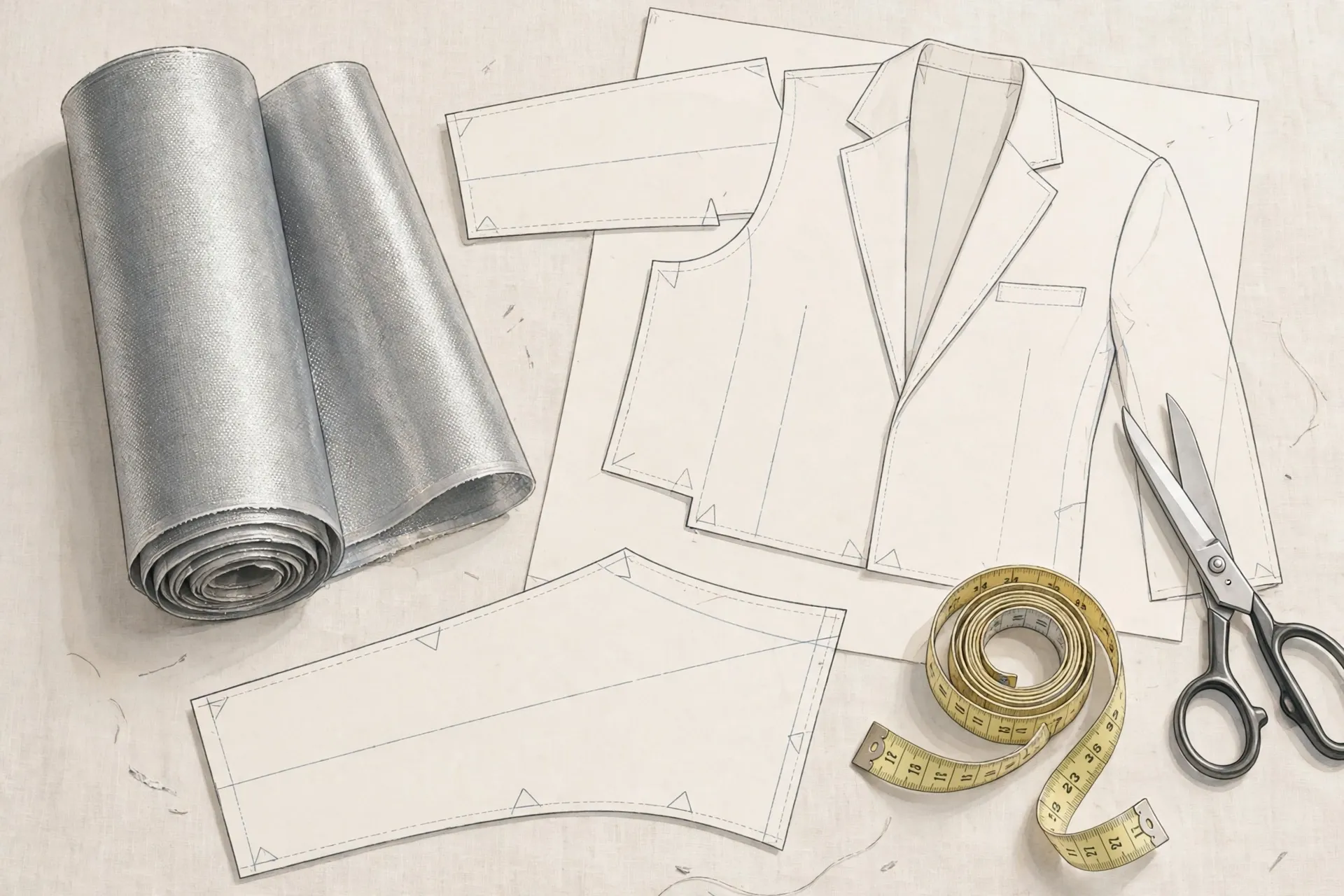
Send your supplier a complete tech pack, a fabric choice with a shielding target, and a size and labelling plan, and you will usually get a usable first sample in one round. The sample still needs a shielding check and a wash check before you approve bulk production. This guide is for a brand owner or product manager who is ordering EMF shielding apparel for the first time through OEM. It is not for a shopper buying one hat or one shirt for personal use.
When the first sample comes back wrong
You send a brand a drawing of a shielding hoodie, a fabric name you saw on a website, and a note that says make it look like the photo. Two weeks later a parcel arrives. The hood is the wrong depth, the zip is in the wrong place, the silver fibre fabric feels different from the swatch you approved, and nobody can tell you what shielding level the garment actually reaches, because no one agreed on a test before the sample was cut. You now have two choices, and both cost time. You can accept a garment your customers will return, or you can pay for a second sample and explain the delay to your own buyer. Most first OEM orders do not fail because the factory cannot sew. They fail because the brief left the decisions that matter most until after the fabric was cut. A tech pack does not need to be long. It needs to answer the questions a factory will ask in the first hour, before anyone touches a roll of fabric.
Why a short brief creates a long sample round
A shielding garment is not a normal garment with a special fabric swapped in. The fabric choice changes the pattern, the sewing, the care label and the test. Silver fibre fabric and copper-nickel fabric behave differently when they are cut, stretched and washed, and a design that works in cotton can pull, fray or lose conductivity in a shielding textile if the pattern does not allow for it. That is the first gap in most first briefs. The buyer knows the product they want to sell, but the brief does not say which fabric, which shielding target, or which garment the fabric has to survive in. The second gap is evidence. A shielding claim without a test method is a sentence, not a specification. If you do not agree before sampling what will be tested, on which part of the garment, and after how many washes, you will argue about the result after the money is spent. The third gap is labelling and packaging. A brand that sells in Europe, North America or Latin America needs a care label, a size chart and a hang tag that match the market it sells in, and those items take time to approve. If they are left until the sample is already sewn, the sample round becomes a labelling round as well. None of these gaps is a sign that a supplier is difficult. They are a sign that the brief arrived before the decisions were made. The cost shows up as a second sample, a missed season, or a bulk order that cannot be repeated because the first order was never properly specified.
What to send before anyone cuts fabric
Start with the garment, not the fabric. Write down the exact style, the sizes you need, and the market it will be sold in. A beanie, a hoodie, a work uniform and a maternity garment do not share a pattern, a size range or a care instruction, and a supplier cannot quote or sample them from a single photo. Then name the fabric and the shielding target together. Say whether you want silver fibre fabric or copper-nickel fabric, what weight and width you expect, and what shielding level you need the finished garment to reach. If you do not know the shielding level yet, say so in the brief and ask the supplier to propose a fabric and a test for the sample, rather than leaving the fabric choice open. The site lists silver fibre fabric at 50 to 80 decibels in its product guides and copper-nickel fabric at 60 to 90 decibels, so use those ranges as a starting point for discussion, not as a promise for your garment, because the finished garment depends on the pattern, the seams and the lining as well as the roll of fabric. Next, list what can be customised and what cannot change. Colour, logo, packaging, size and hang tag are customisable on the OEM page for this supplier, and you should say which of those you need on the first sample and which can wait for bulk. If your brand needs a private label, say so now, because a label changes the care instructions and the time needed to approve them. Then give the commercial terms in the same document. Minimum order quantity depends on the product. Fabric is usually ordered from 10 square metres or 10 metres, with a better price for a larger quantity, and silver fibre fabric is usually priced by the square metre while copper-nickel fabric is usually priced by the metre. A stock sample usually ships in 1 to 5 days, while a custom sample usually takes 5 to 30 days depending on the process, and the exact time is confirmed once the customer confirms the specification. Finished products in stock can be ordered from 1 to 2 pieces, while an out-of-stock item needs a new quotation and lead time. Payment is by letter of credit, telegraphic transfer, PayPal or Western Union. Confirm those terms in your brief, and add your target price and your quantity, because a supplier cannot tell you whether your design is feasible at your price without them. A buyer who is ordering fabric by the roll needs a different brief from a buyer who is ordering finished garments, so say which one you are. If you are ordering fabric, give the width, weight and quantity in metres. If you are ordering garments, give the sizes, the quantity per size and the packaging. One page that answers those questions is enough to start. A ten page brief that leaves them out is not.
What can still go wrong, and how to limit it
A first sample can still fail, and you should plan for that instead of assuming it will pass. The most common failure is a wash failure. A silver fibre garment that shields well when it is new can lose performance if it is washed the wrong way, so agree before sampling how the sample will be washed, how many times, and what will be tested afterwards. Ask for the test result in writing, with the test method named, and keep the tested sample as your reference. Do not approve bulk production from a photograph. The second common failure is a fit failure across sizes. A sample in one size does not prove that the largest and smallest sizes will fit, so ask which sizes will be sampled and which will be graded from the sample. The third failure is a colour or hand-feel failure after dyeing or finishing. Silver fibre fabric changes colour and feel when it is dyed, so approve a dyed swatch before you approve a dyed garment. None of these checks needs a laboratory you own. They need a written agreement before sampling about what will be tested, who will test it, and what result counts as a pass. If a supplier cannot name a test, that is useful information, and you should find out before you pay for bulk, not after. If your market needs a specific certificate or label, name it in the brief and ask what documentation the supplier can provide with the sample. Do not assume a certificate that applies to a roll of fabric automatically applies to a finished garment in your market. The boundary here is simple. This guide helps you prepare a brief and check a first sample. It does not replace a test report for your garment, a legal review of a claim you plan to print on a label, or a commercial decision about whether the price works for your business.
Your next step
Put the brief on one page and send it with three attachments: your tech pack or a clear drawing with measurements, a swatch or a fabric name with a shielding target, and a size and labelling plan for your market. Ask the supplier to confirm in reply the fabric, the sample time, the test that will be run on the sample, and what is included in the sample price. When the sample arrives, check the fit, the seams and the labelling first, then run the agreed shielding and wash check, and keep the result with the sample. If the sample passes, approve it in writing and name the same fabric, pattern and test for bulk. If it fails, name the one change that matters most and ask for a revised sample on that change alone, instead of redesigning the whole garment. That is how a first sample becomes a repeatable order, rather than a single parcel you cannot reproduce.