Guides & Education
Conductive Fabric for Data Centres and Server Rooms: Shielding, Grounding and Installation Notes
Shielding a server room is a materials question and an installation question. This guide covers where conductive fabric is used, how seams and grounding affect performance, and what to confirm before
Conductive Fabric for Data Centres and Server Rooms: Shielding, Grounding and Installation Notes
A data centre buyer who orders conductive fabric by the roll and a data centre buyer who orders a finished shielding solution are buying two different things, even when the fabric is the same. The roll is a material. The shielding is what happens after the material is cut, joined, sealed and grounded in a real room, and the seams and the grounding decide most of the result. This guide is for a facilities manager, a data centre buyer or an installer who is sourcing conductive fabric for a server room for the first time. It covers the material choice, the installation questions to settle before ordering, and the checks to run on a sample. It is not an electrical installation guide: grounding and electrical work should be carried out by qualified personnel to the regulations that apply in your market.
Where conductive fabric is used in a server room
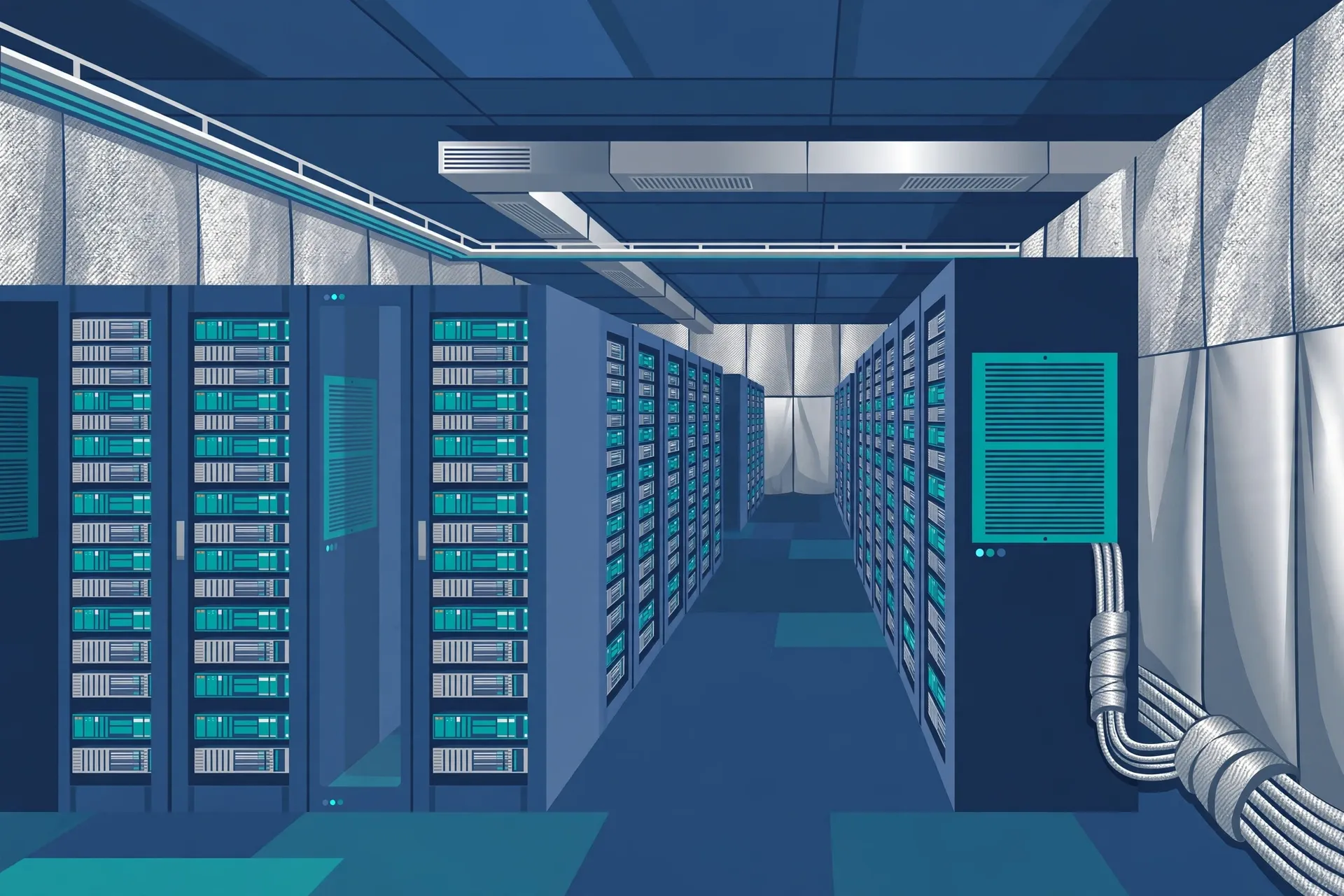
Conductive fabric is used in a server room in four places, and each one asks something different of the material. The first is room lining: fabric fixed to walls, ceilings or partitions inside a shielded room or an equipment room, usually behind a finish layer. Here the questions are about width, weight, flexibility and whether the fabric can be cut and joined without leaving gaps. The second is curtains and flexible partitions: shielding curtains that divide a space or cover an opening, where the fabric has to hang, fold and move without tearing. Here the questions are about durability, edge finishing and how the curtain closes. The third is cable and component shielding: wraps around cable bundles, covers for sensitive components, and linings inside cabinets and enclosures. Here the fabric is cut to shape and bonded or sewn, and the questions are about thickness, flexibility and whether it holds its shielding at a fold or a bend. The fourth is gaskets and seals: conductive foam and fabric used around doors, panels and enclosure openings, where the seal is the shielding. Here the material has to compress, recover and keep contact, and the questions are about compression, recovery and long-term contact.
A buyer who names the use in the first message saves a round of questions. A wall lining and a door gasket are not the same order, even if they use related materials, because one is measured in square metres and the other in cut lengths, one is fixed and the other moves, and the documents each one needs are different.
Choosing the material
Copper-nickel fabric is listed at 60 to 90 decibels in the product guides on this site, and it is the usual choice for linings, curtains and wraps, because it is flexible, light and easy to cut and sew. Conductive foam, used for gaskets and seals around doors, panels and enclosure openings, is listed above 75 decibels. Silver fibre fabric is listed at 50 to 80 decibels, and it is the usual choice where a softer hand feel or a textile finish matters, for example in curtains and covers that people touch. Those ranges are a starting point for discussion, not a promise for your finished room, because the shielding a room reaches depends on the joints, the seals and the grounding as well as the roll of fabric. Name the shielding target and the test you want in the same message, and ask for the test result in writing, with the test method named. Test reports and supplier certificates are available on request.
When you choose, think about what the material has to survive after it is installed. A wall lining sits still, so weight and width matter more than flexibility. A curtain moves every day, so durability and edge finishing matter more than weight. A cable wrap is folded and bent, so flexibility matters more than anything else. A gasket is compressed and released, so recovery matters more than the number on the roll. Tell the supplier how the material will be fixed, joined and used, and ask which fabric and which weight they would propose for that use, rather than choosing from a name alone.
Seams, closures and grounding: where shielding is won or lost
A shielded room fails at the gaps, not in the middle of the fabric. Every joint between two pieces of fabric, every edge around a door or a panel, and every opening for a cable or a vent is a place where shielding can leak, and the installation has to close each one. Before you order, settle how the joints will be made: whether pieces overlap, how wide the overlap is, and how the overlap is fixed, because a joint that is only taped is not the same as a joint that is bonded or sewn with conductive thread, and the supplier needs to know which one you plan so the fabric and the quantity can be quoted correctly. Ask the same question about closures: how a curtain closes, how a cover fastens, and whether the closure keeps contact along its full length when it is shut. A zip, a hook-and-loop strip or a magnetic edge each behaves differently, and the choice changes the material and the sample you should ask for.
Grounding is the other half of the installation, and it is the half the fabric supplier cannot decide for you. A conductive fabric that is not connected to a grounding point the way your installation requires is a sheet of conductive material, not a shield. Tell the supplier how the fabric will be grounded in your room, or ask what connection method the fabric supports, and confirm the answer with the qualified person who will carry out the installation in your market, to the regulations that apply there. Do not assume a fabric that worked in one room will work in another room with a different grounding arrangement, and do not approve a bulk order from a photograph of a roll. The sample should be tested the way the room will be used: joined, sealed and grounded as it will be on site, not laid flat on a table.
Samples, quantities and what to check
Fabric can be ordered from as little as 1 square metre. The suggested starting quantity is 10 square metres or 10 metres, with a better price for a larger quantity, and silver fibre fabric is usually priced by the square metre while copper-nickel fabric is usually priced by the metre. Finished products in stock can be ordered from 1 to 2 pieces, while an out-of-stock item needs a new quotation and lead time. Say whether you are ordering fabric by the roll or finished goods, and give the width, because a quote in square metres and a quote in metres are not the same quote.
A stock sample usually ships in 1 to 5 days, while a custom sample usually takes 5 to 30 days depending on the process, and the exact time is confirmed once the specification is confirmed. Order the sample before you promise your customer a delivery date. When it arrives, check the fabric, the edges and the joins first, then run the agreed shielding check on a joined and sealed sample, not on a single flat piece, and keep the result with the sample. Ask for the documents you need with the sample, not with the bulk order, so a missing document is found while the order is still small. Decide the labelling before the sample is cut if the goods carry your own brand, in the language and wording your market expects.
Payment is by letter of credit, telegraphic transfer, PayPal or Western Union. Confirm the method and the currency before the order is placed. Yiwu Zimo Trading Company is a trading-and-manufacturing supplier. The details above describe how it quotes and samples. They do not describe factory capacity or production processes, which are not published, and they do not promise a shielding level for a room or a product that has not been tested.
Frequently asked questions
Which fabric should we use for a server room lining?
Copper-nickel fabric, listed at 60 to 90 decibels, is the usual choice for linings, curtains and wraps. Conductive foam, listed above 75 decibels, is used for gaskets and seals. Name your use, your shielding target and your test method, and ask the supplier to propose a fabric and a weight for it.
Why do seams and grounding matter so much?
A shielded room fails at the gaps. Joints, edges, door seals and cable openings are where shielding leaks, and a fabric that is not grounded as the installation requires does not act as a shield. Test a joined, sealed and grounded sample, not a single flat piece.
How much fabric can we order for a first test?
Fabric can be ordered from as little as 1 square metre. The suggested starting quantity is 10 square metres or 10 metres, with a better price for a larger quantity.
How long does a sample take?
A stock sample usually ships in 1 to 5 days. A custom sample usually takes 5 to 30 days depending on the process, and the exact time is confirmed once the specification is confirmed.
What documents can the supplier provide?
Test reports and supplier certificates are available on request. Name the document you need in your brief and ask for it with the sample.
Your next step
Write a one-page brief with the use case, the fabric, the shielding target and the test method, how the pieces will be joined and grounded, the quantity in the unit the supplier prices in, the width, the documents you need, and the payment method and currency. Send it and ask the supplier to confirm the fabric, the sample time, the test that will be run on the sample, and what is included in the sample price. When the sample arrives, test it joined, sealed and grounded, the way it will be used on site, before you approve bulk. If you are ready to start, contact us through the contact page or email info@zimo-cn.com with your brief, and we will reply with a fabric proposal, a sample time and a quote.