EMF Shielding Fabric for Smart Wearables: From Silver Fibre Yarn to a Washable Garment
Smart wearables need shielding that survives sewing and washing. This guide follows silver fibre yarn from fabric to a finished garment, with sampling and wash testing to agree first.
EMF Shielding Fabric for Smart Wearables: From Silver Fibre Yarn to a Washable Garment
A smart wearable is a garment first and a device second. It has to feel right on the skin, survive the wash, and keep working after the tenth wear, not just on the day it leaves the factory. When the wearable also needs electromagnetic shielding, the fabric is doing two jobs at once: it is the garment and it is part of the shielding. This guide follows that fabric from silver fibre yarn to a finished, washable garment, for a brand or sourcing team buying shielding fabric for smart wearables for the first time. It covers how the yarn becomes fabric, what to check at each step, how to handle washing, and how to sample before ordering in bulk.
From yarn to fabric: what the buyer is actually ordering
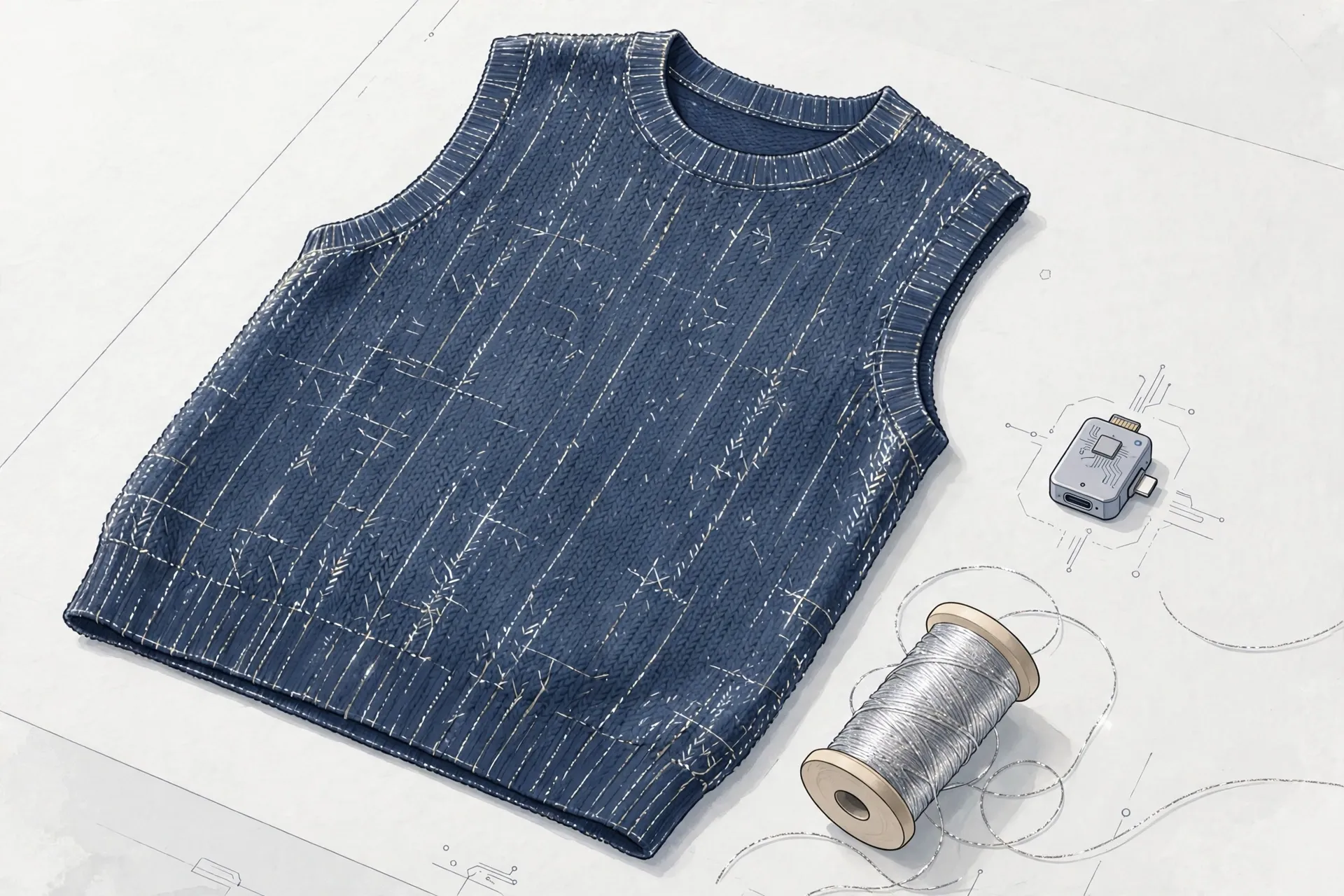
Shielding fabric for wearables usually starts as a yarn that carries a conductive metal, most often silver fibre. That yarn is knitted or woven into a fabric, and the fabric is then cut and sewn into a garment. Each step changes what the buyer receives: the yarn sets the conductivity, the knit or weave sets the stretch, the weight and the hand feel, and the garment construction sets where the shielding actually covers the body. A buyer who only asks for a roll of fabric is ordering the middle of the chain. A buyer who describes the finished garment — a cap, a vest, a base layer, a belly band — lets the supplier propose the yarn, the fabric and the construction together.
Silver fibre fabric is listed at 50 to 80 decibels in the product guides on this site, and it is the usual choice for wearables because it is soft, light and close to an ordinary textile in feel. Copper-nickel fabric is listed at 60 to 90 decibels and is the usual choice where a higher shielding figure matters more than a soft hand feel, for example in a lining or a panel rather than a next-to-skin layer. Those ranges describe the fabric, not the finished garment. What the garment shields depends on the cut, the seams, the closures and how much of the body it covers, as well as the roll it was cut from. Name the shielding target and the test you want in the same message, and ask for the test result in writing, with the test method named. Test reports and supplier certificates are available on request.
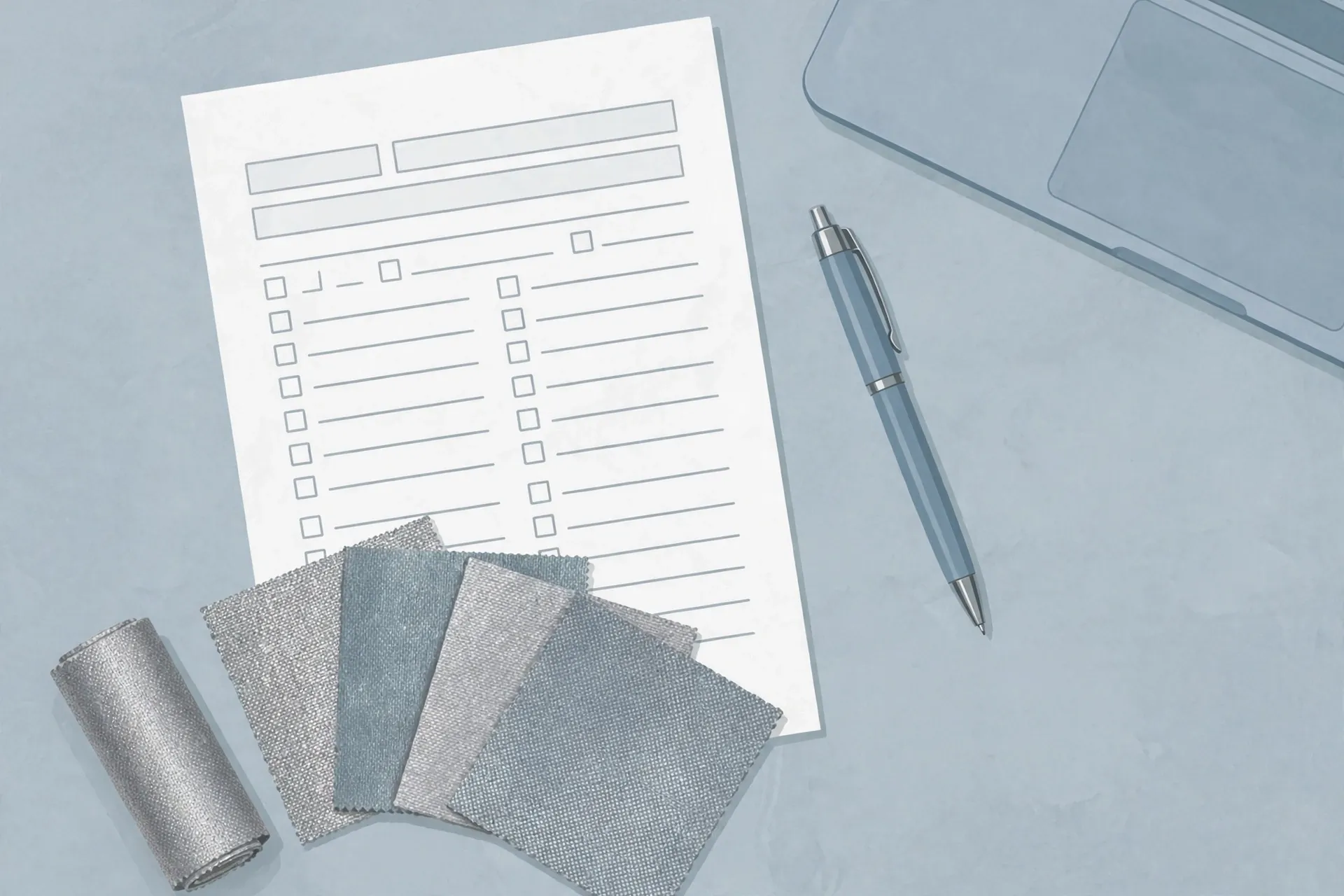
Before you order, agree the fabric in the terms your customer will check: the fibre content, the weight, the width, the stretch and recovery, the colour and the finish. If the garment will be dyed or printed, say so before sampling, because dyeing and finishing can change the hand feel and the shielding, and the supplier needs to sample the finished fabric, not the undyed roll. If the garment carries sensors, wiring or a detachable device, say where those parts sit and how they connect, because a seam or a fastener placed over a sensor changes both the garment and the test.
Sewing a shielding garment: seams, closures and coverage
A shielding garment fails most often at the joins, not in the middle of the fabric. A seam that opens, a closure that leaves a gap, or a panel that shifts in wear breaks the shielding surface, and the garment still looks finished. Before you order, agree how the panels will join, how the seams will be made, and whether the shielding layer is continuous across each seam or only on the main panels. Agree the closures — zips, snaps, hook-and-loop, elastic — and where each one sits, because a closure is a gap unless it is designed as part of the shielding.
Coverage is the second decision. A cap shields the head it covers; a vest shields the torso it covers; a base layer shields what it touches. A buyer who sketches the coverage on the tech pack saves a round of questions: draw the shielded area, mark the seams and the closures, and note the parts of the body that stay uncovered. If the garment has a pocket, a lining or a second layer, say whether the shielding is in the outer layer, the lining or both, because two thin layers are not the same order as one layer of the same total weight. If the garment is sized in a range, say whether the shielding coverage is checked on every size or only on the sample size.
Fit matters for wearables in a way it does not for a curtain. A garment that is too tight pulls at the seams; a garment that is too loose shifts and opens gaps. Agree the size range, the stretch the fabric must hold, and how the garment will be checked for fit before bulk. The supplier can propose a fabric, supply a sample and report a test result in writing; the decision about whether that result meets your customer's specification is yours and your customer's.
Washable means tested after washing, not just labelled washable
A wearable that cannot be washed is a sample, not a product. But "washable" on a label is a claim, and a claim needs a test. Before you order, agree the washing method with the supplier: the temperature, the detergent type, the cycle, and whether the garment is machine washed, hand washed or dry cleaned. Agree how many washes the sample will go through before it is tested, and agree that the shielding test is run on the garment after washing, not only on the unwashed fabric. A test on a flat, unwashed piece of fabric says nothing about a garment that has been sewn, worn and washed.
Do not accept a wash count from a brochure. The number of washes a garment survives depends on the yarn, the fabric, the garment construction and the washing method together, and no supplier can promise a count for a garment that has not been made and tested yet. Ask instead for the test plan: which garment will be washed, how it will be washed, how it will be tested after washing, and what counts as a pass. Keep the washed sample and its test result with the bulk order file, so a later batch can be checked against the same standard. If your customer has a washing specification, send the pages that apply to the fabric and the garment, rather than describing them in your own words.
Care labelling is part of the order, not an afterthought. Agree the care symbols, the washing instructions and any warning the garment needs, and agree them before bulk, because a care label that contradicts the test method creates a dispute the first time a customer washes the product. If the garment will be sold in more than one market, say so, because care labelling rules differ by market and the label has to be agreed for each one.
Samples, quantities and what to check
Fabric can be ordered from as little as 1 square metre. The suggested starting quantity is 10 square metres or 10 metres, with a better price for a larger quantity, and silver fibre fabric is usually priced by the square metre while copper-nickel fabric is usually priced by the metre. Finished products in stock can be ordered from 1 to 2 pieces, while an out-of-stock item needs a new quotation and lead time. Say whether you are ordering fabric by the roll or finished garments, give the width, and say whether the fabric will be cut, sewn or bonded.
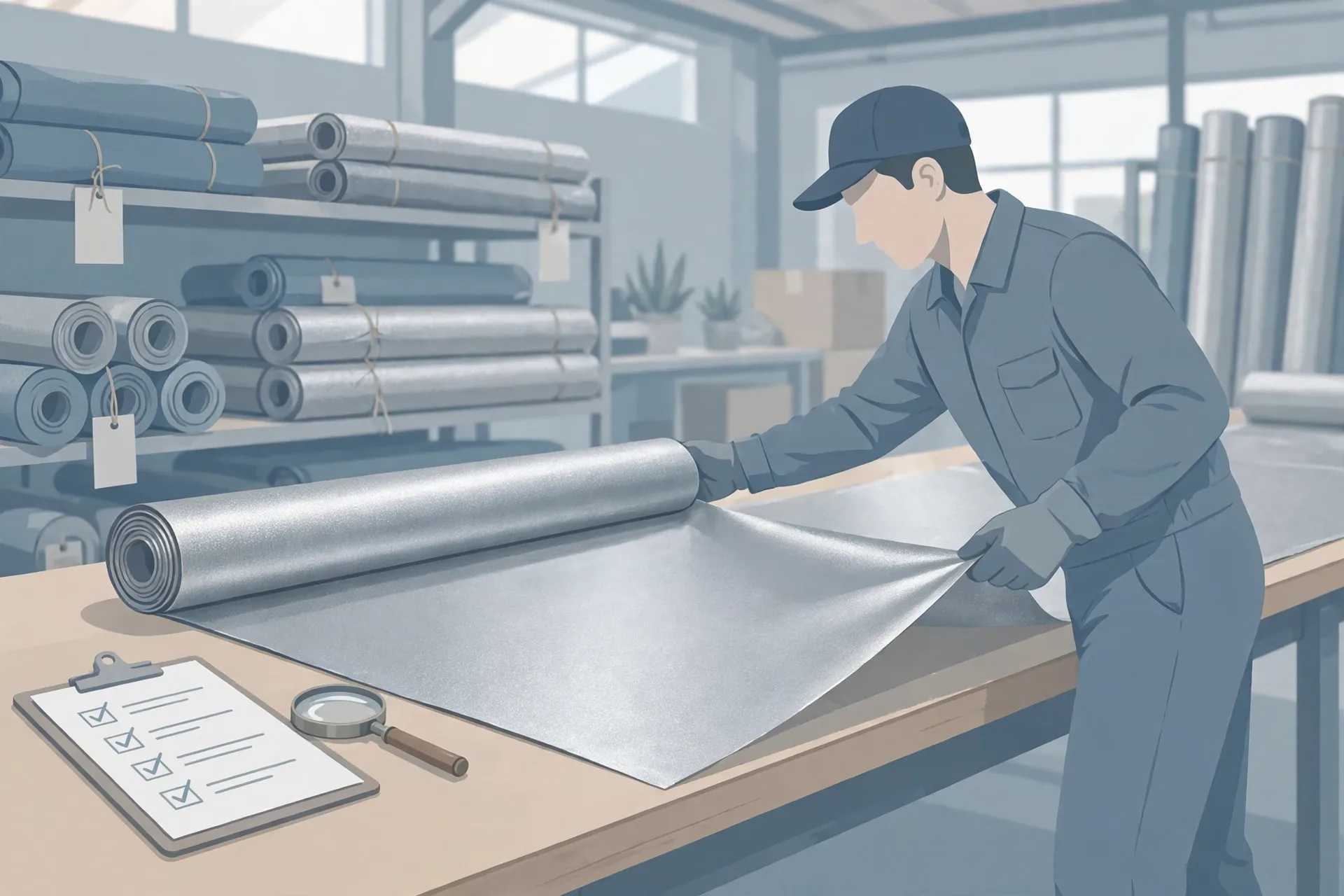
A stock sample usually ships in 1 to 5 days, while a custom sample usually takes 5 to 30 days depending on the process, and the exact time is confirmed once the specification is confirmed. For a wearable, order the sample as a finished garment, not only as a piece of fabric, and test the garment as it will be worn: sewn, closed, and washed by the agreed method. When it arrives, check the fabric, the seams, the closures and the fit first, then run the agreed checks on the washed garment, and keep the result with the sample. Ask for the documents you need with the sample, not with the bulk order, so a missing document is found while the order is still small.
Payment is by letter of credit, telegraphic transfer, PayPal or Western Union. Confirm the method and the currency before the order is placed. Yiwu Zimo Trading Company is a trading-and-manufacturing supplier. The details above describe how it quotes and samples; they do not describe factory capacity or production processes, which are not published, and they do not promise a shielding level for a garment that has not been tested.
Frequently asked questions
Which fabric is used for smart wearables?
Silver fibre fabric, listed at 50 to 80 decibels, is the usual choice because it is soft and close to an ordinary textile in feel. Copper-nickel fabric, listed at 60 to 90 decibels, is used where a higher shielding figure matters more than a soft hand feel.
Why does the finished garment matter more than the roll?
Because the shielding depends on the cut, the seams, the closures and the coverage as well as the fabric. Test the finished, sewn garment, not a flat piece of fabric.
How do we know the garment stays washable?
Agree the washing method before ordering, wash the sample by that method, and run the shielding test on the garment after washing. Do not accept a wash count from a brochure.
What should the sample be?
A finished garment in the size you will sell, sewn and closed as bulk will be, washed by the agreed method and tested after washing, with the test method named and the result in writing.
How long does a sample take?
A stock sample usually ships in 1 to 5 days. A custom sample usually takes 5 to 30 days depending on the process, and the exact time is confirmed once the specification is confirmed.
Your next step
Write a one-page brief with the garment type, the shielded area drawn on the tech pack, the fabric, the shielding target and the test method, the seams and closures, the washing method and the test after washing, the size range, the quantity in the unit the supplier prices in, the width, the documents you need, and the payment method and currency. Send it and ask the supplier to confirm the fabric, the sample time, the test that will be run on the washed sample, and what is included in the sample price. When the sample arrives, test the washed garment before you approve bulk. If you are ready to start, contact us through the contact page or email info@zimo-cn.com with your brief, and we will reply with a fabric proposal, a sample time and a quote.