Guides & Education
EMF Shielding Fabric for the EU Market: REACH, Labelling and Buyer Documentation, Explained for Sourcing Teams
EU sourcing teams check three things before ordering EMF shielding fabric: the REACH paperwork, the labelling and the documents that travel with the goods. This guide walks through each one.
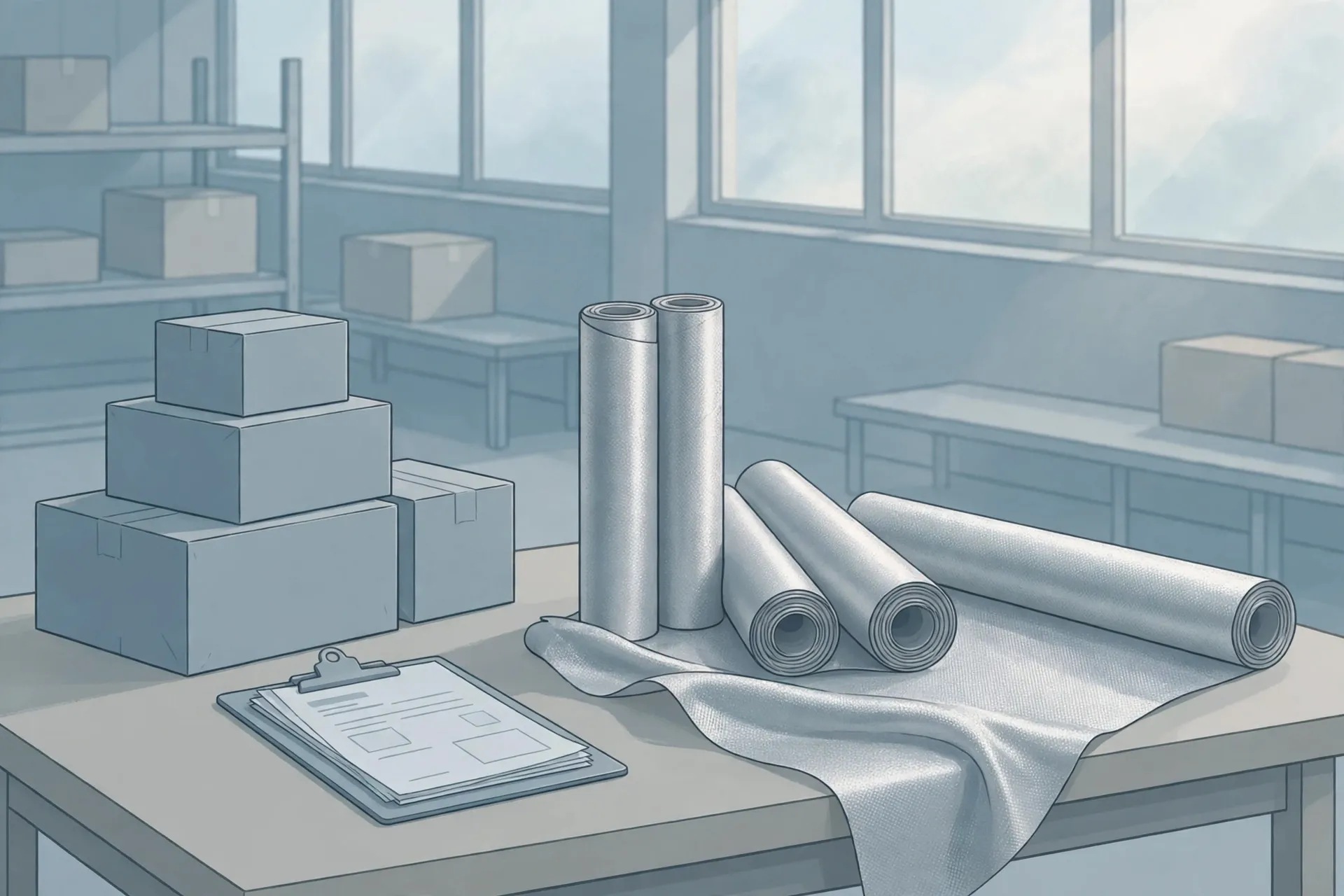
A European sourcing team does not order shielding fabric on a price and a shielding number alone. Before the first order it checks three things: what paperwork the supplier can provide for the EU market, what the label on the goods will say, and what documents travel with the shipment. A supplier who answers all three in writing gets the order moving. This guide is for a European buyer, distributor or sourcing manager placing a first order of EMF shielding fabric or finished shielding goods. It is not for a shopper buying one item for personal use.
The order that stopped at the warehouse door
You place a first order for shielding fabric, the rolls arrive, and your warehouse team opens the cartons. The fabric is right, the width is right, and the shielding number on the quotation matches what you asked for. Then your compliance colleague asks for the documents, and the order stops. The invoice describes the goods in different words from the quotation. The care label is in the wrong language for your market. The composition statement you need for your own customer is not in the parcel, and the supplier says it can be sent later, after the goods have already been booked onward. Nothing about the fabric is wrong, and the order is still stuck, because the paperwork was treated as an afterthought instead of part of the order. The shielding number decides whether the fabric works. The paperwork decides whether the goods can be sold.
What REACH means for your first order, in practical terms
REACH is the name European buyers use for the EU chemicals framework, and it is the first word that comes up when a sourcing team talks about a textile from outside the EU. What it means for your order is simpler than the name sounds: your buyer, your customer or your own compliance team will ask what the fabric is made of, and they will ask for that answer in writing. Start by naming the fabric and its composition in your first message. Say whether you want copper-nickel fabric or silver fibre fabric, and ask the supplier to confirm the composition in writing. Copper-nickel fabric is listed at 60 to 90 decibels and silver fibre fabric at 50 to 80 decibels in the product guides on this site. Those ranges are a starting point for discussion, not a promise for your finished product, because the shielding a garment, a curtain or a pouch reaches depends on the pattern, the seams and the lining as well as the roll of fabric.
Then name the document you need, instead of asking for paperwork in general. Test reports and supplier certificates are available on request, so say which document your market or your customer asks for, and ask the supplier to confirm in writing whether it can provide it, and with the sample or with the bulk shipment. Do not assume a document that applies to a roll of fabric automatically applies to a finished garment in your market. If your customer needs a specific declaration or a specific wording, send the wording with your brief and ask the supplier to confirm it can be supplied.
Labelling: what the goods should say when they arrive
A label is not a decoration. It is the part of the product your customer reads first, and it is the part your warehouse team checks when the cartons arrive. Before you order, decide what the label must carry for your market: the product name, the composition, the care instructions and the importer details, in the language and wording your market expects. If the goods carry your own brand, the label decision has to be made before the sample is cut, because a private label changes the care instructions and the time needed to approve them. Colour, logo, packaging, size and hang tag can be customised, and you should say which of those you need on the first sample and which can wait for bulk.
Ask the supplier to confirm the care wording for your fabric in writing, because the care instructions for silver fibre fabric and copper-nickel fabric are different, and a customer who washes the product the wrong way may damage the shielding. A silver fibre garment that shields well when it is new can lose performance if it is washed the wrong way, so the care label is part of the shielding promise, not an afterthought. Check the size and labelling plan in the same message as the fabric choice, and ask for a photograph or a proof of the label before bulk production, so a wrong language or a wrong composition line is caught on paper instead of on a thousand finished pieces.
The documents that travel with the shipment
The third check is the paperwork that travels with the goods. Ask which documents will be in the parcel, and confirm that the description on the invoice matches the product you ordered, word for word. If the quotation says copper-nickel shielding fabric and the invoice says something else, your warehouse and your customer will both ask questions you cannot answer from the quotation alone. Ask how the fabric is packed as well: how it is rolled, how the cartons are marked, and whether the packing protects the rolls from moisture on the freight leg to your warehouse. A carton that arrives unmarked is a carton your team has to open to identify, and an opened carton is a carton that has to be repacked before it can go on to your customer.
Confirm the commercial terms in the same document as the fabric specification. Fabric can be ordered from as little as 1 square metre, while 10 square metres or 10 metres is the suggested starting quantity, with a better price for a larger quantity, and silver fibre fabric is usually priced by the square metre while copper-nickel fabric is usually priced by the metre. Finished products in stock can be ordered from 1 to 2 pieces, while an out-of-stock item needs a new quotation and lead time. Payment is by letter of credit, telegraphic transfer, PayPal or Western Union. Confirm the method and the currency before the order is placed, and ask what is included in the quoted price: the fabric, the sample cost, the documents and the packaging should each be named.
Samples: prove the fabric and the paperwork together
A stock sample usually ships in 1 to 5 days, while a custom sample usually takes 5 to 30 days depending on the process, and the exact time is confirmed once the specification is confirmed. Order the sample before you promise your customer a delivery date, and use the sample round to test the paperwork as well as the fabric. When the sample arrives, check the labelling first, then run the agreed shielding and wash check, and keep the result with the sample. Ask for the documents you need with the sample, not with the bulk order, so a missing document is found while the order is still small. If the sample passes, approve it in writing and name the same fabric, pattern, test and labelling for bulk. Yiwu Zimo Trading Company is a trading-and-manufacturing supplier, and the details above describe how it quotes and samples. They do not describe factory capacity or production processes, which are not published, and they do not promise a shielding level for a product that has not been tested.
Frequently asked questions
What should I ask about REACH before ordering?
Name the fabric and ask the supplier to confirm its composition in writing, then name the document your market or customer asks for and ask whether it can be provided, and when. Test reports and supplier certificates are available on request.
What shielding level should I ask for?
Start from the ranges in the product guides: copper-nickel fabric at 60 to 90 decibels, silver fibre fabric at 50 to 80 decibels. Then agree on a test method and a target for your finished product, and ask for the test result in writing.
What must the label carry?
The product name, the composition, the care instructions and the importer details, in the language and wording your market expects. Decide the label before the sample is cut if the goods carry your own brand, and ask for a proof of the label before bulk production.
How much fabric can I order for a first test?
Fabric can be ordered from as little as 1 square metre. The suggested starting quantity is 10 square metres or 10 metres, with a better price for a larger quantity. Finished products in stock can be ordered from 1 to 2 pieces.
What payment methods are accepted?
Letter of credit, telegraphic transfer, PayPal and Western Union. Confirm the method and the currency before you place the order.
Your next step
Write the three checks into a one-page brief: the fabric and the document you need for your market, the labelling and the language it must carry, and the documents that must travel with the shipment, with the quantity, the payment method and the delivery city. Send it with your target price, and ask the supplier to confirm the fabric, the sample time, the documents and what is included in the sample price in reply. When the sample arrives, check the label and the documents first, then run the agreed shielding and wash check before you approve bulk. If you are ready to start, contact us through the contact page or email info@zimo-cn.com with your brief, and we will reply with a fabric proposal, a sample time and a quote.