Oct 3, 2026Guides & Education
Silver Fiber Fabric Uses: Beyond EMF Shielding
Silver fiber fabric uses beyond EMF shielding: antibacterial wear, smart textiles, heated clothing, antistatic workwear — how to choose the right spec.
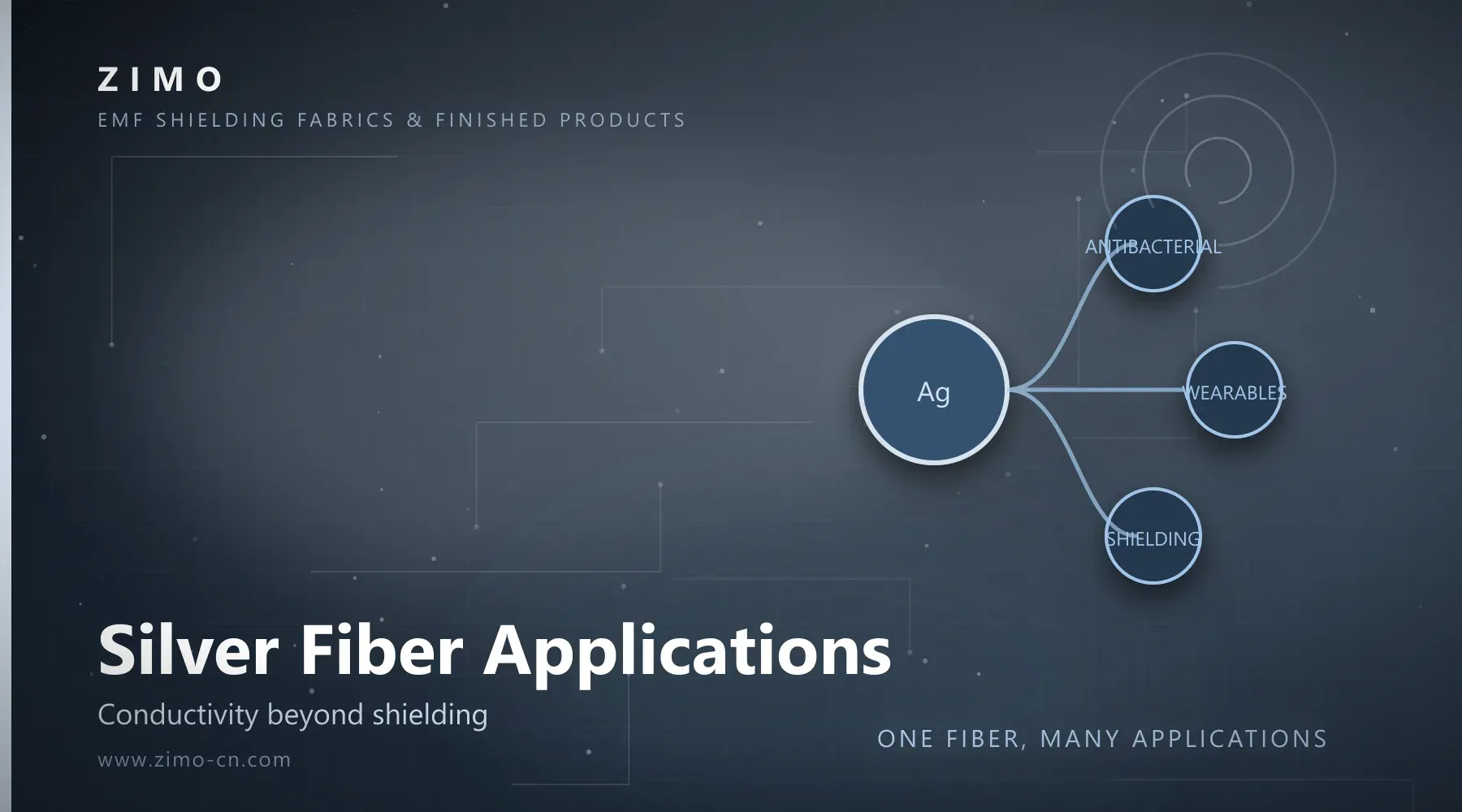
Ask what silver fiber fabric is used for and most people give one answer: shielding. True — conductive silver fabric is a core material in EMF protection products. But that single role understates the material. Silver fiber fabric combines three properties few textiles offer at once: it conducts electricity, it carries silver's natural antibacterial characteristics, and it stays soft enough to wear against the skin. This guide walks through the main silver fiber fabric uses, what each draws on, and how to choose a spec that fits.
Three Properties Behind Every Application
Conductivity. Silver is among the most conductive elements known. In fiber form it turns an ordinary textile into a conductive silver fabric that can carry low-voltage current, dissipate static charge and attenuate radio-frequency signals. This one property underlies shielding, heating, sensing and antistatic uses alike.
Natural antibacterial character. Silver is widely used in textiles such as socks and underwear — a long-standing practice in apparel. Silver fiber carries this characteristic into woven and knitted constructions, which is why antibacterial silver fabric appears across next-to-skin product categories.
Softness and wearability. Metal foils and rigid meshes shield well but do not drape. Silver fiber fabric does. It cuts, sews and wears like a conventional textile — the property that makes wearable applications possible at all.
Silver Fiber Applications at a Glance
Application | Why silver fiber fits | Typical forms
EMF / RF shielding | Conductivity attenuates radio-frequency signals in a soft, sewable textile | EMF protection hats, blankets, underwear, aprons, scarves, working uniforms, bed canopies, anti-scanning phone pouches, RFID blocking bags
Antibacterial textiles | Silver's natural antibacterial characteristics, long used in socks and underwear | Socks, underwear, sportswear, base layers
Smart textiles and wearables | Flexible conductive paths replace rigid wiring inside garments | Sensor-equipped garments, flexible interconnects, conductive traces
Heated apparel | A distributed conductive layer spreads low-voltage heat evenly | Heated jackets, gloves, insoles (battery-powered designs)
Antistatic (ESD) workwear | Gives static charge a path to dissipate instead of building up | Antistatic workwear, cleanroom garments, electronics-handling apparel
EMI management inside devices | A soft conductive liner fits where a rigid metal shield cannot | Enclosure liners, cable wraps, shielding patches
EMF and RF Shielding: The Best-Known Use
For many buyers this is the entry point — and the largest category. Conductive fabric attenuates a share of incoming radio-frequency energy; shielding effectiveness is measured in decibels (dB), and higher dB means more attenuation. Roughly speaking, 20 dB corresponds to about 99 percent attenuation and 40 dB to about 99.99 percent.
Zimo's dense silver fiber fabric is manufacturer-tested at 50–80 dB, and our silver fiber mesh — the open-weave version used for bed canopies — at approximately 20–40 dB. Both figures are manufacturer-tested, and test reports are available on request. For buyers who prioritize peak shielding performance over a metallic hand feel, our copper nickel fabric is manufacturer-tested at 60–90 dB.
Finished applications span wearables and the home: EMF protection hats in baseball cap, beanie, hood and bucket hat styles, bed canopies, blankets, underwear, aprons, scarves and working uniforms, plus anti-scanning phone pouches and RFID blocking bags. Standard products carry no MOQ; custom MOQ is set per project, and OEM/ODM is available for finished goods.
Antibacterial Silver Fabric: Next-to-Skin Categories
The second group builds on silver's material character rather than its conductivity. Silver is a long-standing presence in socks, underwear and sportswear, and silver fiber fabric extends that into modern knitted and woven constructions. Brands typically position these products around freshness and everyday comfort for next-to-skin wear.
Two notes for product teams. Durability depends on construction: silver inherent to the fiber holds up better through washing than a surface finish. And in downstream marketing, the standard framing is a material characteristic — not a treatment or health claim.
Smart Textiles and Wearables
Wearable electronics need conductive paths that bend, fold and survive washing. Silver fiber fabric and silver-based yarns serve as flexible interconnects and conductive traces in sensor-equipped garments, routing signals from textile electrodes to a small module. Compared with discrete wire, a fabric path keeps the garment soft and works with standard cut-and-sew processes.
Heated Apparel
Low-voltage heated garments use a conductive layer as the heating element. Because the conductive area is distributed across the fabric rather than concentrated in a coil, heat spreads more evenly and the garment stays pliable. Silver fiber fabric is one material used for this layer, with designs typically powered by low-voltage battery packs. Zimo can discuss custom weights and constructions for heated-apparel projects.
Antistatic Workwear and EMI Management
Two quieter applications rely on the same conductivity.
Static dissipation. In electronics assembly, cleanrooms and other static-sensitive environments, charge build-up on ordinary synthetic workwear is a nuisance. Antistatic garments made with conductive fiber give that charge a path to dissipate instead of accumulating on the wearer.
EMI management inside equipment. The same attenuation that shields a person can quiet a device. Cut pieces of conductive fabric serve as liners inside electronic enclosures, wraps around cables and patches where a rigid metal shield does not fit. Here the fabric's softness is the advantage: it can be die-cut, folded and bonded into spaces a metal can cannot reach.
One Fabric Does Not Fit Every Application
The most common sourcing mistake we see is specifying a silver fiber fabric by a single number before defining the use. A dense, higher-weight weave and an open mesh are different products with different strengths, and the difference is decisive.
An EMF bed canopy needs airflow and visibility — which is why the open-weave silver fiber mesh (approximately 20–40 dB, manufacturer-tested) exists alongside the dense fabric. A next-to-skin garment weighs softness, hand feel and washability more than peak attenuation. A heated or antistatic application cares most about stable, even conductivity across the sheet.
Each application weights conductivity, softness, washability and cost differently, so the specification — weave density, weight (GSM) and construction — should follow the application, not precede it. Zimo supplies silver fiber fabric in two tiers: a dense fabric manufacturer-tested at 50–80 dB and a mesh at approximately 20–40 dB, both customizable in size and weight. Other conductive fabrics are available on request — contact us for specs.
FAQ
Does silver fiber fabric irritate the skin?
Silver has been used in textiles for a long time, including socks and underwear worn directly against the skin. Individual sensitivity still varies from person to person; if you have known skin sensitivities, it is sensible to consult a professional and test a sample before prolonged wear.
How conductive is silver fiber fabric?
Conductive enough for its main commercial roles: attenuating RF signals, carrying low-voltage current for heating and dissipating static. Exact values — surface resistivity and shielding effectiveness — depend on the construction and weight, so we quote figures per specification rather than as one universal number.
Will the antibacterial property wash out?
It depends on how the silver is incorporated. Where it is inherent to the fiber rather than applied as a surface finish, the characteristic is more durable through repeated washing. Following the care instructions for the specific fabric matters as well; our guidance on washing EMF shielding fabric covers the practical points.
Can silver fiber fabric be used in heated clothing?
Yes — a conductive textile layer is a common approach to low-voltage heated garments. Suitability depends on the target garment, heat distribution and power source, which makes it a customization discussion. Tell us what you are building and we will respond with a suggested construction.
Silver-plated or blended: which construction should I choose?
Each construction trades conductivity, durability, hand feel and cost in different directions, so there is no single best option — the right choice follows the application's priorities. Our guide to how EMF protection clothing is made explains the common constructions in more detail.
Tell Us Your Application — We'll Suggest the Right Silver Fiber Spec
Every application weights conductivity, softness, washability and cost differently, and the right specification follows from the use. Tell us your application — we'll suggest the right silver fiber spec, whether one of our two standard tiers or a custom construction. Contact us to start the conversation.
Related Reading
Silver Fiber Fabric: Specs, Shielding Data and Options
How EMF Protection Clothing Is Made
Conductive Fabric Types: A Buyer's Overview