Guides & Education
Importing EMF Shielding Textiles into Brazil: Duties, Labelling and Lead Times for Buyers
Importing EMF shielding textiles into Brazil means checking duties, labelling and lead times before you order. This guide lists what to confirm with your broker and your supplier first.
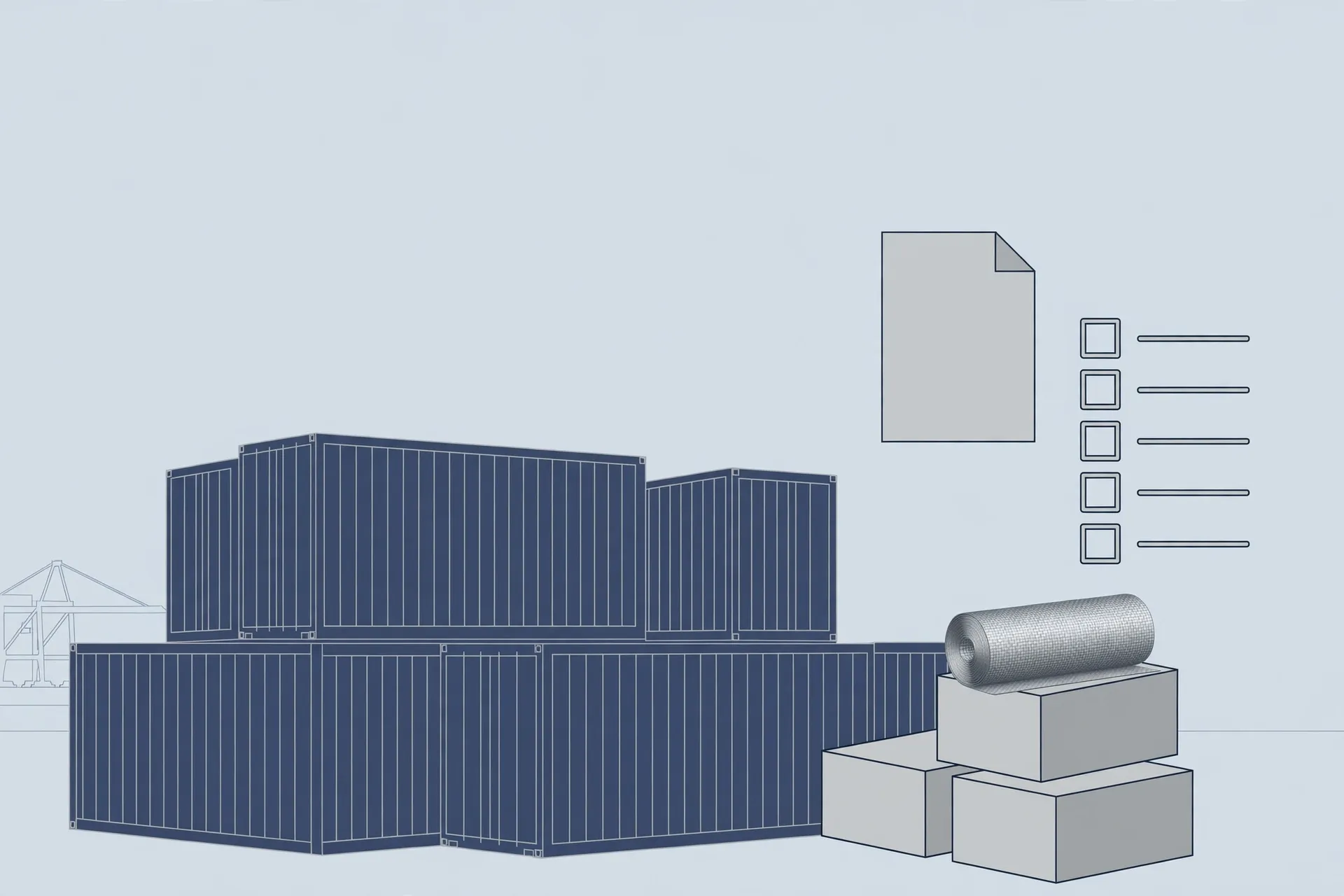
A first shipment of EMF shielding fabric to Brazil usually goes wrong in one of three places: the duty was estimated from the wrong product category, the label was written in the wrong language, or the lead time was counted from the order date instead of from the day the specification was confirmed. None of these is a problem with the fabric. All three are problems with what was confirmed before the order was placed. This guide is for a buyer in Brazil who is importing EMF shielding textiles for the first time, or for a distributor planning a first bulk order. It is not a customs manual, and it does not replace a licensed customs broker. It tells you what to ask, and in what order, so the broker and the supplier can give you a real answer instead of a guess.
The shipment that waited at the port
You order a roll of copper-nickel fabric, the supplier ships it, and the goods arrive in Santos. Then the broker asks for a document you do not have, or the label on the carton does not match the invoice, and the shipment waits while the paperwork is fixed. Every day at the port costs money and patience, and your customer is waiting for a sample that is sitting in a warehouse. Most first imports do not fail because the duty was high. They fail because the buyer estimated the landed cost from the fabric price alone, and treated duties, labelling and freight as details to sort out later. The landed cost is the only cost that matters, and it is set by four things: the product classification, the documents that travel with the goods, the labelling on the goods, and the time each step actually takes.
Duties: ask the broker before you ask for a price
Do not estimate Brazilian import duty from a number you saw on a website. The amount depends on the exact product, how it is classified, and the port of entry, and it changes. Before you ask the supplier for a quote, send your customs broker the product name, the material composition, the width and weight, and the end use, and ask for the classification and the duties and taxes that apply to that classification. Then ask the supplier to confirm that the description on the invoice and the packing list matches the classification the broker used. If the supplier describes the goods one way and the broker classifies them another way, the shipment is the thing that waits.
A second question for the broker is which documents the shipment needs. Ask for the full list in writing: commercial invoice, packing list, certificate of origin if one applies, and any test report or supplier certificate the importer needs for this product. Test reports and supplier certificates are available on request from the supplier, so name the document you need before the goods ship instead of asking for it when the broker is already waiting.
Labelling: write it in Portuguese, and check it before the goods leave
Labelling is where small mistakes become expensive. The label on the carton and the label on the product should carry the same information: the product name, the composition, the quantity, the country of origin and the importer details your broker asks for. In Brazil, the labelling your customer and your broker need is in Portuguese, so confirm with the broker which fields must appear in Portuguese and which can stay in English. Do not assume a label that worked for a shipment to the United States or Europe will pass in Brazil.
If the goods carry your own brand, decide the label before the sample is made. Colour, logo, packaging, size and hang tag can be customised, and a private label changes the care instructions and the approval time. A care label that is wrong is not a small error for shielding textiles: silver fibre fabric and copper-nickel fabric have different care needs, and a customer who washes the product the wrong way may damage the shielding. Ask the supplier to confirm the care wording for your fabric in writing before bulk production starts.
Lead times: count from the right starting line
Lead time has three parts, and buyers usually count only one. The first part is the sample. A stock sample usually ships in 1 to 5 days, while a custom sample usually takes 5 to 30 days depending on the process, and the exact time is confirmed once the specification is confirmed. The second part is production, which starts only after the sample is approved and the specification is frozen. The third part is freight and customs clearance, which depends on the shipping method, the route and the port, and which your freight forwarder and broker should estimate in writing for your specific shipment. Ask the supplier for the sample and production time, ask the forwarder for the freight time, and ask the broker for the clearance time, and put the three answers on one page with the dates each one starts from.
The minimum order affects the lead time as well. Minimum order quantity depends on the product. Fabric can be ordered from as little as 1 square metre, while 10 square metres or 10 metres is the suggested starting quantity, with a better price for a larger quantity. Silver fibre fabric is usually priced by the square metre, while copper-nickel fabric is usually priced by the metre. Finished products in stock can be ordered from 1 to 2 pieces. A small first order is a sensible way to test the import process: it lets you walk through classification, documents, labelling and clearance once, with a small shipment, before you commit to a large one.
What to confirm with the supplier, in one message
Send the supplier one message that covers the whole shipment. Name the fabric and the shielding target: copper-nickel fabric is listed at 60 to 90 decibels, and silver fibre fabric at 50 to 80 decibels in the product guides on this site, and the finished product depends on the pattern, the seams and the lining as well as the roll of fabric, so agree on a test method and ask for the test result in writing. Give the quantity, the width and the end use, and say whether you are ordering fabric by the roll or finished goods. Ask the supplier to confirm the sample time, the production time after sample approval, the documents that will travel with the shipment, and the labelling that will be on the cartons. Payment is by letter of credit, telegraphic transfer, PayPal or Western Union: confirm the method and the currency in the same message.
What this guide does not cover
This guide does not give duty rates, tax percentages, classification codes or clearance times, because those depend on your exact product and shipment and they change. Your licensed customs broker is the source for those numbers, and your freight forwarder is the source for transit times. This guide also does not replace a legal review of a claim you plan to print on a label, or a test report for your finished product. Yiwu Zimo Trading Company is a trading-and-manufacturing supplier, and the details above describe how it quotes and samples. They do not describe factory capacity or production processes, which are not published.
Frequently asked questions
What duty will I pay on EMF shielding fabric imported into Brazil? It depends on the exact product, its classification and the port of entry. Ask your licensed customs broker for the classification and the duties and taxes that apply, before you place the order, and make sure the supplier's invoice description matches that classification.
What documents should travel with the shipment? Ask your broker for the full list in writing. It usually includes the commercial invoice and packing list, and may include a certificate of origin and a test report or supplier certificate. Test reports and supplier certificates are available on request, so ask for them before the goods ship.
What language should the labels be in? Confirm with your broker which fields must appear in Portuguese. The label on the carton and the label on the product should carry the same information, and the care wording should match the fabric you ordered.
How long does a first order take? A stock sample usually ships in 1 to 5 days, and a custom sample usually takes 5 to 30 days depending on the process. Production starts after the sample is approved, and freight and clearance times come from your forwarder and broker for your specific shipment.
How much fabric can I order for a first test? Fabric can be ordered from as little as 1 square metre. The suggested starting quantity is 10 square metres or 10 metres. Finished products in stock can be ordered from 1 to 2 pieces.
Your next step
Before you order, get three written answers: the classification and duties from your broker, the freight and clearance time from your forwarder, and the fabric, sample time and document list from your supplier. Put the three on one page and check that the product description matches in all three. Then place the sample order, and walk the sample through the same import steps your bulk order will follow. If you are ready to start, contact us through the contact page or email info@zimo-cn.com with your product, quantity and delivery city, and we will reply with a fabric proposal, a sample time, the documents we can provide, and a quote.