Oct 3, 2026EMF Wearables
EMF Protection Hats: Caps, Beanies, Bucket Hats & Hoods Compared
Compare EMF protection hats: baseball caps, beanies, bucket hats and hoods. Learn how shielding fabric, coverage and fit affect performance.
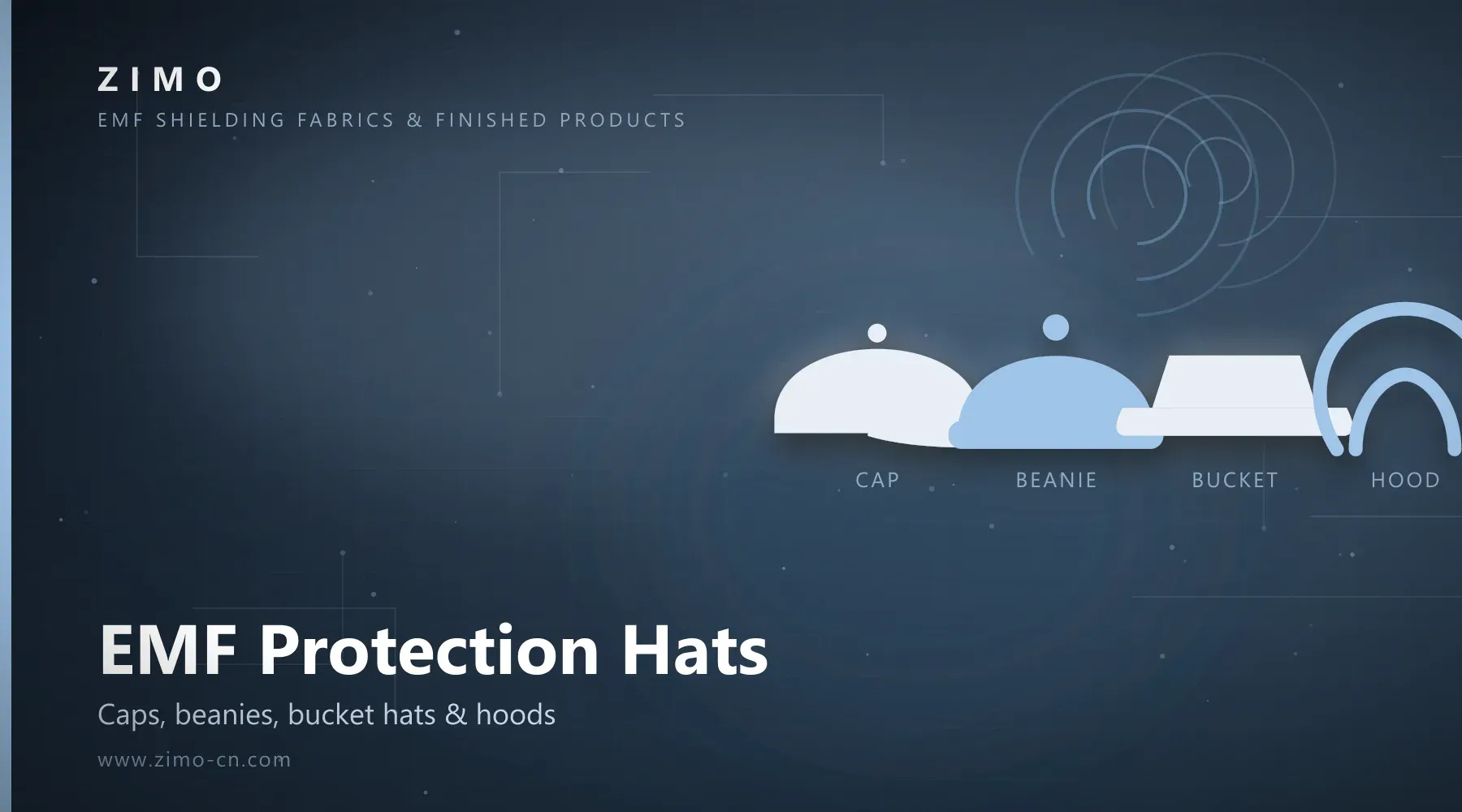
An EMF protection hat is one of the most searched-for products in the EMF shielding category: easy to wear, simple to fit into a daily routine, and covering an area many people care about first. But the four common styles — baseball cap, beanie, bucket hat and hood — differ in coverage, season and fit, and those differences matter more than most product pages admit. This guide compares them, explains what is inside the lining, and helps you match a hat to your situation, whether you are buying one or planning a product line.
Why the Head Is a Common Focus for EMF Protection
Mobile phones are often held against the ear, and wireless routers, base stations and Bluetooth devices are part of most daily environments. Whatever your position on the science, one thing is straightforward: many people look for ways to reduce their exposure, and the head is where they usually start. A shielding hat addresses this in a practical, textile-based way. Conductive fabric woven into the lining attenuates radio-frequency signals across the area it covers — in the same physical way other shielding textiles work. What it can and cannot do depends on coverage and fit, which is exactly what the rest of this guide sorts out.
Four EMF Hat Styles Compared
The four styles cover four different use cases rather than four quality levels:
Style | Best for | Covered area | Practical notes
EMF protection baseball cap | Daily commuting, office, driving | Crown, forehead and upper back of head | Structured brim keeps the face clear; the most "invisible" style in a work setting
Anti radiation beanie | Cold weather, casual wear | Full crown plus ears | Soft knit sits close to the head, so edge gaps around the ears are smaller
EMF protection bucket hat | Sunny days, travel, casual outings | Crown and upper sides; the brim shades the face | Two roles in one: sun protection outside, shielding lining inside
EMF hood | Maximum coverage | Head, ears, neck and back of neck | Best coverage in the range; pairs with a scarf for the throat area
The rule of thumb: the larger the covered area, the larger the shielded zone — and none of these styles shields what they do not cover. The face stays open by design.
What Is Inside an EMF Protection Hat
Most EMF hats use a two-layer construction: a regular outer shell in cotton or a cotton blend, plus an inner lining of conductive shielding fabric. At Zimo, the lining is typically a dense silver fiber fabric — rated at 50–80 dB shielding attenuation (manufacturer-tested; test reports available on request). Silver fiber is the standard choice for wearables because it is soft, skin-friendly and naturally antimicrobial, which matters for a product worn against the forehead for hours. Copper nickel fabric, which tests at 60–90 dB (manufacturer-tested; test reports available on request), is used across the range where higher attenuation matters more than drape.
To put those numbers in context: 30 dB corresponds to about 99.9% attenuation and 40 dB to about 99.99%. More important is what the label does not tell you — a fabric's dB figure is measured on the fabric, not on the finished hat. Real-world performance depends on how much of the head the lining covers, how the panels are sewn together, and how well the hat fits. Seams, openings and loose fits all create paths for signal. That is why coverage and fit, discussed below, deserve as much attention as the dB number.
How to Choose an EMF Protection Hat
1. Coverage and fit
Match the style to your day: a baseball cap for commuting, a beanie for winter, a bucket hat for sun-plus-casual, a hood when coverage is the priority. Fit matters as much as style — the lining should sit close to the head without pressure points.
2. Ask for the fabric spec, not just the style
Before buying — or sourcing — ask two questions: what shielding attenuation is the fabric rated at, and at which frequency bands was it tested? Reputable suppliers test in-house and can share documentation. Zimo fabrics are manufacturer-tested, and test reports are available on request.
3. Comfort and care
You will only get the benefit of a hat you actually wear. Check that the inner fabric feels comfortable for long sessions, and follow the care label — gentle washing keeps conductive yarns effective for longer, while harsh treatment degrades any conductive textile over time. Silver fiber's natural antimicrobial property also helps reduce odor between washes.
4. A style you will actually wear
The best spec loses to a hat that stays in the wardrobe, so pick a color and shape that blend into your existing rotation.
What a Hat Can and Cannot Shield
Honesty here saves disappointment. An EMF hat attenuates signals across the area its lining covers — the crown, and depending on style, the ears and back of the neck. It does not turn the whole body into a shielded zone. The face is open by design, and at the edges — along the hairline, around the ears, at the neck — some signal reaches the skin directly. If edge coverage matters to you, two upgrades exist: an EMF hood extends coverage over the neck and nape, and an EMF protection scarf covers the throat and neck area that hats leave open.
For Brands and Sellers: Building an EMF Hat Line
For brands and e-commerce sellers, hats are a natural first SKU in EMF textiles: a clear use case and a keyword family (EMF protection baseball cap, anti radiation beanie, EMF protection bucket hat, EMF hood) that one product line can cover. Zimo manufactures the shielding fabric in-house and sews the finished hats, so fabric and garment come from the same source — one quality chain from yarn to lining to cap. We support OEM and ODM programs, including private-label hats in all four styles. Standard products carry no MOQ; customized versions (size, fabric weight, style) carry an MOQ agreed per project. Other conductive fabrics are also available on request.
Contact Zimo
Brands and sellers: ask about OEM & private-label programs via our contact page — custom MOQ is agreed per project, and standard items carry no MOQ. Individual buyers: contact us about retail availability and we will recommend the right style for your climate and routine.
FAQ
Does an EMF protection hat block 5G?
Shielding attenuation varies by frequency band, so the accurate answer is: it depends on the fabric's tested bands. Rather than claiming a blanket yes, we share the tested frequency range and dB figures for the specific lining fabric — manufacturer-tested, with test reports available on request.
Will washing damage the shielding layer?
Conductive textiles are durable but not indestructible. Follow the care label that comes with each hat: gentle washing and air drying preserve the conductive yarns, while hot water, bleach and aggressive machine cycles shorten their life. Silver fiber's natural antimicrobial quality means fewer washes are needed.
Will a shielding hat be too hot in summer?
It depends on the lining. For warm weather, a lighter option is silver fiber mesh — approximately 20–40 dB shielding attenuation (manufacturer-tested), which is more breathable than the dense 50–80 dB fabric above. Even 20 dB corresponds to about 99% attenuation, so mesh is a meaningful option, not a compromise. A bucket hat also feels airier than a close-fitting beanie.
Can I add my own logo or design?
Yes. Zimo offers OEM and ODM hat production, including private-label branding in all four styles. Customization of size, fabric weight and style is available, with MOQ agreed per project — contact us with your requirements for a specific answer.
Related Reading
Curious what the lining fabric actually does? Read our silver fiber fabric guide for specs and construction details.
Hats leave the neck open — an EMF protection scarf is the natural companion piece.
New to shielding textiles? The EMF shielding fabric guide explains dB ratings, fabric types and how to read them.