Oct 3, 2026Shielding Fabrics
Conductive Fabric Types: Silver, Copper Nickel & Steel Compared
Compare conductive fabric types for EMF shielding: silver fiber, copper nickel, stainless steel. Attenuation ranges, washability, cost and typical uses.
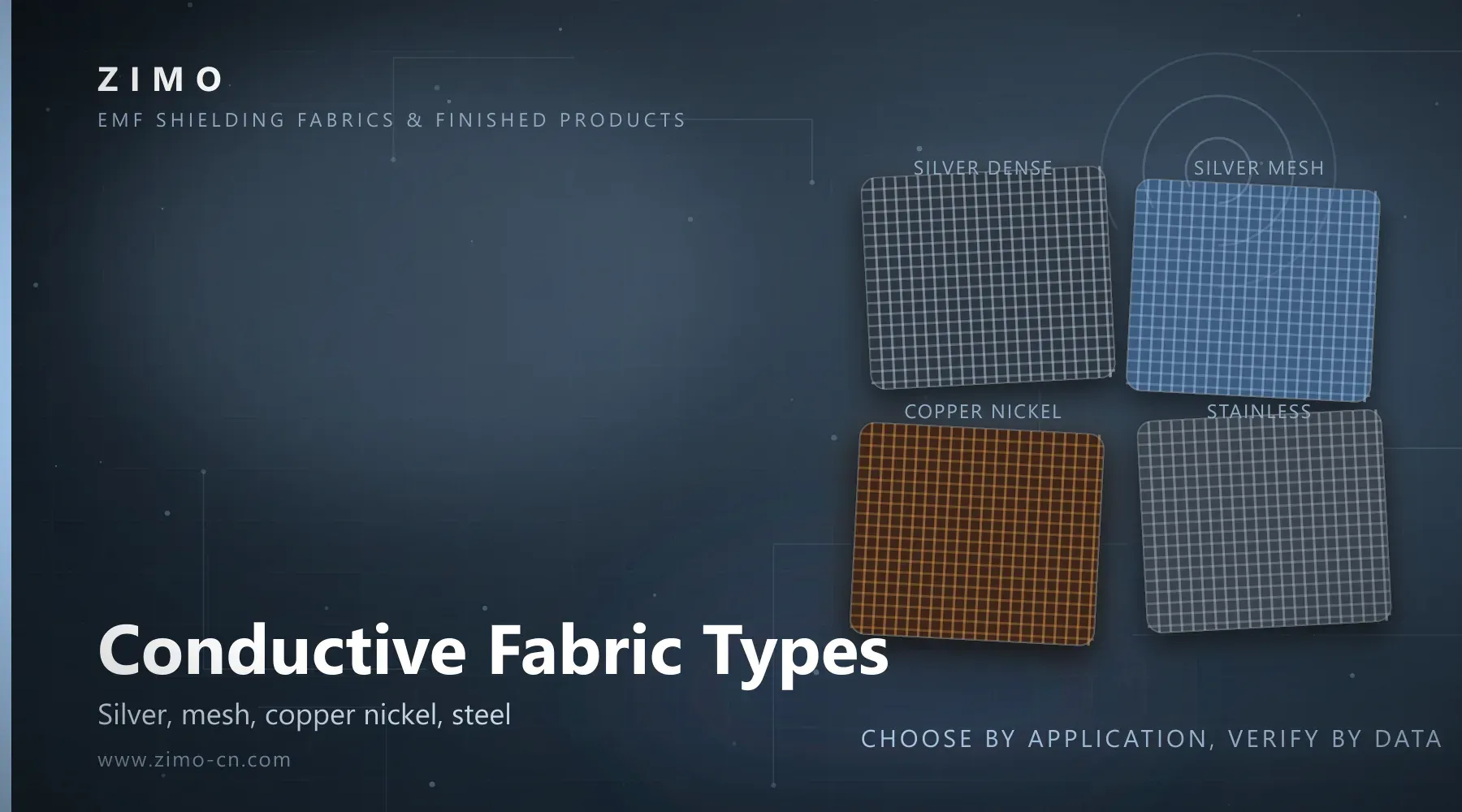
Every EMF shielding product — a hat, a blanket, a bed canopy, a phone pouch — starts with the same sourcing decision: which conductive fabric to build it from. The main conductive fabric types differ sharply in attenuation, comfort, washability and cost, and choosing by feel alone is the most common mistake. This guide compares the four most common types — dense silver fiber fabric, silver fiber mesh, copper nickel plated fabric and stainless steel yarn fabric — then walks through a three-step process for matching a type to your application. For a wider overview, see our EMF shielding fabric guide.
How Conductive Fabrics Are Made
Textiles do not conduct electricity naturally, so manufacturers build conductivity in through one of three routes. Metal fibers, typically fine stainless steel yarns, are spun or blended into the yarn. Base fibers can be plated with a conductive metal — the route behind silver-plated and copper-nickel-plated yarns. The third option applies a metallized coating or layer to a finished fabric.
Each route shapes the textile differently: hand feel, washability, oxidation behavior and cost all trace back to how the metal was introduced. Two fabrics with similar dB figures can still behave differently in a finished product. For how these materials become garments, see how EMF protection clothing is made.
Four Conductive Fabric Types at a Glance
The table below summarizes each type's positioning. All dB figures are manufacturer-tested, vary with weight and weave, and test reports are available on request.
Type | Shielding (manufacturer-tested) | Hand feel / skin contact | Wash & wear | Oxidation | Cost | Typical uses
Dense silver fiber fabric | 50–80 dB | Very soft, comfortable against the skin | Gentle wash cycles | Silver may tarnish over time; naturally antibacterial fiber | Premium | Hats, underwear, scarves, blankets
Silver fiber mesh | Approx. 20–40 dB | Lightweight, open netting | Gentle wash cycles | Silver surface behavior as above | Premium | Bed canopies, mosquito nets, canopies
Copper nickel plated fabric | 60–90 dB | Coated hand feel; best as insert or lining | Durable coated surface | Nickel outer layer slows oxidation | Economy | Pouches, wallet and bag linings, curtains, workwear panels
Stainless steel yarn fabric | Varies by weave and weight | Thicker, structured hand; minimal stretch | Known for wash resistance | Corrosion resistant | Varies — request current data | Structured apparel — shirts, trousers, jackets; durable shielding layers
Dense Silver Fiber Fabric (50–80 dB)
This is the comfort option among shielding fabric materials. Manufacturer-tested attenuation spans 50–80 dB depending on spec — 50 dB alone means more than 99.99% attenuation on the standard dB-to-percentage scale. The fiber is soft enough for direct skin contact and naturally antibacterial, which is why it anchors Zimo's wearable line: underwear, scarves, hats and blankets. The trade-off is cost: silver carries a premium, so it earns its place where fabric touches the user.
Silver Fiber Mesh (20–40 dB)
Silver fiber mesh uses an open netting structure, manufacturer-tested at approximately 20–40 dB — roughly 99% to 99.99% attenuation on the standard scale. Air and light pass through, so mesh is the standard material for bed canopies and mosquito-net products, not a rival to dense fabrics. Judge it against its purpose — shielding with ventilation — not against a dense fabric's figure.
Copper Nickel Plated Fabric (60–90 dB)
Copper nickel fabric is the workhorse for high attenuation on a budget. Manufacturer-tested values reach 60–90 dB, the highest confirmed range in Zimo's fabric line, at an economy cost position. Its plated construction gives a coated hand feel, so it is usually specified as an insert, lining or panel: wallet and bag linings, phone pouches, curtain panels, aprons and working-uniform panels. The nickel outer layer slows oxidation, which matters for long-term use and storage.
Stainless Steel Yarn Fabric
Stainless steel fabric is the structured, wash-hardy option. Metal yarns woven into the textile give it a thicker, more substantial hand than silver fiber — it is not the soft, skin-caressing type, and it has almost no stretch. That stability is a feature, not a flaw: the fabric holds its shape through wear and laundering, which suits woven apparel such as shirts, trousers and jackets, and any build where a firm, dimensionally stable shielding layer matters more than drape. The general trade-off is attenuation efficiency: at equal fabric weight, stainless steel constructions usually attenuate less than dense silver or copper nickel systems, and exact figures depend on weave and weight — compare per-spec data rather than material labels. Contact us for current stainless steel specs and data.
Dense Weave vs Mesh: The Structure Trade-Off
Material choice sets the ceiling; construction decides how close you get. A dense weave maximizes surface coverage and therefore attenuation, at the cost of airflow and light — right for garments, blankets, pouches and linings. A mesh accepts lower dB figures in exchange for breathability and translucency, which is what makes EMF bed canopies practical: a 20–40 dB mesh still attenuates roughly 99% to 99.99% while air and light pass through. When briefing a supplier, state the structure you need along with the material: the same fiber in two constructions will not deliver the same result.
How to Choose: Application First, Data Last
Three steps.
First, define the application and the frequency bands of concern. A wallet insert, a next-to-skin garment and a bed canopy solve different problems; the use case narrows the field first.
Second, match the type. Direct skin contact points to dense silver fiber. High attenuation in an insert or lining points to copper nickel. Canopy and netting products point to silver mesh. Durability-led requirements open the stainless steel conversation. For a head-to-head, see silver vs copper nickel fabric.
Third, request manufacturer-tested data for the exact specification you will buy. Shielding effectiveness varies with weight and weave, so a dB number is only meaningful alongside its spec. Understand how shielding effectiveness is measured before comparing quotes, and ask for test reports — Zimo provides them on request.
Where Zimo Fits In
Zimo's confirmed fabric lines cover the three data-backed types: dense silver fiber fabric at 50–80 dB, silver fiber mesh at approximately 20–40 dB and copper nickel plated fabric at 60–90 dB, all manufacturer-tested with test reports available on request. They also drive a finished-goods line: EMF protection hats in baseball cap, beanie, hood and bucket hat styles, plus blankets, underwear, aprons, scarves, working uniforms, anti-scanning phone pouches and RFID blocking bags.
Standard items carry no MOQ. Customization of size, weight and style is available with a per-project MOQ, and finished goods can be produced OEM/ODM — useful if you are starting an EMF protection brand.
FAQ
Which conductive fabric should I use for a wallet or bag interlayer?
Copper nickel plated fabric is the usual choice: its 60–90 dB manufacturer-tested range is the highest in the lineup, its coated structure holds shape as an insert, and its economy positioning keeps material costs down. For card-level projects, see RFID blocking fabric for wallets.
Which type works best next to the skin?
Dense silver fiber fabric. It is soft, naturally antibacterial and manufacturer-tested at 50–80 dB — the material Zimo uses for underwear, scarves and hat linings. Copper nickel is better reserved for inserts or panels that do not rest against skin all day.
Is stainless steel fabric more wash-durable?
Industry experience says yes — metal-yarn constructions are known for wash resistance and corrosion resistance. But durability is one criterion: at equal weight, stainless steel usually attenuates less than dense silver or copper nickel, so request per-spec dB data before deciding. Whichever type you choose, follow the care guidance for washing EMF shielding fabric.
How much does a silver mesh canopy block?
Zimo's silver fiber mesh is manufacturer-tested at approximately 20–40 dB, roughly 99% to 99.99% attenuation on the standard conversion. That range is deliberate: mesh trades peak shielding for airflow and light, which keeps a bed canopy comfortable night after night.
Can I combine different fabric types in one product?
Yes — zoned material use is common practice. A typical build uses copper nickel for high-attenuation inserts or linings, dense silver fiber where the product touches skin, and mesh where ventilation matters. Zimo supports this at fabric level and through OEM/ODM finished goods.
Request a Spec Recommendation
Not sure which type fits? Send your application for a spec recommendation. Tell us what you are making, the form it takes and any attenuation target, and we will recommend the fabric type and spec — or an OEM/ODM finished-goods route — with matching test data.
Related Reading
Copper Nickel Fabric: 60–90 dB Shielding at an Economy Cost Position
Silver Fiber Fabric: 50–80 dB Shielding for Wearables and Bedding
How Shielding Effectiveness Is Measured: Reading dB Numbers Correctly