Shielding Fabrics
Silver Fiber vs Copper Nickel Fabric: Which One for Your Product Line?
Silver fiber vs copper-nickel EMF shielding fabric compared on attenuation, hand feel, oxidation and cost — with a decision matrix for B2B buyers.
Choosing a shielding fabric is a product-line decision, not just a spec-sheet decision. Pick the wrong family and you pay twice: once in reworked samples, again in customer complaints about stiffness, discoloration or performance that does not match your listing. This guide compares the two workhorse families — silver fiber and copper-nickel — on the four factors that actually move a sourcing decision, then closes with a decision matrix you can take into your next supplier call.
First, the Numbers: Manufacturer-Tested Attenuation
Before hand feel or cost, start with verified attenuation. Shielding effectiveness (SE) is expressed in decibels (dB), and reliable suppliers publish ranges rather than single hero numbers, because attenuation varies with frequency and construction.
Zimo's manufacturer-tested ranges:
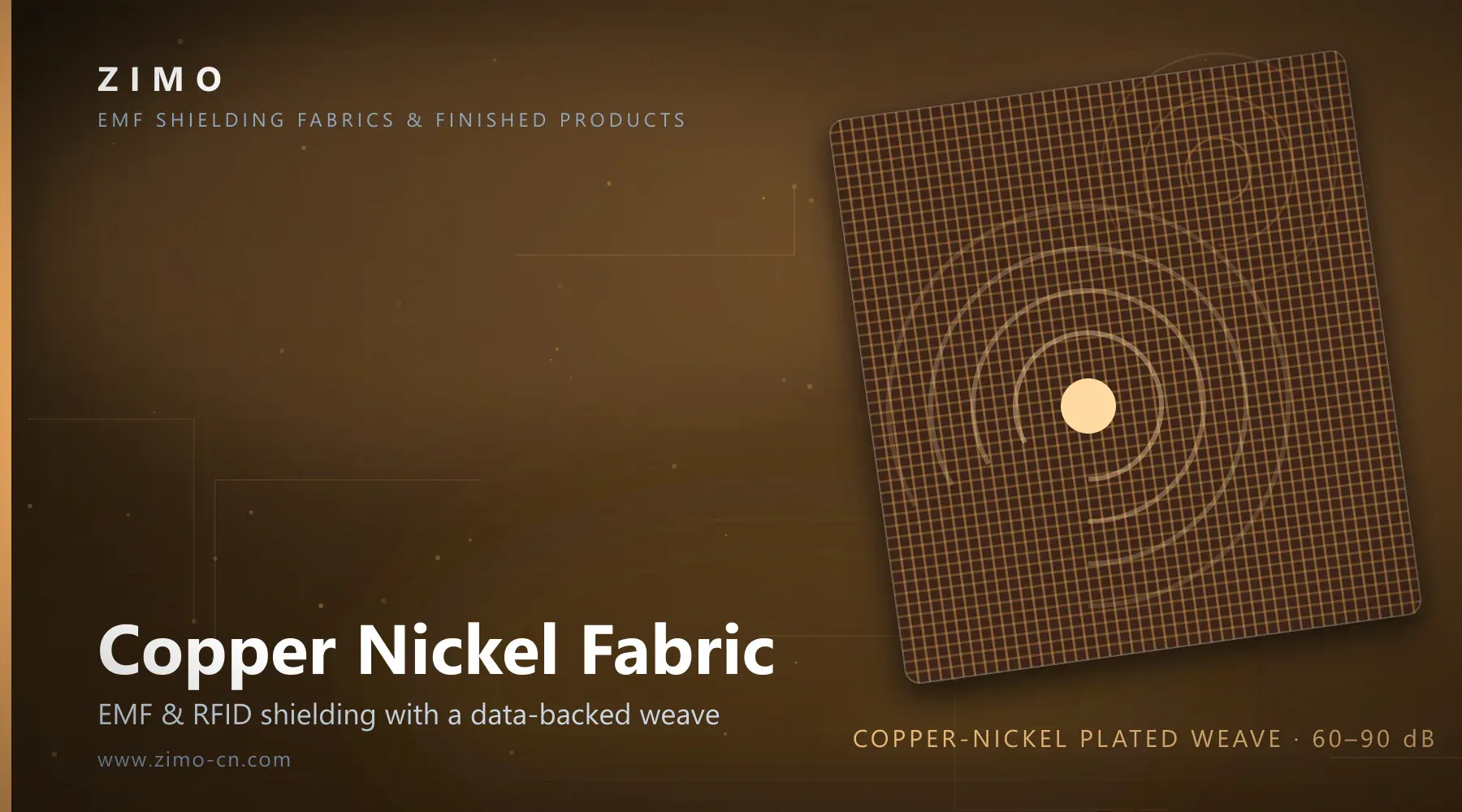
Copper-nickel fabric: 60–90 dB (manufacturer-tested)
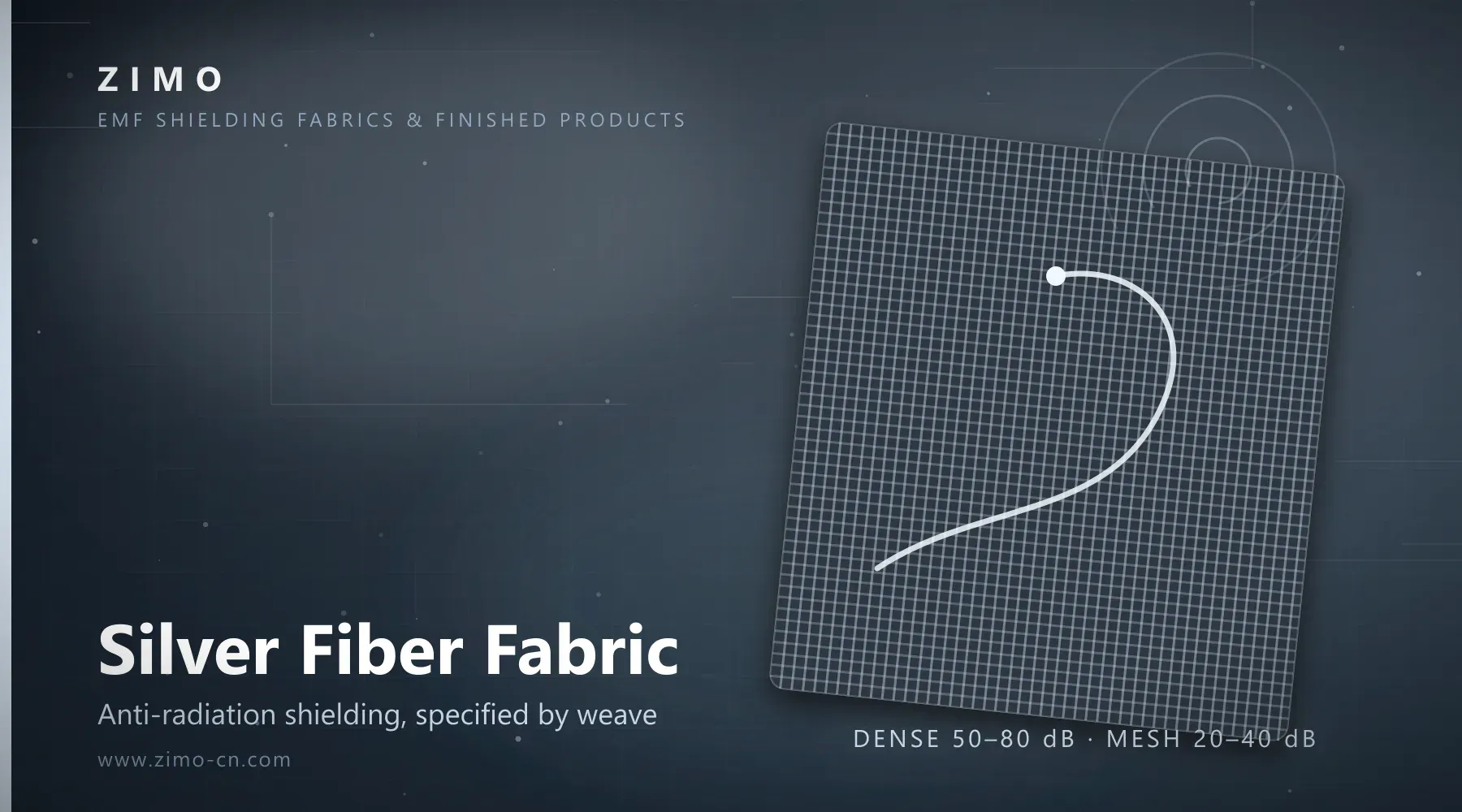
Silver fiber, dense construction: 50–80 dB (manufacturer-tested)
Silver fiber, open mesh: 20–40 dB (manufacturer-tested)
Two details matter. First, copper-nickel reaches higher at the top of its band, which is relevant when a customer spec references ambitious dB targets. Second, mesh silver trades attenuation for breathability and light weight — legitimate for accessories, not for products sold on high SE. Whatever figure you quote onward should carry the same qualifier: manufacturer-tested, and confirmed against your use case.
Hand Feel and Garment Compatibility
Silver fiber fabrics are built on a textile base — cotton, polyester or a blend — so they behave like fabric, not like metal sheeting. A useful reference point: Zimo's SILVER 75#B combines 42% silver fiber with 53% cotton and 5% polyester at 175 GSM. That construction drapes, cuts and sews like a mid-weight cotton, which is why dense silver dominates apparel applications where the fabric sits against the body.
Copper-nickel fabric has a distinctly metallic hand. It is slightly stiffer, holds a panel shape well, and rewards applications where structure is a feature: curtain panels, bag linings, equipment pouches, enclosure inserts. Design for it as a technical panel rather than a soft garment cloth.
Oxidation: What Changes Over Time
Silver tarnishes. Air, humidity and sweat darken the surface over time — normal oxidation, not a defect. The conductive structure remains intact beneath the discoloration; what shortens fabric life is harsh washing and abrasion, not air alone. If you build on silver fiber, plan for it: set care expectations on the label and in listing copy so darkening reads as normal aging rather than product failure.
Copper-nickel is an alloy selected for corrosion resistance, so it holds appearance and conductivity better in humid conditions than bare copper would. Neither family is maintenance-free, though — both deserve explicit care instructions, which we cover in our washing guide linked below.
Cost Drivers, Without Quoting Prices
We will not quote prices — they move with silver markets and order volume — but the cost logic is stable. Silver fiber cost scales with metal content: dense constructions carry more silver than mesh, so dense silver sits at the top of the range and tracks the silver market. Copper-nickel follows plated-yarn economics and tends to be steadier across procurement cycles.
The mistake buyers make is comparing fabric price per meter instead of cost per finished product. A 175 GSM fabric that yields more panels per linear meter can beat a nominally cheaper one once waste, seaming labor and returns are counted.
Which Product Lines Fit Which Fabric
Dense silver fiber fits apparel worn close to the body — maternity lines, everyday shielding wear, sleep products. Softness and drape sell the garment, and the 50–80 dB manufacturer-tested band supports most consumer product claims.
Silver mesh suits breathable applications — canopy and netting layers, scarves, liners — where comfort and airflow outrank maximum attenuation (20–40 dB, manufacturer-tested).
Copper-nickel fits structural and semi-structural products — curtains, canopies, pouches, RFID-blocking wallets, Faraday-style inserts — where the 60–90 dB manufacturer-tested band and shape retention matter more than a cotton hand.
Stainless steel fabric serves structured, durability-driven garments such as shirts, trousers and jackets, but Zimo does not publish dB figures for its stainless steel fabrics. If attenuation is your deciding spec, raise it with us directly rather than assume a number.
Decision Matrix
Decision factor | Copper-nickel | Silver fiber (dense) | Silver fiber (mesh)
Attenuation (manufacturer-tested) | 60–90 dB | 50–80 dB | 20–40 dB
Hand feel | Metallic, structured | Soft, cotton-like | Light, breathable
Oxidation behavior | Alloy corrosion resistance | Tarnishes (cosmetic) | Tarnishes (cosmetic)
Relative material cost | Steadier, mid-range | Higher, tracks silver content | Lower among silver options
Typical fit | Curtains, pouches, inserts | Apparel, maternity, sleep | Canopies, breathable layers
Read by column when your product is fixed, by row when your spec is fixed. High-dB curtain programs point to copper-nickel; weekly-washed apparel justifies dense silver.
How to De-Risk the Choice in Two Weeks
Order swatches of both families and run three checks: measure attenuation at your frequencies, sew a sample panel with your construction, and wash it the way your care label will instruct. Ten days of hands-on work settles debates that spec sheets never will — and because Zimo works without minimum order quantities, validation costs swatches and time, not commitment.
FAQ
Is higher dB always the better choice?
No. Attenuation is one constraint among several. A 20–40 dB mesh (manufacturer-tested) that customers actually wear beats a 60–90 dB panel left in a drawer. Match the fabric to the product promise, then verify with your own tests.
Will silver fabric darken over time?
Yes — surface tarnish is normal silver oxidation, driven by air and moisture exposure. It is cosmetic; the conductive structure remains. Care instructions and packaging choices control how fast it appears.
Can I use both fabrics in one product?
Commonly, yes. Layered constructions pair a copper-nickel panel for structure and higher attenuation with a silver layer where fabric meets skin. Discuss seam and edge treatment with your supplier so the layers work as one system.
What about stainless steel fabric?
It suits structured, durability-focused garments, but Zimo does not publish dB ratings for stainless steel fabrics. When attenuation is central to your spec, copper-nickel or silver fiber are the families with manufacturer-tested ranges.
Get a Decision-Ready Swatch Set
Zimo manufactures silver fiber and copper-nickel shielding fabrics with no minimum order quantity and customization available. Send your product and target spec via zimo-cn.com/contact-us and we will recommend a fabric family, provide manufacturer-tested dB documentation for the specific construction, and ship swatches for your own verification.
Request swatches and test documentation via our contact page.
Related Reading
How to Choose EMF Shielding Fabric: GSM, Width and dB Explained for Buyers
How EMF Shielding Fabric Is Tested: Methods, Standards and What the Numbers Mean
How to Wash EMF Shielding Fabric: Care Instructions That Preserve Performance
MOQ Explained: Why Fabric Suppliers Set Minimum Orders and How to Work With Them