Oct 2, 2026Shielding Fabrics
Silver Fiber Fabric: Anti-Radiation Shielding by Spec (50–80dB)
Silver fiber fabric guide: dense fabric 50–80 dB, mesh 20–40 dB (manufacturer-tested). Soft, breathable, antibacterial. No MOQ on standard products.
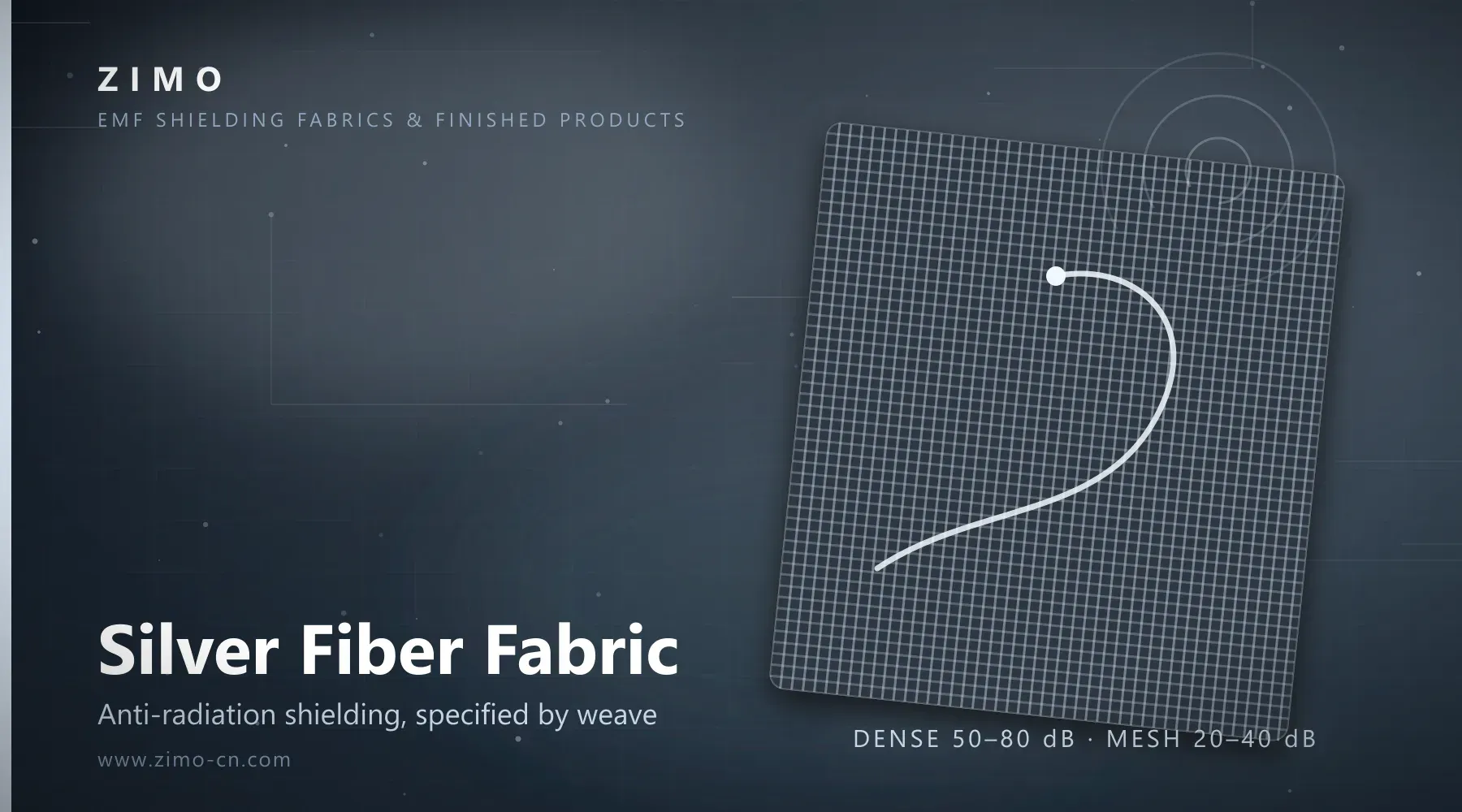
Silver fiber fabric is one of the most widely used materials in wearable EMF protection: soft enough to sew into hats, underwear, and blankets, yet conductive enough to attenuate a meaningful share of electromagnetic waves. Most supplier pages quote a single headline number that hides how much performance varies between constructions. This page takes the opposite approach: Zimo publishes shielding data by spec tier — 50–80 dB for dense silver fiber fabric and approximately 20–40 dB for silver fiber mesh — all manufacturer-tested, with test reports available on request.
What Silver Fiber Fabric Is and How It Shields
Silver fiber fabric is a silver coated fabric: fine textile fibers are coated or blended with metallic silver so the finished cloth forms a continuous, electrically conductive network. When electromagnetic waves meet this conductive surface, part of the energy is reflected and part is dissipated within the material, reducing the amount that passes through. The mechanism applies across radio frequencies, not at a single point.
Because the silver layer sits on fine, flexible fibers, the cloth drapes much like ordinary textile. That is the core reason anti radiation silver fabric is specified for close-to-skin garments: measurable attenuation without the stiffness or weight of rigid shielding materials.
Shielding Data by Spec: Dense Fabric vs Mesh
Zimo supplies silver fiber fabric in two constructions, and we quote a separate shielding range for each.
Spec tier | Construction | Shielding (manufacturer-tested) | Standard conversion | Typical use
Silver fiber fabric, dense (better specs) | Tight-woven conductive textile | 50–80 dB | Above 99.99% attenuation | Hats, underwear, scarves, aprons, blankets, garments
Silver fiber mesh | Open net weave | Approx. 20–40 dB | ≈99%–99.99% attenuation | Mosquito nets, bed canopies, canopy curtains
How to read this table:
All figures are manufacturer-tested; test reports are available on request for supported specifications. They are not third-party certifications.
Shielding varies with frequency and with the exact spec (weight, density, coating), so a range — not a single number — is the honest description.
Conversions follow the standard relationship: 10 dB ≈ 90%, 20 dB ≈ 99%, 30 dB ≈ 99.9%, 40 dB ≈ 99.99%. Dense fabric at 50–80 dB therefore exceeds 99.99% attenuation.
Why publish tiers instead of one maximum value? Sourcing teams buy a spec, not "a fabric." A mesh canopy that quietly arrives at 25 dB when the buyer expected 80 dB is exactly the mismatch tiered disclosure prevents. Stating both ranges up front lets you match material to application before sampling.
Why Brands Choose Silver Fiber for EMF Protection Garments
Three properties drive the choice of EMF protection silver fabric for wearables:
Skin-friendly drape. Silver fiber textiles are soft and flexible, so they sit comfortably against skin in underwear, scarves, and headwear — without the stiffness of metallic foils.
Breathability. Both dense fabric and mesh allow air movement, which matters for garments and bed canopies used for long periods.
Naturally antibacterial. Silver is inherently antibacterial as a material property, one reason the same fibers are widely used in everyday textiles beyond shielding.
The practical implication for product teams: anti-radiation silver fabric behaves like a garment material first. It cuts, sews, and finishes on standard apparel lines, without special processes.
Applications: From Anti-Radiation Hats to Bed Canopies
Dense silver fiber fabric (50–80 dB)
Use the dense tier wherever attenuation per garment area is the priority: anti-radiation hats (baseball cap, beanie, hood, bucket hat), underwear, aprons, scarves, blankets, and full garments, including maternity apparel and working uniforms. Zimo supplies these as finished products under OEM/ODM, or as roll fabric for manufacturers of wallets, bags, apparel, and workwear.
Silver fiber mesh (approx. 20–40 dB)
The mesh tier trades some attenuation for airflow and visibility. It is the standard choice for shielding mosquito nets, bed canopies, and canopy curtains that hang over a sleeping area and must stay breathable. If your product is worn, start with the dense tier; if it covers a bed or window, start with mesh.
Customization, Sampling, and No-MOQ Policy
Standard products: no MOQ. Order single rolls of standard specs — practical for sampling, small-batch launches, and DIY projects bought by the meter.
Customization available. Size, weight (GSM), and style can be customized; MOQ for custom orders is determined per requirement and confirmed before production.
OEM/ODM for finished goods. Hats, underwear, blankets, aprons, scarves, and working uniforms can be produced to your brand's specification.
Other conductive fabrics on request. If silver fiber is not the right fit, ask about alternative materials and we will match the spec to your application.
Washing and Care: An Honest Note on Oxidation
Silver reacts with sulfur and oxygen in air, moisture, and sweat, so silver fiber fabric gradually darkens or discolors over time. This is normal surface chemistry, not a defect — but it should be planned for, not hidden.
Hand wash or use a gentle machine cycle in cold or lukewarm water.
Use mild detergent; avoid bleach and strong oxidizing agents.
Do not wring or tumble dry at high heat; hang or lay flat to air dry.
Minimize friction and repeated aggressive washing, which mechanically wear the conductive layer.
Attenuation can change gradually over a garment's life as the silver surface ages. If documented performance matters for your product, request the manufacturer test reports for your spec and set your own QC baseline rather than by color or feel.
FAQ
Which tier should I choose — dense silver fiber fabric or mesh?
Choose the dense tier (50–80 dB, manufacturer-tested) for wearables where attenuation is the priority: hats, underwear, scarves, aprons, blankets. Choose mesh (approx. 20–40 dB) for mosquito nets, bed canopies, and curtains where airflow and visibility matter. The decision is mostly about product form, not only the number.
How does shielding change after washing?
There is no fixed universal wash count. The change depends on wash method, detergent, water temperature, and wear frequency. Gentle washing preserves the conductive layer far longer than aggressive cycles, but every silver-based textile ages. Ask for test reports and set a QC threshold if documented performance matters.
Does discoloration affect shielding performance?
Discoloration is surface oxidation of the silver and does not by itself mean the fabric has stopped shielding. Oxidation and mechanical wear are gradual and can accompany changes in conductivity over long use. The reliable check is measurement: judge the fabric by tested attenuation against its report, not by color.
Can I get samples before placing a bulk order?
Yes. Standard silver fiber fabric products carry no MOQ, and we recommend sampling before any production decision. Contact us with the spec tier and application, and we will confirm sample availability and test reports for the specifications you need.
What is the lead time?
Lead time depends on specification, quantity, and level of customization. Standard specs move faster than custom GSM or styles, and OEM/ODM finished goods take longer than roll fabric. Send your spec and target quantity and we will confirm a production schedule for your order.
Request a Quote or Get a Sample
Whether you need roll fabric for apparel production or finished EMF protection products under OEM/ODM, Zimo can quote by spec and ship standard products with no MOQ. Send your target spec, quantity, and application, and we will respond with availability and the relevant test reports.
Request a Quote / Get a Sample
Related Reading
Copper Nickel Fabric: 60–90 dB Shielding, Test Reports on Request — the higher-attenuation alternative for industrial and wearable use.
Silver vs Copper Nickel Fabric: How to Choose — a direct comparison of the two most common shielding textiles.
EMF Protection Underwear: Sourcing Notes for Brands — what to specify before producing close-to-skin garments.