Sep 14, 2026Material Notes
Nickel-Copper Conductive Fabric: The Core Interconnect Material for Flexible Electronics and EMI Shielding
Discover why nickel-copper conductive fabric is the go-to solution for EMI/RFI shielding, flexible electronics, and wearable devices.
Introduction
As electronic devices continue to shrink and become more flexible, traditional rigid circuit boards can no longer meet the form-factor demands of modern products. The rise of flexible electronics has opened new possibilities for device design innovation—and nickel-copper conductive fabric is emerging as a critical material for flexible interconnects and EMI shielding.
As a leading supplier of radiation protection and signal shielding products, we specialize in nickel-copper conductive fabric solutions. This guide covers everything you need to know about its structure, performance, applications, and why it belongs in your next project.
What Is Nickel-Copper Conductive Fabric?
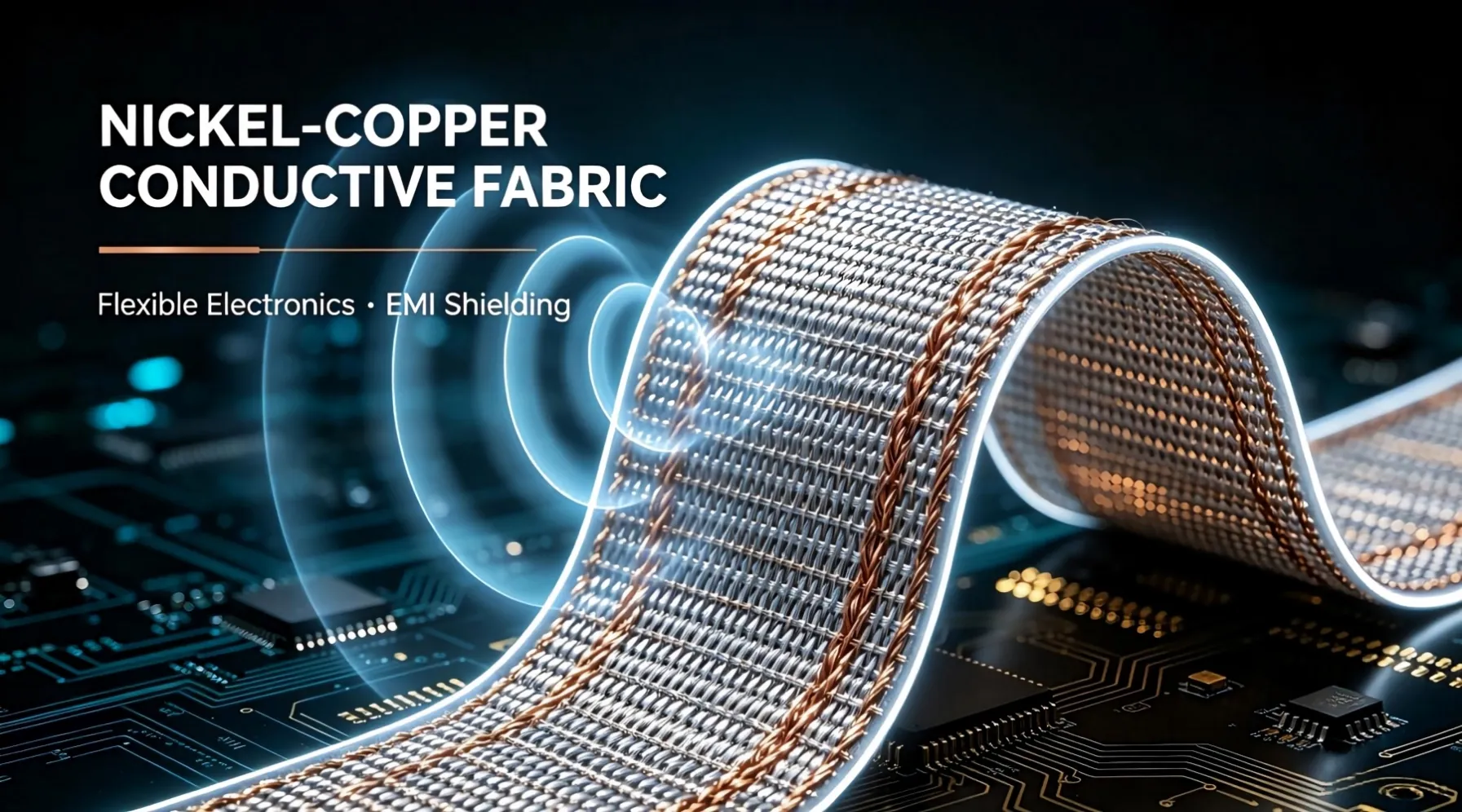
Nickel-copper conductive fabric (also known as NiCu conductive cloth, copper-nickel shielding fabric, or conductive textile) is a composite material built on a flexible textile substrate. Through a precision electroless plating process, a nickel-copper metal layer is deposited onto the fabric surface, combining the flexibility of textiles with the conductivity of metals.
The base material is typically high-performance polyester fiber or ripstop polyester fabric, chosen for its mechanical strength and durability. In the metal coating, the copper layer provides excellent electrical conductivity, while the nickel layer enhances wear resistance, corrosion resistance, and electromagnetic shielding performance. This multilayer design ensures stable electrical performance even under dynamic conditions.
Key material properties at a glance:
Parameter | Typical Value |
|---|---|
Surface resistance | ≤ 0.03–0.08 Ω/sq |
Shielding effectiveness | 75–96+ dB (20 MHz–18 GHz) |
Thickness range | 30 μm–600 μm |
Base material | Polyester woven / non-woven / ripstop |
Flame retardant grade | UL94 VTM-0 |
These specifications make nickel-copper conductive fabric one of the most cost-effective conductive textiles on the market today.
Why Choose Nickel-Copper Conductive Fabric?
Excellent Electrical Conductivity
The copper layer delivers low surface resistance—typically below 0.05 Ω/sq—ensuring high-quality signal transmission and efficient electrical grounding. Research confirms that increased nickel deposition improves surface conductivity by forming a more continuous conductive layer, enhancing charge transport.
Superior EMI/RFI Shielding Performance
Nickel-copper conductive fabric provides 75 dB to over 96 dB shielding effectiveness across a wide frequency range from 20 MHz to 18 GHz. This level of attenuation is essential for:
- EMI shielding in consumer electronics and industrial equipment
- RFI protection in communication systems
- ESD grounding in sensitive electronic environments
- Faraday cage construction for labs and RF-sensitive rooms
The nickel component's high magnetic permeability enhances electromagnetic wave absorption, while the copper layer reflects incoming radiation, creating a dual-mechanism shielding effect.
Outstanding Flexibility and Durability
Unlike rigid metal foils or conductive tapes, nickel-copper conductive fabric bends, folds, and conforms to complex shapes without cracking or losing conductivity. It is:
- Bend-resistant for repeated flexing in hinge assemblies
- Tear-resistant (especially ripstop varieties)
- Abrasion-resistant with no change in surface resistivity after 1,000+ wear cycles
- Corrosion-resistant thanks to the nickel plating
Lightweight and Space-Saving
At just 2.3–3.3 oz/yd² (approximately 78–112 g/m²), nickel-copper conductive fabric adds minimal weight to any assembly. Its thin profile (as low as 30 μm) supports the trend toward thinner, lighter electronic devices.
Easy to Process
The fabric can be easily cut, sewn, laminated, and coated. It is compatible with conductive adhesives and pressure-sensitive adhesive (PSA) systems for tape applications.
Key Applications Across Industries
Consumer Electronics
- Foldable smartphones and tablets: Connects display modules to motherboards across hinge mechanisms, maintaining reliable signal transmission through repeated folding cycles.
- Laptops and 2-in-1 devices: Provides flexible interconnects between display and base units.
- Wearable devices: Smartwatches, fitness trackers, and smart clothing benefit from the fabric's comfort and conductivity.
The global wearable technology market is projected to reach $180 billion by 2028, driving substantial demand for conductive fabrics that enable seamless electronics integration.
EMI Shielding and RF Protection
Nickel-copper conductive fabric is widely used for:
- Faraday cages and EMI enclosures in laboratories and industrial facilities
- RF-sensitive room protection
- HEMP (High-altitude Electromagnetic Pulse) protection for critical infrastructure
- Anti-static and ESD shielding in electronics manufacturing
Automotive Electronics
Modern vehicles incorporate increasingly complex electronic systems. Nickel-copper conductive fabric is used in:
- Flexible connections for car seat sensors and occupant detection systems
- EMI shielding for infotainment and navigation systems
- Conductive textile gaskets for control units
Automotive electrification trends and the growing IoT ecosystem continue to expand application possibilities.
Medical Devices
In wearable medical monitoring equipment, the fabric's flexibility and biocompatibility allow it to conform comfortably to the human body while ensuring accurate physiological signal acquisition. Applications include:
- Flexible electrodes for ECG and EMG monitoring
- EMI shielding for sensitive medical instrumentation
- Wearable health sensors for continuous patient monitoring
The medical wearable market is projected to exceed $27 billion by 2026, representing a significant growth opportunity for conductive fabric suppliers.
Market Outlook: Why Now Is the Time to Invest
The electrically conductive fabric market was valued at USD 412.5 million in 2025 and is projected to reach USD 976.8 million by 2034, exhibiting a CAGR of 9.8%. Key growth drivers include:
- 5G and high-frequency communication creating demand for EMI shielding materials
- Flexible and foldable electronics requiring bendable interconnects
- Wearable technology expansion across consumer, medical, and military applications
- Automotive electrification increasing the need for lightweight shielding solutions
Asia-Pacific accounts for over 55% of global demand growth, while North America and Europe together represent approximately 30% of the market.
Material Specifications and Customization Options
When sourcing nickel-copper conductive fabric for your application, consider the following specifications:
Specification | Standard Options | Customization |
|---|---|---|
Base fabric | Polyester woven / non-woven / ripstop | Yes |
Surface resistance | 0.03–0.08 Ω/sq | Tight tolerances available |
Shielding effectiveness | 75–96+ dB | Frequency-specific optimization |
Thickness | 30–600 μm | Cut to specification |
Width | Up to 126 cm | Slitting available |
Adhesive backing | Conductive PSA (optional) | Die-cut to shape |
Flame retardancy | UL94 VTM-0 | Halogen-free options |
Color | Silver / nickel metallic / black | Custom coating available |
We offer both standard roll goods and custom-fabricated components including die-cut gaskets, tapes, and shaped shielding pieces to meet your specific design requirements.
Why Source Nickel-Copper Conductive Fabric from Us
As a dedicated manufacturer and supplier of EMI shielding and radiation protection materials, we bring:
- Deep product expertise — We understand the technical requirements of EMI shielding, ESD grounding, and flexible interconnects across industries.
- Full customization — From surface resistance tuning to die-cut shapes, we tailor products to your specifications.
- Quality assurance — Every batch is tested for surface resistivity, shielding effectiveness, and mechanical durability.
- Competitive pricing — Direct manufacturing means cost-effective solutions without compromising performance.
- Responsive support — Our team provides technical guidance from material selection through production integration.
Frequently Asked Questions
Q: What is the difference between nickel-copper conductive fabric and silver-coated fabric?
Nickel-copper conductive fabric offers comparable shielding effectiveness at a lower cost than silver-coated alternatives. While silver provides slightly higher conductivity, nickel-copper provides better corrosion resistance and is more economical for high-volume applications.
Q: Can nickel-copper conductive fabric be washed or cleaned?
The fabric is designed for durability in electronic applications rather than repeated laundering. For wearable applications requiring washability, specialized encapsulation or coating may be recommended.
Q: What frequency range does nickel-copper conductive fabric shield?
Standard products provide effective shielding from 20 MHz to 18 GHz, covering most commercial, industrial, and consumer electronic applications.
Q: Is nickel-copper conductive fabric RoHS compliant?
Yes, our products comply with RoHS and can be supplied halogen-free upon request.
Q: Can you provide samples for testing?
Absolutely. We encourage customers to request samples for performance validation before committing to production orders.
Conclusion
Nickel-copper conductive fabric represents a versatile, reliable, and cost-effective solution for EMI shielding, flexible interconnects, and conductive textile applications. As the flexible electronics and wearable technology markets continue to expand, this material will play an increasingly important role in enabling the next generation of electronic devices.
Whether you are designing foldable smartphones, automotive sensor systems, wearable medical devices, or RF shielding enclosures, nickel-copper conductive fabric delivers the performance you need.
Ready to discuss your project? Contact us today for samples, technical specifications, or custom fabrication quotes. We are committed to being your long-term partner in conductive textile solutions.