Guides & Education
Conductive Fabric for Aerospace and Defence Textiles: Specification Questions Buyers Always Ask
Aerospace and defence buyers ask the same specification questions before ordering conductive fabric. This guide covers uses, materials, testing, samples and documents.
Conductive Fabric for Aerospace and Defence Textiles: Specification Questions Buyers Always Ask
A buyer sourcing conductive fabric for an aerospace or defence textile project asks different questions from a buyer sourcing the same fabric for a consumer product. The fabric may end up in a crew garment, a seat cover, a curtain inside a shelter, a lining inside an equipment cover, or a blanket over a sensitive unit, and each use brings its own specification, its own test list and its own documents. The buyers who get the fastest answer are the ones who ask the specification questions first, before the sample is cut. This guide lists the questions aerospace and defence buyers always ask, explains why each one matters, and shows how to put the answers into a one-page brief a supplier can quote against. It is not an aerospace or defence engineering guide: the specification and the test requirements come from your customer, and the supplier's job is to supply a sample against your brief and report the test result in writing, not to set the standard.
Where conductive fabric is used in aerospace and defence textiles
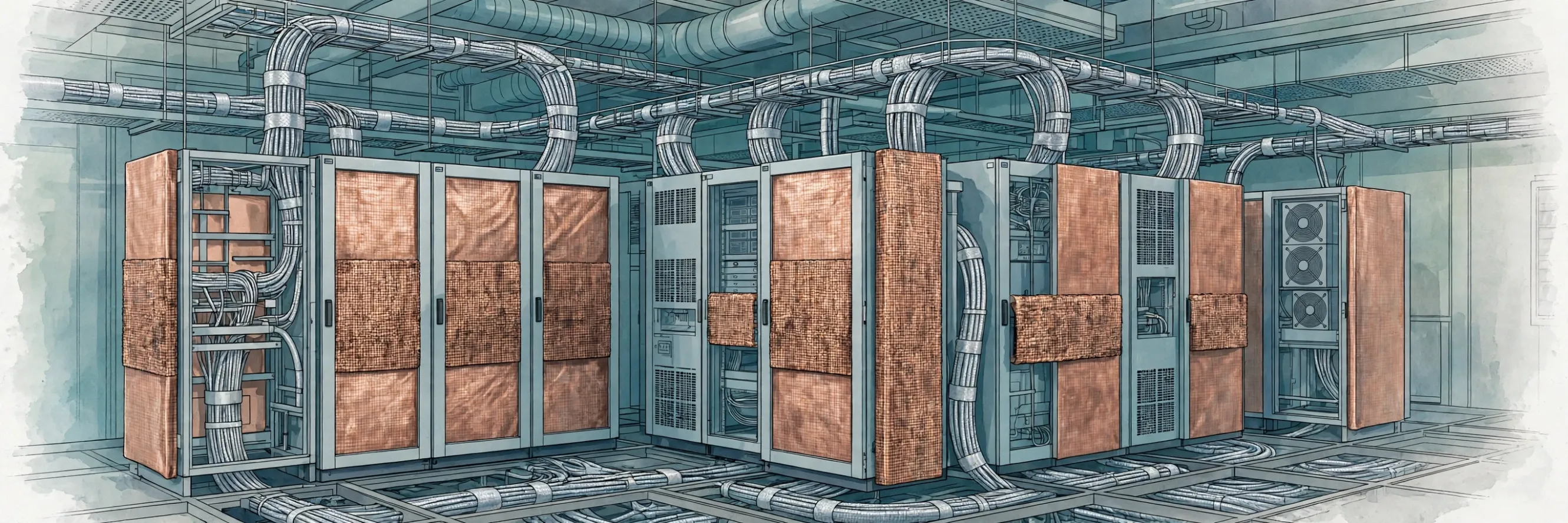
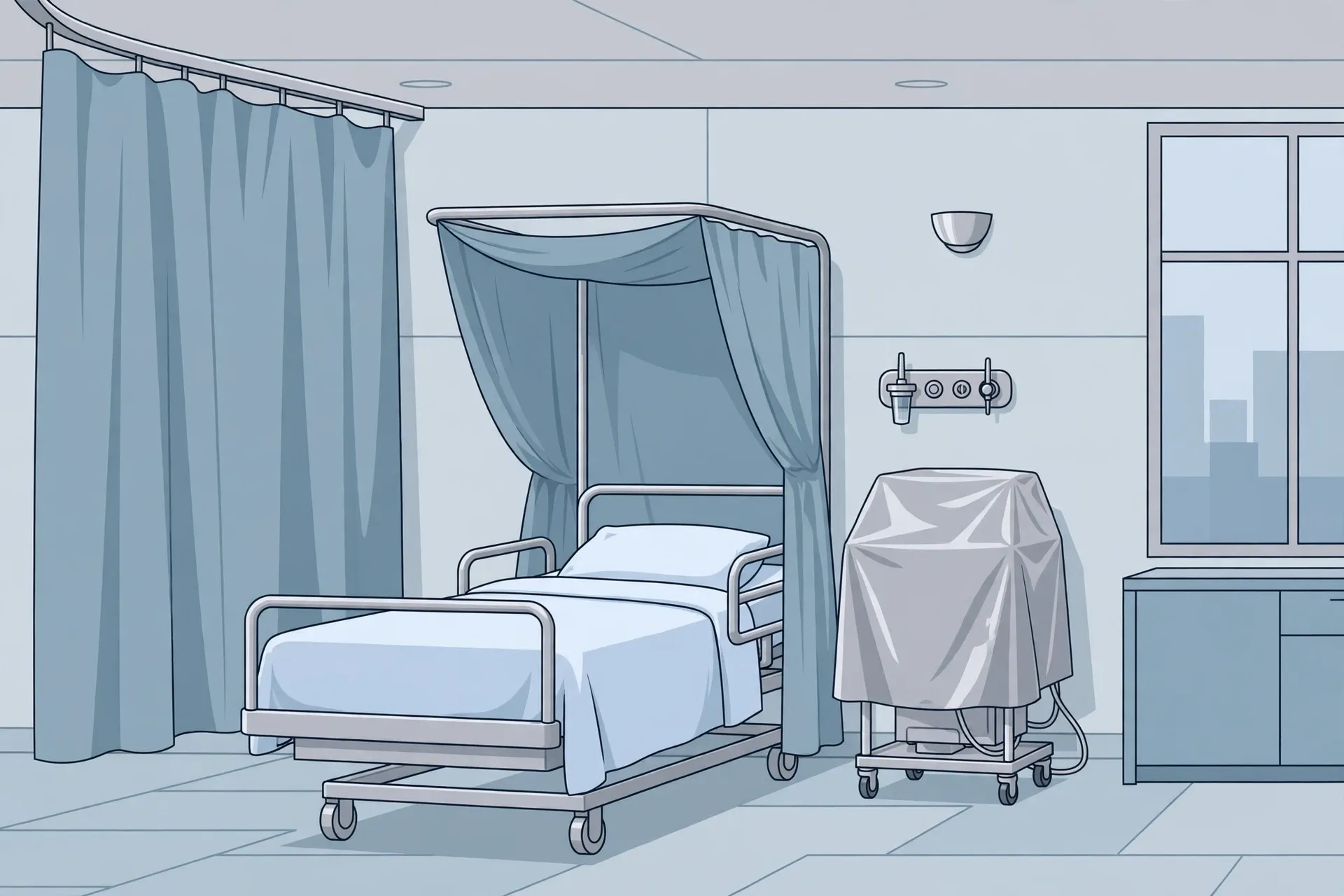
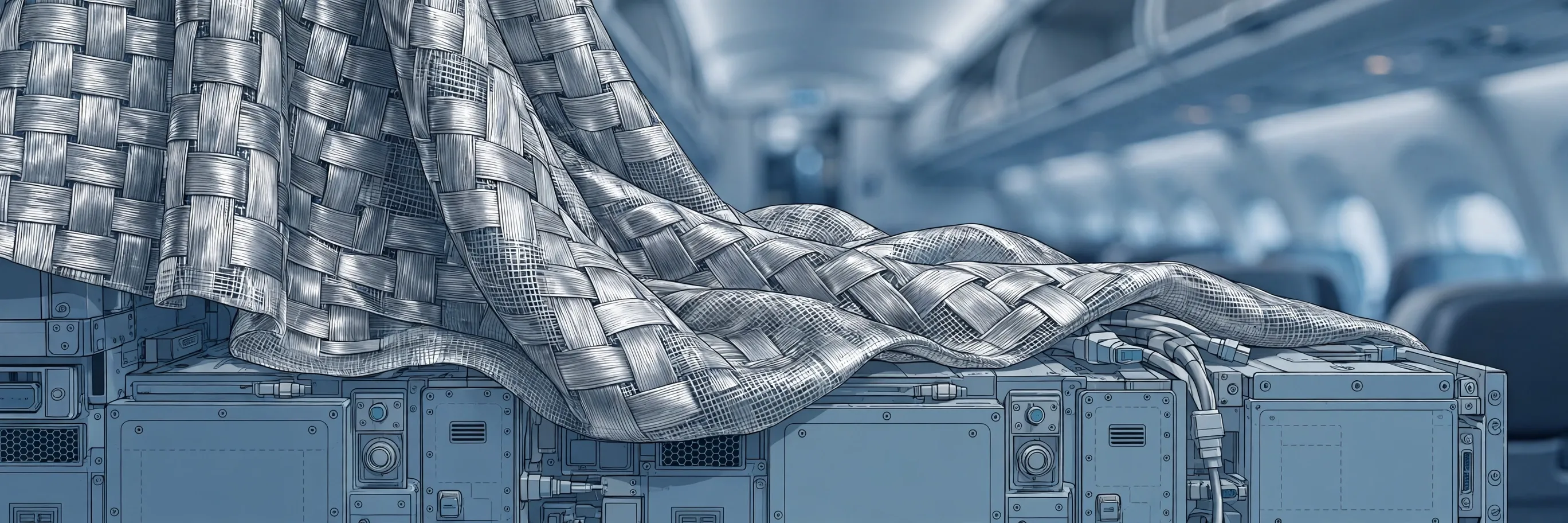
The first use is garments and wearable textiles: crew clothing, liners inside jackets and coveralls, and protective layers worn close to the body. Here the fabric has to shield, but it also has to feel like clothing: it must be flexible, light enough to wear, and able to be cut and sewn the way a garment factory works. The second use is seating and cabin textiles: seat covers, headrest covers, curtains and blankets inside cabins and crew rest areas, where the fabric is handled every day and has to keep its shielding after repeated use. The third use is covers and enclosures: covers for equipment, cases and sensitive units, and linings inside shelters and temporary structures, where the fabric is the shielding layer and the seams, closures and overlaps are part of the result. The fourth use is gaskets and seals: conductive foam and fabric around access panels, doors and enclosure openings, where the seal itself does the shielding work and has to compress, recover and keep contact over time.
A buyer who names the use in the first message saves a round of questions. A garment liner and an equipment cover are not the same order, even if they use the same roll of fabric, because one is sewn to a pattern and worn, the other is cut to shape and closed with fasteners, one is measured in pieces and the other in square metres, and the test each one needs is different. Say where the fabric will be used, who will use it, and how it will be fixed, joined and cleaned, and the supplier can propose a fabric instead of guessing one.
Choosing the material
Copper-nickel fabric is listed at 60 to 90 decibels in the product guides on this site, and it is the usual choice for covers, linings, curtains and cabin textiles, because it is flexible, light and easy to cut, bond and sew. Conductive foam, used for gaskets and seals around enclosures and access panels, is listed above 75 decibels. Silver fibre fabric is listed at 50 to 80 decibels, and it is the usual choice where a softer hand feel or a textile finish matters, for example in garment liners and seat covers that people touch and wear. Those ranges are a starting point for discussion, not a promise for your finished part, because the shielding a part reaches depends on the shape, the seams, the bonding and the closures as well as the roll of fabric. Name the shielding target and the test you want in the same message, and ask for the test result in writing, with the test method named. Test reports and supplier certificates are available on request.
When you choose, think about what the material has to survive after it is fitted. A garment liner is worn, washed and folded, so flexibility and hand feel matter as much as shielding. A cabin curtain is opened and closed every day, so durability at the fold matters. A cover is put on and taken off, so the closures and the edges matter. A gasket is compressed and released, so recovery matters more than the number on the roll. Tell the supplier how the material will be used, handled and maintained, and ask which fabric they would propose for that use, rather than choosing from a name alone. If your customer has a specification document, send the pages that apply to the fabric, rather than describing them in your own words, so the supplier works against the right requirement.
The specification questions buyers always ask
The first question is about the use: where the fabric goes, what it is joined to, and how it is fixed. A buyer who answers this in the brief lets the supplier choose the right weight, the right width and the right way to cut it. The second question is about the shielding target: what level of shielding the finished part must reach, measured on the finished part, and by which test method. A target without a method cannot be quoted, and a result without a method cannot be compared, so name both in the brief. The third question is about durability: what the fabric must survive in service, whether that is repeated handling, folding, wear, washing or long storage, and what the pass result is for each check your customer requires. Name the checks in the brief rather than asking for a general promise of durability.
The fourth question is about the documents: which test reports and supplier certificates your customer needs, and whether they are needed with the sample or with the bulk order. Ask for them with the sample, not with the bulk order, so a missing document is found while the order is still small. The fifth question is about the sample itself: whether a stock sample is enough for a first check, or whether a custom sample cut to your pattern is needed, and what will be tested on it. The sixth question is about quantity and price: how the fabric is priced, in which unit, and what the suggested starting quantity is. The seventh question is about delivery: how long the sample takes, and when the bulk order can ship once the sample is approved. A buyer who asks all seven questions in the first brief usually gets a usable answer in one round; a buyer who asks them one at a time spends weeks on the same order.
Testing: agree the method before the sample is cut
The test list for an aerospace or defence textile starts with shielding, and it should not end there. Agree before sampling what will be tested, on which part of the finished piece, and after what treatment, because a test result without a method is a sentence, not a specification. For a cover or a lining, the shielding test should be run on the finished, joined piece, not on a flat piece of fabric, because the seams, the closures and the overlaps are part of the result. For a garment liner, agree how the sample will be handled before the test, so the result reflects the garment as it will be worn and used. For a laminated piece, test the bonded part, not the fabric alone, because the bond is part of the product.
Then agree the durability checks your customer requires and name them in the brief, with the pass result for each one. Do not assume a document that applies to a roll of fabric automatically applies to a finished part in your market, and do not assume a supplier's test report replaces your customer's approval. The boundary here is simple: the supplier can propose a fabric, supply a sample and report a test result in writing. The decision about whether that result meets your customer's specification is yours and your customer's. If your market needs a specific document, name it in the brief and ask what the supplier can provide with the sample.
Samples, quantities and what to check
Fabric can be ordered from as little as 1 square metre. The suggested starting quantity is 10 square metres or 10 metres, with a better price for a larger quantity, and silver fibre fabric is usually priced by the square metre while copper-nickel fabric is usually priced by the metre. Finished products in stock can be ordered from 1 to 2 pieces, while an out-of-stock item needs a new quotation and lead time. Say whether you are ordering fabric by the roll or finished goods, give the width, and say whether the fabric will be cut, sewn, bonded or laminated, because each one changes the quantity and the sample you should ask for.
A stock sample usually ships in 1 to 5 days, while a custom sample usually takes 5 to 30 days depending on the process, and the exact time is confirmed once the specification is confirmed. Order the sample before you promise your customer a delivery date. When it arrives, check the fabric, the edges, the seams and the joins first, then run the agreed shielding and durability checks on the finished piece, and keep the result with the sample. Decide the labelling before the sample is cut if the goods carry your own brand, in the language and wording your market expects.
Payment is by letter of credit, telegraphic transfer, PayPal or Western Union. Confirm the method and the currency before the order is placed. Yiwu Zimo Trading Company is a trading-and-manufacturing supplier. The details above describe how it quotes and samples. They do not describe factory capacity or production processes, which are not published, and they do not promise a shielding level for a part that has not been tested.
Frequently asked questions
Which fabric is usually used for aerospace and defence textiles?
Copper-nickel fabric, listed at 60 to 90 decibels, is the usual choice for covers, linings, curtains and cabin textiles. Silver fibre fabric, listed at 50 to 80 decibels, is the usual choice where a softer hand feel matters, such as garment liners and seat covers. Conductive foam, listed above 75 decibels, is used for gaskets and seals.
What should we put in the brief?
The use case, the fabric, the shielding target and the test method, how the part will be cut, sewn, bonded or laminated, the quantity in the unit the supplier prices in, the width, the durability checks your customer requires, the documents you need, and the payment method and currency.
What should we test on the sample?
The shielding test on the finished, joined piece, and the durability checks your customer requires, agreed before sampling, with the test method named and the result in writing.
How much fabric can we order for a first test?
Fabric can be ordered from as little as 1 square metre. The suggested starting quantity is 10 square metres or 10 metres, with a better price for a larger quantity.
How long does a sample take?
A stock sample usually ships in 1 to 5 days. A custom sample usually takes 5 to 30 days depending on the process, and the exact time is confirmed once the specification is confirmed.
Your next step
Write a one-page brief with the use case, the fabric, the shielding target and the test method, how the part will be cut, sewn, bonded or laminated, the quantity in the unit the supplier prices in, the width, the durability checks your customer requires, the documents you need, and the payment method and currency. Send it and ask the supplier to confirm the fabric, the sample time, the test that will be run on the sample, and what is included in the sample price. When the sample arrives, test the finished piece before you approve bulk. If you are ready to start, contact us through the contact page or email info@zimo-cn.com with your brief, and we will reply with a fabric proposal, a sample time and a quote.